Akash Yogini

Akash Yogini stands as one of the most mesmerizing, profound, and esoteric figures within the pantheon of Vajrayana Buddhism. Known alternatively as Akāśa Vajrayoginī, Vidyadhari ("The Knowledge Holder"), or Bijeshwori Devi, she represents the ultimate realization of the awakened mind soaring beyond the boundaries of worldly dualities.
This comprehensive guide explores the deep-rooted historical background, extensive spiritual significance, and complex iconographic systems behind this unique female Buddha.
Historical Background & Lineage Foundations
Spiritual Significance: The Space of Awareness
- The Nature of Emptiness (Shunyata): The sky serves as the ultimate metaphor for the mind. It has no color, shape, boundaries, or structural limits, yet it contains everything. Akash Yogini reminds practitioners that their fundamental awareness is as vast and unconditioned as infinite space.
- Transformation of Core Afflictions: Vajrayana does not ask practitioners to suppress their worldly desires or emotional fires. Instead, Akash Yogini models how to step directly into those desires, using their raw energetic power to incinerate ego-based perceptions.
- The Unbroken Union of Bliss and Emptiness: Her vibrant, active form represents Bliss (Sukha), while her movement through the open sky represents Emptiness. Realizing these two states as a single, inseparable reality is the foundation of ultimate liberation.
Akash Yogini Iconography
The physical depiction of Akash Yogini is an incredibly complex, multi-layered visual language where every line, color, and posture acts as a direct teaching on the path to enlightenment.
Physical Appearance & Posture
Akash Yogini is consistently represented as a radiant, youthful woman with an energized, unconstrained body. She is depicted leaping directly into the open sky. Her body tilts dramatically to the left, which signifies her alignment with the left-hand path (Vama Marga) of the Mother Tantra traditions, emphasizing internal transformation through intuitive wisdom and energetic bliss.
Her right leg is bent sharply backward at the knee, while her left leg is pulled up completely into the sky in a dramatic Urdhvapada (raised foot) posture. This left leg is cradled gracefully within the crook of her left arm. This wide, athletic flying stance shows her total command over the elements and her complete freedom from gravitational boundaries or earthly attachments.
Facial Expression & Vision
Her face displays a complex expression of passionate, wrathful compassion. Her lips part slightly to reveal her bared fangs, indicating her readiness to crush all ego-driven ignorance. Her long, jet-black hair flows freely down her back, unrestrained by worldly conventions. She possesses three eyes, which symbolize her panoramic vision capable of seeing through the past, present, and future simultaneously.
Arms & Implements Held
Akash Yogini has two principal arms, each wielding a sharp tantric tool:
- The Curved Knife (Kartika or Drigug): Held firmly in her lowered right hand, she circles this weapon through the ten directions. The handle is topped with a half-vajra, and her index finger is raised in the threatening Tarjani Mudra. This knife is used to slice away the roots of dualistic thinking, conceptual delusions, and negative spiritual forces.
- The Skull Cup (Kapala): Held aloft in her raised left hand, she brings the skull cup close to her lips to drink the fresh blood within it. This act represents transforming worldly suffering and afflictions into the nectar of Great Bliss (Mahasukha).
The Tantric Staff (Khatvanga)
Resting across her left shoulder is a golden Khatvanga staff that stands equal to her body height. This staff acts as a hidden visual symbol for her male consort, Chakrasamvara, proving that she possesses the perfect balance of female wisdom (Prajna) and male skillful means (Upaya). The top of the staff features a sequence of symbolic items:
- A foundational crossed-vajra and a nectar-filled vase.
- An impaled blue head of Bhairava (conquered ignorance).
- A freshly severed human head (the death of ego).
- A dry white skull (impermanence).
- A crowning half-vajra tip.
Crown, Jewelry, and Body Ornaments
Akash Yogini wears no ordinary clothing; she is adorned entirely in the graveyard ornaments of an enlightened dakini:
- The Five-Skull Crown: Her head features a golden crown topped with five carved white skulls, which represent transforming the five root poisons (ignorance, attachment, anger, pride, and jealousy) into the five pristine wisdoms of the Buddhas.
- The Bone Girdle & Apron: Hanging from her waist is an intricate apron crafted from sixty-four filigree bone beads. The individual strands are accented with auspicious symbols and figures of sacred swans.
- The Skull Garland: She wears a long garland consisting of fifty dried white human skulls draped over her shoulders, which represents cutting through the fifty structural concepts of the human alphabet and linguistic conditioning.
- The Sacred Reliquary Box (Gau): Positioned directly between her breasts, this small box links her golden jewelry strands together, symbolizing her guarded, esoteric heart wisdom.
Aura, Halo, and Lotus Support
She is completely enveloped by a massive, oval-shaped halo of blazing wisdom flames. These orange and red fire plumes signify the intense heat of spiritual transformation (Tummo) that burns away all karmic defilements. Beneath her flying form, she hovers over a great, multi-colored lotus pedestal, reinforcing her essential purity even while interacting with the cyclic world of suffering.
Akash Yogini in Vajrayana Buddhism & Himalayan Art
Within the historical artistic guilds of the Kathmandu Valley and the monastic scriptoriums of Tibet, capturing the essence of Akash Yogini is considered a supreme test of craftsmanship. Traditional depictions rely heavily on two primary mediums:
1. Newar Cast-Bronze and Copper Statues
The Newar artisans of Lalitpur (Patan) use the lost-wax casting technique to capture her highly dynamic, airborne weightlessness in metal. Because she stands on only one foot or hovers in mid-air supported by her staff and flowing scarves, building these statues requires precise knowledge of physical balance and proportion. The copper statues are often heavily gilded in 24k gold, with their faces hand-painted in pure mineral pigments.
2. Thangka Paintings
In traditional Thangkas, Akash Yogini is rendered in a deep, glowing vermillion red. The background is intentionally filled with dark, rolling storm clouds, wild cemetery landscapes, and jagged mountain peaks to emphasize her role as a fierce, unconventional liberator. Artists follow specific measurements found in canonical iconographic manuals (Sadhanas) to ensure that her proportions align accurately with meditative visualization requirements.
Meditation, Sadhana, and Spiritual Practices
The practice of Akash Yogini is an esoteric discipline that requires official ritual empowerment (Wang), scriptural authorization (Lung), and direct oral instructions (Tri) from a qualified lineage lama. It cannot be learned safely or effectively from books alone.
Traditional Visualization Practices
During advanced meditation, the practitioner visualizes their own ordinary physical body dissolving completely into the empty space of the room. Out of that space, a vibrant red syllable VAM emerges, transforming instantly into the radiant, flying body of Akash Yogini.
By visualizing themselves as the deity, the practitioner breaks down their ordinary ego-identification ("I am this limited body/personality") and steps directly into the vast, cosmic perspective of a fully enlightened being.
Benefits of the Practice
- Rapid Development of Insight: Slices through long-standing mental blocks and stubborn habits.
- Physical Vitality: Re-routes the internal winds (Prana) and energetic drops (Bindu) into the central energetic column of the body.
- Protection from Obstacles: Clears away external spiritual disturbances and internal psychological anxieties.
- Realization at Death: Prepares the consciousness to navigate the transition of death (Bardo), allowing the mind to merge smoothly with the ultimate Clear Light.
Comparative Matrix: Akash Yogini vs. Other Yoginis
To understand her unique role, it helps to see how Akash Yogini compares to the other primary yoginis within the Newar and Tibetan Buddhist universes:
| Aspect / Deity | Akash Yogini (Vidyadhari) | Naro Khechari (Naropa's Dakini) | Khadga Yogini (Sankhu) | Indra Yogini (Guhyeshwari) |
| Primary Posture | Flying in mid-air, left leg raised up high to the sky. | Standing in a dynamic warrior pose, gazing upward. | Standing in an active warrior stance (Pratyalidha). | Hidden, non-anthropomorphic water source or vase manifestation. |
| Primary Implement | Curved Knife (Kartika) and Skull Cup (Kapala). | Curved Knife, Skull Cup, and a shoulder-resting Khatvanga. | Upraised Wisdom Sword (Khadga). | Multitude of ritual implements or subtle elements. |
| Core Element | Cosmic Space / Cosmos (Akasha). | Fire of transformation. | Sharp Air / Cutting Wind. | Foundational Earth and Water. |
| Principal Temple | Bijeshwori Temple, Kathmandu, Nepal. | Bajrayogini Temple, Sankhu, Nepal. | Sankhu Shrine Upper Sanctum, Nepal. | Guhyeshwari Temple near Pashupatinath. |
Cultural Importance in the Himalayan Region
Akash Yogini remains a vital, living part of modern Himalayan religious life. Her influence spans across nations:
Nepal
Her primary home is the Bijeshwori Bahal in Kathmandu, located near the sacred hill of Swayambhunath. For centuries, this temple has served as an essential pilgrimage destination for Newar Vajracharyas and visiting Tibetan masters. During special festivals, the inner courtyard comes alive with ritual dances (Charya Nritya) that mirror her flying posture.
Tibet and Bhutan
In the Tibetan traditions (particularly within the Kagyu and Nyingma schools), she is revered as a potent expression of Vajravarahi. Tibetan pilgrims traveling down into the Kathmandu Valley consider visiting her shrine a mandatory step to honor Mahasiddha Maitripa’s lineage. In Bhutan, her iconographic prints are kept in remote mountain monasteries to guard against negative forces and help practitioners stabilize their meditation sessions.
Akash Yogini is far more than a beautiful artistic figure from ancient times; she is a dynamic, living roadmap to ultimate psychological and spiritual freedom. By combining her fierce, compassionate energy with the infinite space of awareness, she challenges us to slice through our self-imposed boundaries, let go of our limited ego-identities, and leap confidently into the vast, open sky of our own true nature.
Frequently Asked Questions (FAQs)
1. What does the name "Akash Yogini" mean?
The name combines Akasha (meaning infinite cosmic space or sky) and Yogini (a fully enlightened female spiritual figure). It translates directly to "The Sky-Going Goddess of Wisdom."
2. Is Akash Yogini different from Vajrayogini?
She is a specific, unique form of Vajrayogini. While Vajrayogini is the overarching female Buddha archetype, Akash Yogini (Vidyadhari) highlights the flying, sky-going aspect brought down through the spiritual lineage of Mahasiddha Maitripa.
3. Where is her primary temple located?
Her main temple is the Bijeshwori Temple (also called Bidjeshwori Bahal), located on the western bank of the Bishnumati River in Kathmandu, Nepal, on the historical path leading toward Swayambhunath.
4. Can anyone practice the meditation of Akash Yogini?
While anyone can appreciate her beautiful artwork and read her philosophy, her formal tantric meditation practices require a ritual empowerment (Wang) and direct personal guidance from an authorized Vajrayana master.
5. Why is her body painted red?
Her vibrant red color represents fierce compassion, intense spiritual magnetism, and the inner fire of transformation (Tummo) that consumes human ignorance and desire, changing them into clear wisdom.
6. What does the skull cup she holds represent?
The human skull cup (Kapala) holds fresh blood, which represents the raw afflictions and suffering of the world. By bringing it to her lips, she shows the transformation of that suffering into the nectar of ultimate spiritual bliss.
7. What is the meaning behind her raised leg posture?
The Urdhvapada posture (stretching her left leg straight up into the sky) symbolizes her complete freedom from worldly boundaries, total liberation from cyclic existence (Samsara), and her flight into the realm of ultimate truth.
8. Who was Mahasiddha Maitripa?
Maitripa was an influential 11th-century Indian master of Buddhist tantra. He achieved direct realization through his deep devotion to Akash Yogini and passed these essential teachings down through the lineages that entered Nepal and Tibet.
9. Why does she carry a tantric staff (Khatvanga)?
The staff represents her male consort, Chakrasamvara. Carrying it shows that she has fully integrated the male attribute of skillful means with her own female attribute of ultimate wisdom, achieving perfect non-dual balance.
10. How does she benefit everyday practitioners?
She helps practitioners overcome deep-seated anxieties, breaks down dualistic thinking habits, protects against internal and external spiritual obstacles, and provides a clear path to realize the true, open nature of the mind.

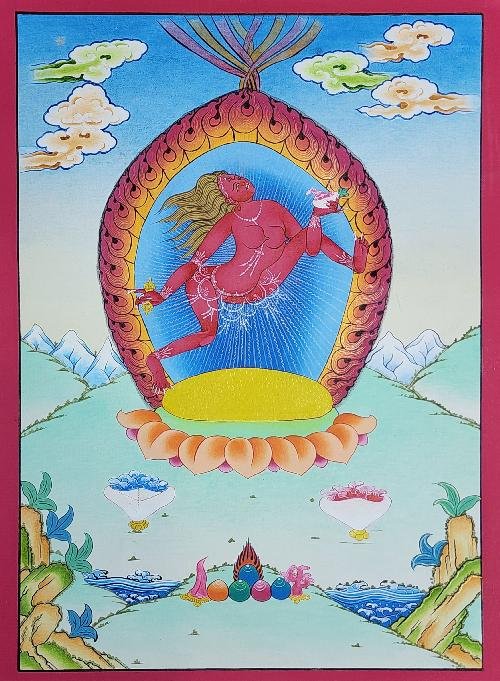
35cm Akash Yogini Thangka, Buddhist Traditional Painting, Hand Painted, Real Gold, Best Value
Weight : 0.1kg | [37161]
US$100
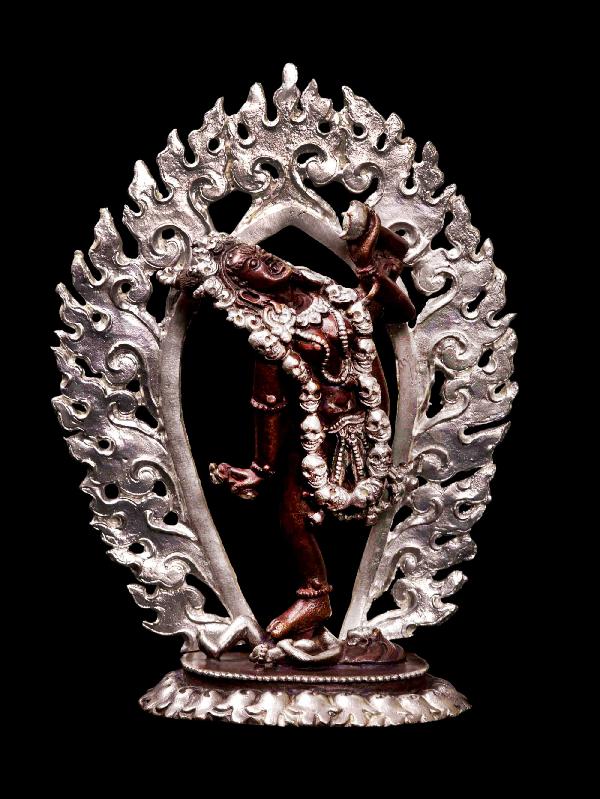
16cm Akash Yogini, Hq, Buddhist Miniature Statue, Silver And Chocolate Oxidized
Weight : 0.47kg | [36912]
US$235
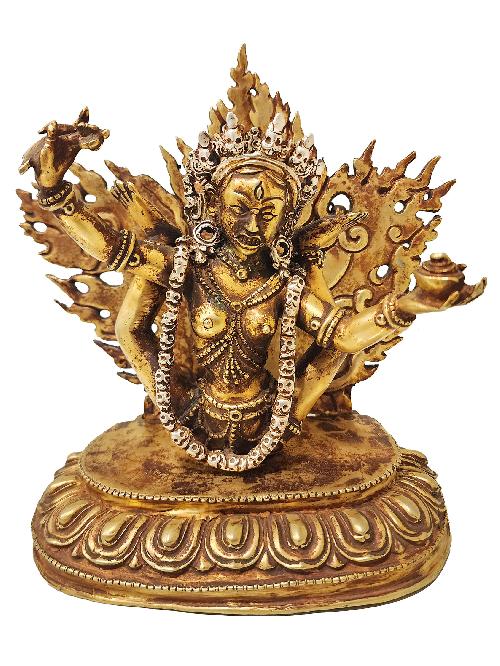
20cm Sukha Siddhi | Akash Yogini, Buddhist Handmade Statue, Full Gold Plated, Antique Finishing
Weight : 1.97kg | [36905]
US$1000
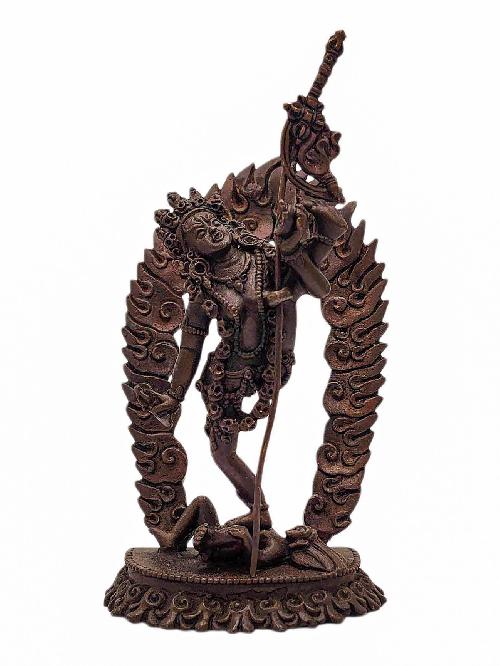
11cm Akash Yogini, Buddhist Miniature Statue, Chocolate Oxidized
Weight : 0.16kg | [35921]
US$60
US$55
You Save
US$10
(15%)
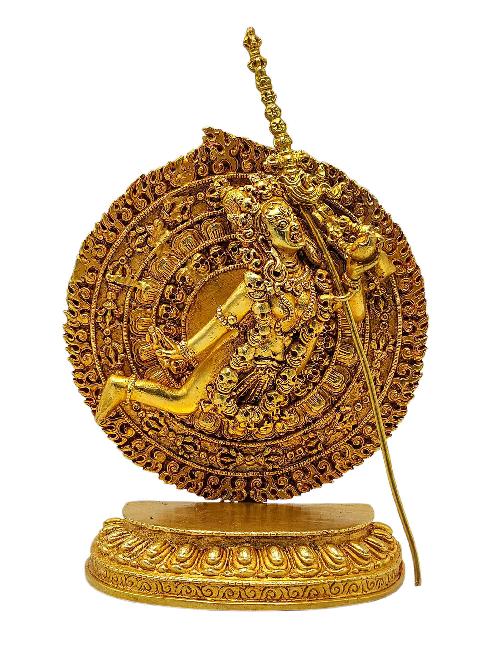
17cm Akash Yogini, Buddhist Miniature Statue, Gold Plated
Weight : 0.56kg | [35897]
US$200
US$170
You Save
US$30
(15%)
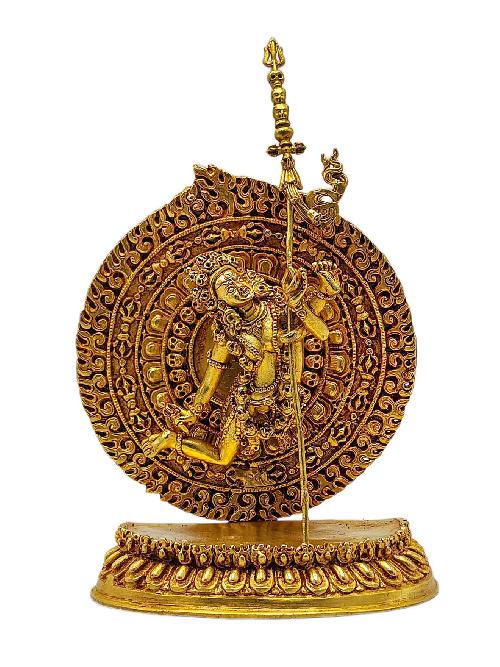
14cm Akash Yogini, Buddhist Miniature Statue, Gold Plated
Weight : 0.24kg | [35896]
US$120
US$105
You Save
US$20
(15%)
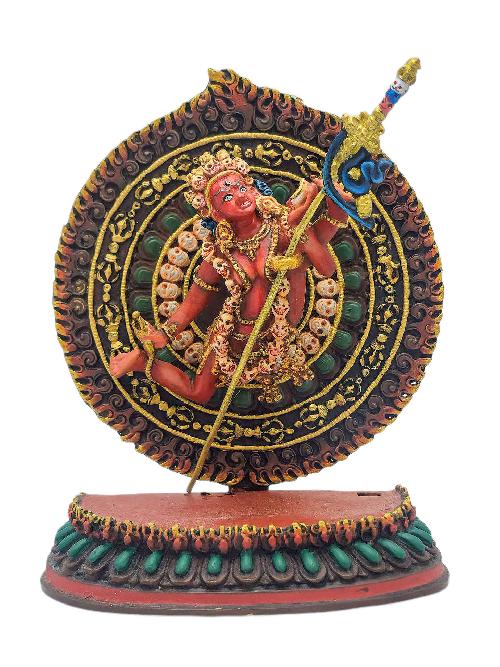
12cm Akash Yogini, Buddhist Miniature Statue, Thangka Color Finishing
Weight : 0.24kg | [35763]
US$195
US$125
You Save
US$70
(35%)

19cm Akash Yogini, Buddhist Miniature Statue, Thangka Color Finishing
Weight : 0.52kg | [35449]
US$300
US$195
You Save
US$105
(35%)

18cm Akash Yogini, Buddhist Miniature Statue, Thangka Color Finishing
Weight : 0.46kg | [35447]
US$300
US$195
You Save
US$105
(35%)

17cm + 50 Year Old Buddhist Miniature Statue Of Akash Yogini, Old Stock
Weight : 0.39kg | [35107]
US$150
US$130
You Save
US$25
(15%)
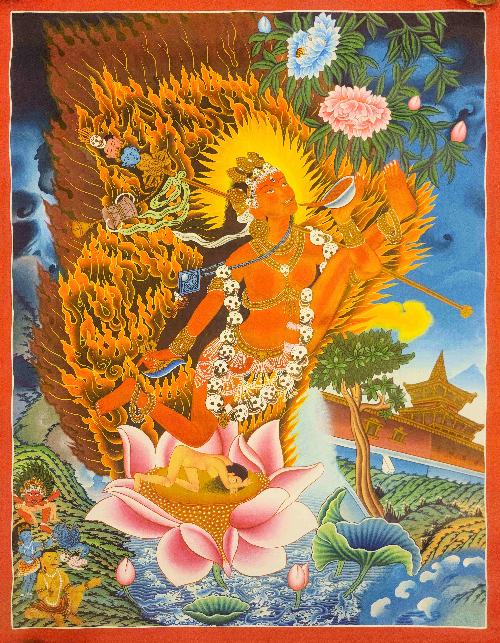
61cm Akash Yogini, Buddhist Traditional Painting, Hand Painted, Real Gold
Weight : 0.3kg | [33430]
US$1640
US$1395
You Save
US$250
(15%)
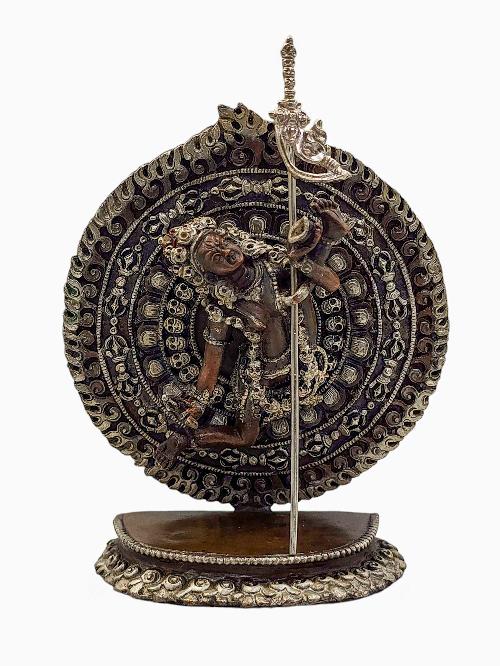
10cm Akash Yogini, Buddhist Round Miniature Statue, Chocolate Silver Plated
Weight : 0.23kg | [33341]
US$150
US$130
You Save
US$25
(15%)
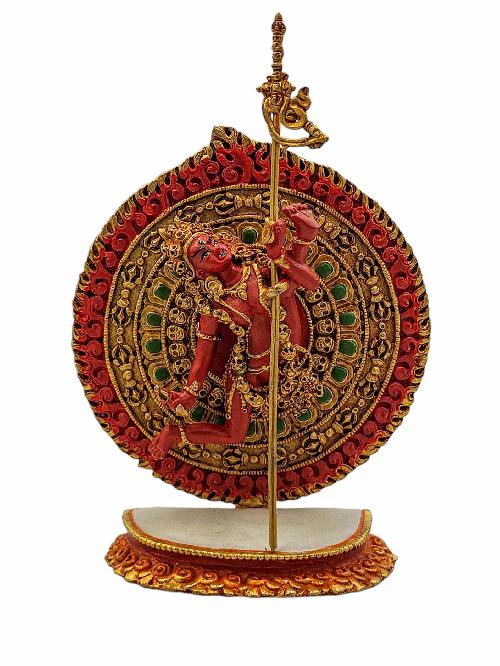
10cm Akash Yogini, Buddhist Round Miniature Statue, Partly Gold Plated
Weight : 0.22kg | [33339]
US$200
US$170
You Save
US$30
(15%)
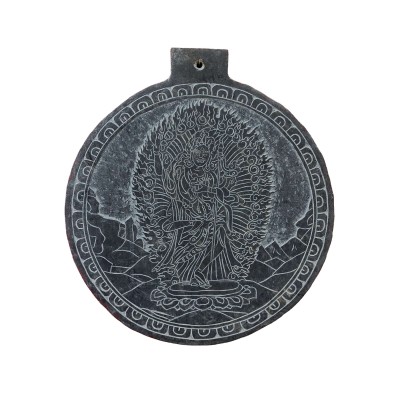
24cm Akash Yogini Carved In Stone, Slate
Weight : 0.55kg | [29112]
US$25
US$20
You Save
US$5
(20%)
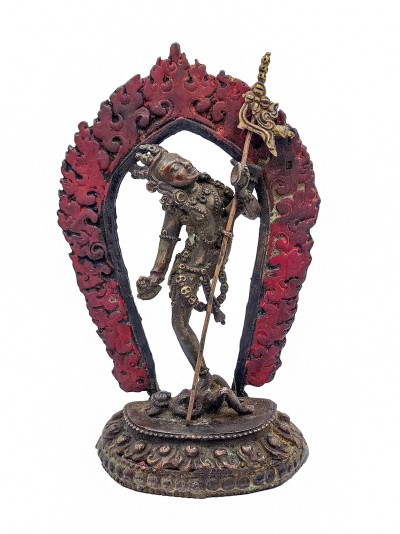
15cm Buddhist Handmade Statue Of Akash Yogini, Antique, Chocolate Oxidized
Weight : 0.3kg | [28802]
US$80
US$65
You Save
US$20
(20%)
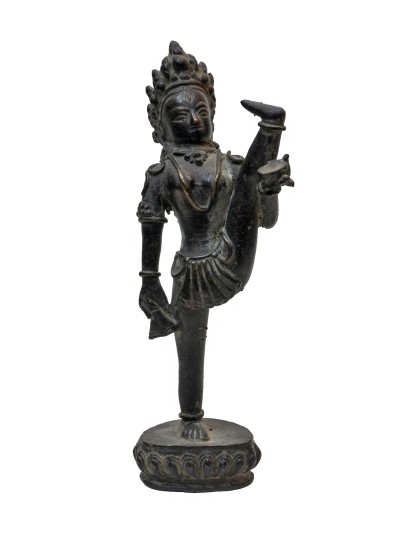
15cm Old Buddhist Handmade Statue Of Standing Akash Yogini, Antique, Old Stock
Weight : 0.29kg | [28368]
US$900
US$720
You Save
US$180
(20%)
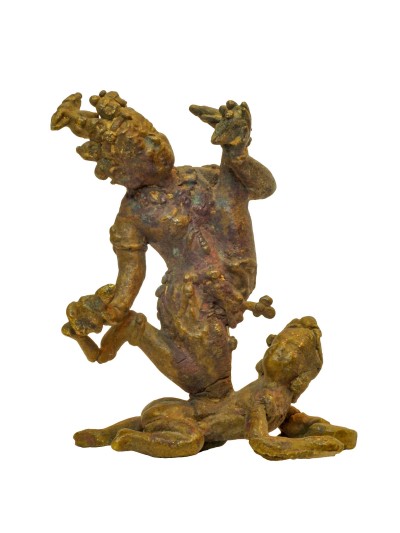
8cm Old, Buddhist Handmade Statue Of Akash Yogini, Antique, Old Stock
Weight : 0.21kg | [28090]
US$800
US$640
You Save
US$160
(20%)
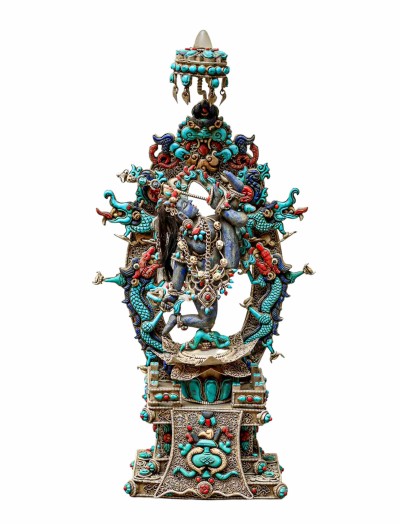
46cm Buddhist Handmade White Metal Statue Of Aakash Yogini Lapis, Real Hair And Original Stone
Weight : 2.32kg | [27250]
US$2100
US$1680
You Save
US$420
(20%)
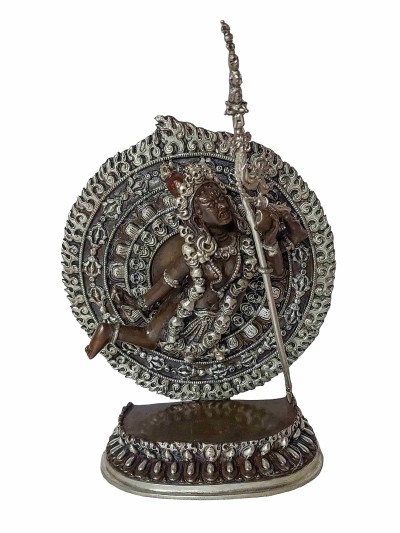
13.5cm Tibetan Buddhist Tantric Statue Of Akash Yogini, Oxidized
Weight : 0.49kg | [27080]
US$170
US$140
You Save
US$35
(20%)
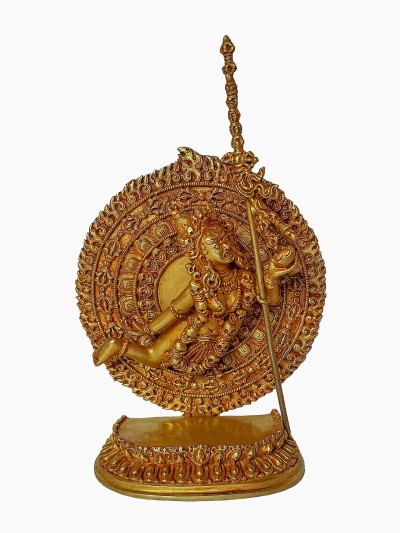
17cm Buddhist Round Miniature Statue Of Akash Yogini, Full Gold Plated
Weight : 0.49kg | [27079]
US$270
US$215
You Save
US$55
(20%)