![[vajrakilaya], Buddhist Miniature Statue, [silver And Chocolate Oxidized]](https://www.handmadeexpo.com/pics/product/33490.jpg)

![[vajrakilaya], Buddhist Miniature Statue, [silver And Chocolate Oxidized]](https://www.handmadeexpo.com/pics/product/thumb/33490.jpg)
![[vajrakilaya], Buddhist Miniature Statue, [silver And Chocolate Oxidized]](https://www.handmadeexpo.com/pics/product/thumb/33490_0.jpg)
![[vajrakilaya], Buddhist Miniature Statue, [silver And Chocolate Oxidized]](https://www.handmadeexpo.com/pics/product/thumb/33490_1.jpg)
![[vajrakilaya], Buddhist Miniature Statue, [silver And Chocolate Oxidized]](https://www.handmadeexpo.com/pics/product/thumb/33490_2.jpg)
![[vajrakilaya], Buddhist Miniature Statue, [silver And Chocolate Oxidized]](https://www.handmadeexpo.com/pics/product/thumb/33490_3.jpg)
Vajrakilaya, Buddhist Miniature Statue, Silver and Chocolate Oxidized
Silver and Chocolate Oxidized
The Vajrakilaya features a captivating combination of partly silver plating and dark oxidation. This unique finishing technique combines the lustrous shine of silver with the rich, deep tones achieved through oxidation. In the process of creating this finish, selected areas of the Vajrakilaya are expertly silver-plated, creating a radiant and reflective surface that catches the light. The remaining areas are intentionally oxidized, resulting in a darkened patina that adds depth and character to the piece. Read More . . .Ceramic Molding System
The Vajrakilaya has been crafted using the Ceramic mold casting process, a modern approach that provides an alternative to traditional methods such as the lost-wax system or rubber molding. Also referred to as ceramic molding, this technique involves the creation of a ceramic mold to cast the statue. The process begins by making a precise and detailed wax model of the desired sculpture. The wax model is then coated with layers of ceramic material, creating a sturdy mold. Once the mold is complete, it is fired in a kiln, causing the wax to melt and escape, leaving behind a cavity that perfectly replicates the original sculpture. Molten metal is then poured into the mold, allowing it to fill the cavity and take on the desired form. Once cooled and solidified, the ceramic mold is carefully broken away, revealing the final metal statue. Read More . . .Iconography :
He is a wrathful yidam deity presented in yab-yum embracing his consort Diptachakra. Vajrakila is painted dark blue with four legs, six arms, three faces. His two principal hands clasp a VajrakilayaKila. The Sanskrit word Vajrakila [Tib. Vajrakilaya] is a composite of the words Vajra here meaning diamond & Kila [Tib. Phurpa] meaning peg or short stake. The blade of the peg is a blue three-sided diamond crystal which symbolically used to free humans from the Principle Three Negative Energies [greed, hatred & delusion] by binding & then transmuting each into the three wisdom energies of love, compassion & understanding. The diamond represents incorruptibility & strength over another form. The Kila is a symbolic spiritual object rather than a weapon. The pommel of the Kila is a five-pronged vajra with each prong representing one of the five Transcendent Buddhas & the energy of lightning. Wooden Kila is favoured by shamans for healing & energetic work are often carved with the three faces of Vajrakila being one joyful, one peaceful & one wrathful. The Tibetan word for Vajra is Dorje.
Vajrakila's two top left hands both hold Vajra sceptres. The upper nine pronged [often open pronged] sceptre signifies his wrathful aspect, the smaller lower sceptre his peaceful nature. Vajrakila's top right hand is in threatening Tarjani hand gesture [Skt. mudra] with the index finger raised releasing a blaze of wisdom fire. His middle right-hand brandishes a trident [Skt. trisula] with three severed & impaled heads in deteriorating stages of decay. [The top having become a skull]. The blue head represents hatred, the redhead greed & the white skull the overriding cause of human suffering, delusion. His middle right-hand brandishes a small khartvanga trident. The staff is traditionally made of red sandalwood. The flame issuing from the middle prong [wisdom fire] symbolises the transmutation of the three principal causes of suffering into enlightened awareness. The white silk scarf depicts a funeral shroud that represents victory over the power of suffering death. He has two outstretched Garuda wings which represent his supremacy over the primordial underlying energy of the earth and her water. This subterranean energy is represented by naga serpents which the Garuda is held to have authority over. His association with primordial energy is also depicted in his horse neck, face whiskers, symbolic mane & similarity to Garuda-winged deity Hayagriva.
Diptachakra cusps a skullcap [Skt. kapala] with her left arm held upwards offering the uterine blood & entrails to Vajrakila. Together they represent the power of regeneration & renewal. She stands with her right leg extended & her left leg wrapped around Vajrakila's waist. She wears the five bone ornaments, a necklace of fifty dry skulls, and a leopard-skin dhoti [loincloth]. The skull necklace [Skt. Kapalamala] represents the female principle of emptiness & the ultimate emptiness of all phenomena. Unlike severed heads, skulls are strung with human hair. Her right arm is around Vajrakila's neck & her association with the blue lotus [Skt. Utpala] is found on Vajrakila's headpiece where there are three blue flowers. Vajrakila is draped with two flayed skins represent his power over the two sources of cyclical existence. The human skin represents his power over greed and the elephant skin his power over delusion. His consort wears the tiger skin representing her power over the third of the three original causes of suffering being hatred.
The necklace of severed heads [Skt. mundamala] strung with intestines is the male principle representing the physical world of form. The intestines [Skt. antra] represent the transitory & illusory nature of phenomena. Foodstuffs in the intestines are transformed into excrement and although nutrition is gained the iconography here alludes to the understanding of transition. The Yab-yum deities trample the bodies of Rudra & his consort Khrodhishvari, who lie prone upon a sun disc. His three faces painted white, blue & red symbolise Vajrakila's destruction of the Three Primary Poisons [greed, hatred & delusion]. His twisted earrings, bracelets anklets are rendered from serpents [Skt. nagas] & with the green stoles symbolise them. The wooden horseshoe object around his neck is a sorcerer's gong [Skt. Ghandi] made of white sandalwood & traditionally supported on the shoulder. The sound of this magical gong is reputed to terrify the Maras. The blue-flowered pattern between the end gold bosses symbolise gateways that conceal all the Vedic Gods & the Asuras with the power & energy which Vajrakila wields.
Commentary :
Mantra of Vajrakilaya
You may also want to read the related articles :
Service of Filling and blessing in Statue | Altering Finishing in StatueAt Handmade Statue, we aim to provide a seamless and user-friendly experience. While our website is not a direct online shopping platform, we have a shopping cart system to make submitting your inquiries easy. Follow these steps to place your order:
Step 1: Browse Our Products
Explore our website to discover a wide range of authentic Nepali handicrafts, including statues, thangkas, singing bowls, wood carvings, jewelry, and more. Click on any product to view detailed descriptions and images.
Step 2: Add Items to Your Inquiry Cart
Click the “Add to Inquiry Cart” button for each product you are interested in. This will help you organize your selections conveniently.
Step 3: Review Your Inquiry Cart
Once you’ve added all your items, review your cart to ensure accuracy before submitting your inquiry.
Step 4: Submit Your Inquiry
Click the “Submit Inquiry” button. Fill out the form with your contact details, selected products, and any specific questions or customization requests.
Step 5: Communicate via Email
Since we don’t have an automated payment system, our team will respond to your inquiry via email. We’ll provide guidance, answer questions, and assist with customization requests.
Step 6: Finalize Your Order
Confirm all product details and customization options with our team. Once everything is finalized, we will provide secure payment instructions.
Step 7: Complete Your Payment
Make the payment through the provided method. After confirmation, we will process and prepare your order for shipment.
Step 8: Shipping and Delivery
We offer worldwide shipping. Once your order is dispatched, we will provide tracking details and shipping information.
Step 9: Receive and Enjoy Your Handicrafts
Unpack your beautiful handmade Nepali products and enjoy the craftsmanship and cultural heritage of Nepal.
Need Assistance?
If you face any issues or have questions while placing your order, contact us via email or mobile communication apps. Our team is dedicated to providing prompt support and a smooth ordering experience.
We hope this straightforward ordering process ensures a delightful and satisfying experience with Handmade Statue. Thank you for choosing us to connect you with the rich heritage of Nepali handicrafts.
Return Policy
We have a 7 days money back policy but buyer have to pay the return shipping charges.
Shipping
- Shipping cost is calculated, based on the shipping weight of the products ordered. THe normal Shipping cost is US$25 for upto 0.5 kgs weight
- We ship Worldwide, Except Russia and India.
- The deliver duration varies for international Shipping location. We normally dispatch the product in 2 -3 business days. Else Buyer will be infromed Personally about the shipping.
Related Products
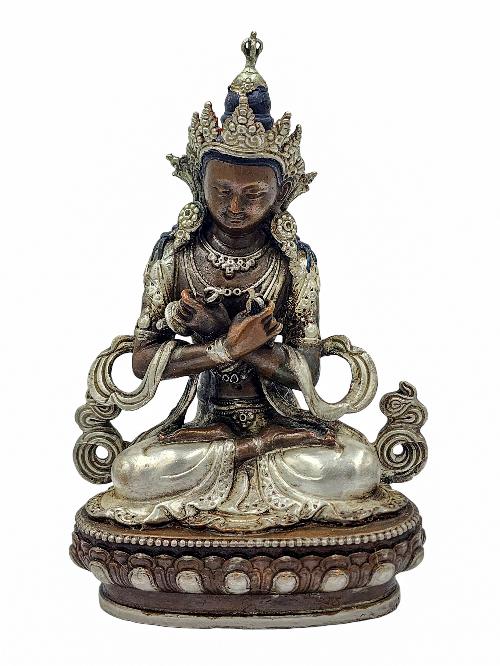
11cm Vajradhara, Buddhist Miniature Statue, Silver And Chocolate Oxidized
Weight : 0.23kg | [30166]
US$175
US$140
You Save
US$35
(20%)
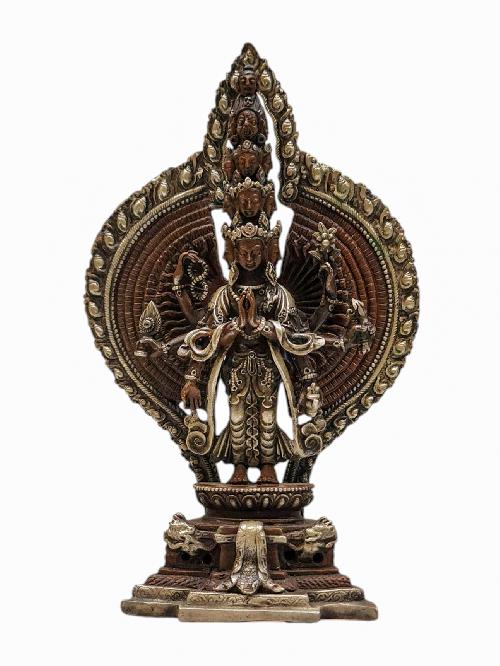
15cm Sahasrabhuja Avalokitesvara, Buddhist Miniature Statue, Silver And Chocolate Oxidized
Weight : 0.26kg | [34221]
US$165
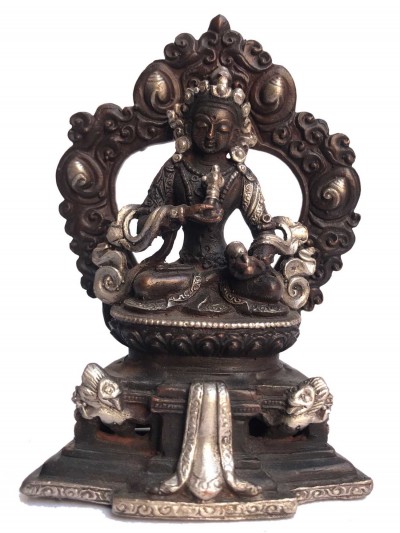
8.5cm Tibetan Statue Of Vajrasattva, On Throne, Silver Plated Oxidized
Weight : 0.14kg | [17102]
US$30
US$25
You Save
US$5
(20%)
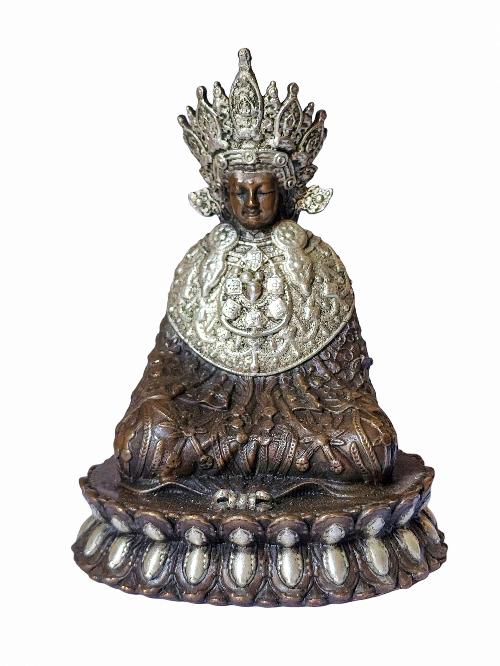
11cm Dipankara Buddha, Buddhist Miniature Statue, Silver And Chocolate Oxidized, With Carving, Musem Copy
Weight : 0.26kg | [30493]
US$165
US$130
You Save
US$35
(20%)
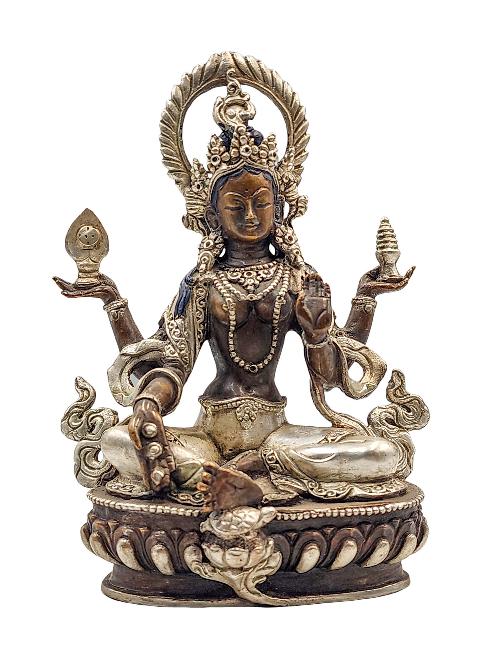
15cm Lakshmi, Hindu Statue, Silver And Chocolate Oxidized
Weight : 0.73kg | [31428]
US$215
US$170
You Save
US$45
(20%)
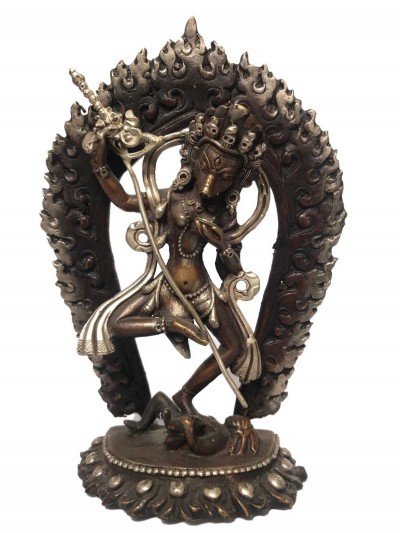
13cm Tibetan Statue Of Simhamukha Yogini, Senge Dongma, Silver Plated Oxidized
Weight : 0.28kg | [17137]
US$60
US$50
You Save
US$10
(20%)
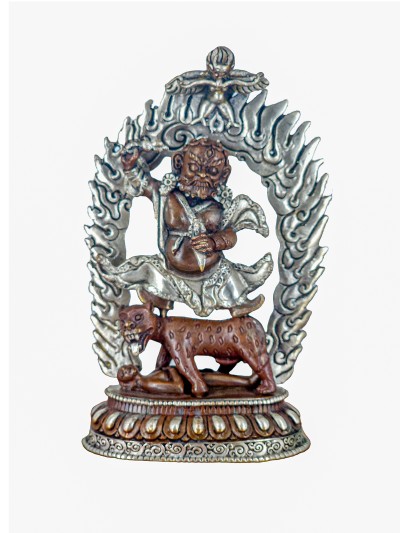
15cm Buddhist Miniature Handmade Statue Of Dorje Drolo, Silver And Chocolate Oxidized
Weight : 0.36kg | [27343]
US$140
US$115
You Save
US$25
(20%)
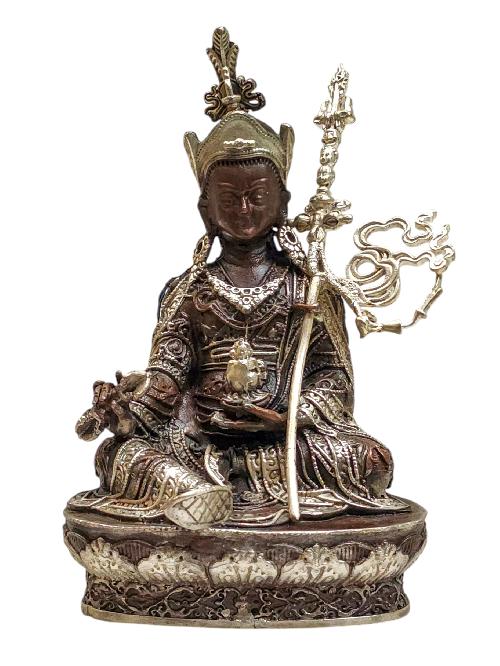
9cm Padmasambhava, Buddhist Miniature Statue, Silver And Chocolate Oxidized
Weight : 0.17kg | [34228]
US$115