![[tsongkhapa], Buddhist Miniature Statue, [full Gold Plated Finish], [hand Painted Face]](https://www.handmadeexpo.com/pics/product/37174.jpg)

![[tsongkhapa], Buddhist Miniature Statue, [full Gold Plated Finish], [hand Painted Face]](https://www.handmadeexpo.com/pics/product/thumb/37174.jpg)
![[tsongkhapa], Buddhist Miniature Statue, [full Gold Plated Finish], [hand Painted Face]](https://www.handmadeexpo.com/pics/product/thumb/37174_0.jpg)
![[tsongkhapa], Buddhist Miniature Statue, [full Gold Plated Finish], [hand Painted Face]](https://www.handmadeexpo.com/pics/product/thumb/37174_1.jpg)
![[tsongkhapa], Buddhist Miniature Statue, [full Gold Plated Finish], [hand Painted Face]](https://www.handmadeexpo.com/pics/product/thumb/37174_2.jpg)
![[tsongkhapa], Buddhist Miniature Statue, [full Gold Plated Finish], [hand Painted Face]](https://www.handmadeexpo.com/pics/product/thumb/37174_3.jpg)
Tsongkhapa, Buddhist Miniature Statue, Full Gold Plated Finish, Hand Painted Face
Tsongkhapa
In his two main treatises, the Lamrim Chenmo (Wylie: lam rim chen mo) and Ngakrim Chenmo (Wylie: sngags rim chen mo), Tsongkhapa meticulously sets forth this graduated way and how one establishes oneself in the paths of sutra and tantra.
Gold Painted Face
The face of Tsongkhapa is painted with gold to enhance its significant features, particularly the eyes, and lips. This detailed painting is essential as it brings forth the crucial attributes of the expression of eyes and lips that metal carving alone cannot capture.Moreover, the painted face serves as a symbolic and sacred ritual in Buddhism, preparing the statue for consecration and practice. The act of painting the face with gold in Buddhism holds deep meaning. It represents the intention to bring life and expression to the statue, imbuing it with a sense of vitality and presence. The application of gold on the face showcases the devotion and craftsmanship of the artisans, ensuring that every detail is carefully attended to honor the sacred essence of the Tsongkhapa. Read More . . .
About Elector Gold Plating
The Tsongkhapa has been crafted using the ceramic mold casting process, a modern approach that provides an alternative to traditional methods such as the lost-wax system or rubber molding. Also referred to as ceramic molding, this technique involves the creation of a ceramic mold to cast the statue. The process begins by making a precise and detailed wax model of the desired sculpture. The wax model is then coated with layers of ceramic material, creating a sturdy mold. Once the mold is complete, it is fired in a kiln, causing the wax to melt and escape, leaving behind a cavity that perfectly replicates the original sculpture. Molten metal is then poured into the mold, allowing it to fill the cavity and take on the desired form. Once cooled and solidified, the ceramic mold is carefully broken away, revealing the final metal statue. Read More . . .Ceramic Molding System
The Tsongkhapa has been crafted using the Ceramic mold casting process, a modern approach that provides an alternative to traditional methods such as the lost-wax system or rubber molding. Also referred to as ceramic molding, this technique involves the creation of a ceramic mold to cast the statue. The process begins by making a precise and detailed wax model of the desired sculpture. The wax model is then coated with layers of ceramic material, creating a sturdy mold. Once the mold is complete, it is fired in a kiln, causing the wax to melt and escape, leaving behind a cavity that perfectly replicates the original sculpture. Molten metal is then poured into the mold, allowing it to fill the cavity and take on the desired form. Once cooled and solidified, the ceramic mold is carefully broken away, revealing the final metal statue. Read More . . .Life History :
With a Mongolian father and a Tibetan mother, Tsongkhapa was born into a nomadic family in the walled city of Tsongkhapa in Amdo, Tibet (present-day Haidong and Xining, Qinghai) in 1357. It is said that the Buddha Sakyamuni spoke of his coming as an emanation of the Bodhisattva Manjusri in the short verse from the Root Tantra of Manjushri (Wylie: 'jam dpal rtsa rgyud):
After I pass away
And my pure doctrine is absent,
You will appear as an ordinary being,
Performing the deeds of a Buddha
And establishing the Joyful Land, the great Protector,
In the Land of the Snows.
According to hagiographic accounts, Tsongkhapa's birth was prophesied by the 12th abbot of the Snar thang monastery and was recognized as such at a young age, taking the lay vows at the age of three before Rolpe Dorje, 4th Karmapa Lama, and was named K?nga Nyingpo (Wylie: kun dga' snying po). At the age of seven, he was ordained as a ?r?ma?era by D?ndrup Rinchen (Wylie: don grub rin chen, 1309?1385), the first abbott of Jakhyung Monastery (Wylie: bya khyung brag), and was given the ordination name Losang Drakpa (Wylie: blo bzang grags pa).
<strong>Monastic career</strong>
It was at this early age that he was able to receive the empowerments of Heruka, Hevajra, and Yamantaka, three of the most prominent wrathful deities of Tibetan Buddhism, as well as being able to recite a great many Sutras, not the least of which was Ma?ju?r?n?masamg?ti. He would go on to be a great student of the Vinaya, the doctrine of behavior, and even later of the Six Yogas of Naropa, the Kalachakra tantra, and the practice of Mahamudra. At the age of 24, he received full ordination as a monk of the Sakya school.
From Zh?nnu Lodr? (Wylie: gzhon nu blo gros) and Rendawa (Wylie: red mda' pa), he received the lineage of the Pramanavarttika transmitted by Sakya Pandita. He mastered all the courses of study at Drigung kagyud Monastery in ?-Tsang.
As an emanation of Manjusri, Tsongkhapa is said to have been of "one mind" with Ati?a, received the Kadam lineages and studied the major Sarma tantras under Sakya and Kagyu masters. He also studied with a Nyingma teacher, the siddha Lek gyi Dorj? (Wylie: legs gyi rdo rje) and the abbot of Shalu Monastery, Ch? kyi Pel (Wylie: zhwa lus pa chos kyi dpal), and his main Dzogchen master was Drupchen Lekyi Dorje (Wylie: grub chen las kyi rdo je), also known as Namkha Gyaltsen (Wylie: nam mkha' rgyal mtshan, 1326?1401).
In addition to his studies, he engaged in extensive meditation retreats. He is reputed to have performed millions of prostrations, mandala offerings, and other forms of purification practice. Tsongkhapa often had visions of i??adevat?s, especially of Manjusri, with whom he would communicate directly to clarify difficult points of the scriptures.
<strong>Monastic career</strong>
It was at this early age that he was able to receive the empowerments of Heruka, Hevajra, and Yamantaka, three of the most prominent wrathful deities of Tibetan Buddhism, as well as being able to recite a great many Sutras, not the least of which was Ma?ju?r?n?masamg?ti. He would go on to be a great student of the vinaya, the doctrine of behaviour, and even later of the Six Yogas of Naropa, the Kalachakra tantra, and the practice of Mahamudra. At the age of 24, he received full ordination as a monk of the Sakya school.
From Zh?nnu Lodr? (Wylie: gzhon nu blo gros) and Rendawa (Wylie: red mda' pa), he received the lineage of the Pramanavarttika transmitted by Sakya Pandita. He mastered all the courses of study at Drigung kagyud Monastery in ?-Tsang.
As an emanation of Manjusri, Tsongkhapa is said have been of "one mind" with Ati?a, received the Kadam lineages and studied the major Sarma tantras under Sakya and Kagyu masters. He also studied with a Nyingma teacher, the siddha Lek gyi Dorj? (Wylie: legs gyi rdo rje) and the abbot of Shalu Monastery, Ch? kyi Pel (Wylie: zhwa lus pa chos kyi dpal), and his main Dzogchen master was Drupchen Lekyi Dorje (Wylie: grub chen las kyi rdo je), also known as Namkha Gyaltsen (Wylie: nam mkha' rgyal mtshan, 1326?1401).
In addition to his studies, he engaged in extensive meditation retreats. He is reputed to have performed millions of prostrations, mandala offerings and other forms of purification practice. Tsongkhapa often had visions of i??adevat?s, especially of Manjusri, with whom he would communicate directly to clarify difficult points of the scriptures.
<strong>Death</strong>
Tsongkhapa died in 1419 at the age of sixty-two. After his death several biographies were written by Lamas of different traditions. Wangchuk Dorje, 9th Karmapa Lama, praised Tsongkhapa as one "who swept away wrong views with the correct and perfect ones." Miky? Dorje, 8th Karmapa Lama, wrote in his poem In Praise of the Incomparable Tsong Khapa:
When the teachings of the Sakya, Kagyue, Kadam
And Nyingma sects in Tibet were declining,
You, O Tsong Khapa, revived Buddha's Doctrine,
Hence I sing this praise to you of Ganden Mountain.
You may also want to read the related articles :
Service of Filling and blessing in Statue | Altering Finishing in StatueAt Handmade Statue, we aim to provide a seamless and user-friendly experience. While our website is not a direct online shopping platform, we have a shopping cart system to make submitting your inquiries easy. Follow these steps to place your order:
Step 1: Browse Our Products
Explore our website to discover a wide range of authentic Nepali handicrafts, including statues, thangkas, singing bowls, wood carvings, jewelry, and more. Click on any product to view detailed descriptions and images.
Step 2: Add Items to Your Inquiry Cart
Click the “Add to Inquiry Cart” button for each product you are interested in. This will help you organize your selections conveniently.
Step 3: Review Your Inquiry Cart
Once you’ve added all your items, review your cart to ensure accuracy before submitting your inquiry.
Step 4: Submit Your Inquiry
Click the “Submit Inquiry” button. Fill out the form with your contact details, selected products, and any specific questions or customization requests.
Step 5: Communicate via Email
Since we don’t have an automated payment system, our team will respond to your inquiry via email. We’ll provide guidance, answer questions, and assist with customization requests.
Step 6: Finalize Your Order
Confirm all product details and customization options with our team. Once everything is finalized, we will provide secure payment instructions.
Step 7: Complete Your Payment
Make the payment through the provided method. After confirmation, we will process and prepare your order for shipment.
Step 8: Shipping and Delivery
We offer worldwide shipping. Once your order is dispatched, we will provide tracking details and shipping information.
Step 9: Receive and Enjoy Your Handicrafts
Unpack your beautiful handmade Nepali products and enjoy the craftsmanship and cultural heritage of Nepal.
Need Assistance?
If you face any issues or have questions while placing your order, contact us via email or mobile communication apps. Our team is dedicated to providing prompt support and a smooth ordering experience.
We hope this straightforward ordering process ensures a delightful and satisfying experience with Handmade Statue. Thank you for choosing us to connect you with the rich heritage of Nepali handicrafts.
Return Policy
We have a 7 days money back policy but buyer have to pay the return shipping charges.
Shipping
- Shipping cost is calculated, based on the shipping weight of the products ordered. THe normal Shipping cost is US$25 for upto 0.5 kgs weight
- We ship Worldwide, Except Russia and India.
- The deliver duration varies for international Shipping location. We normally dispatch the product in 2 -3 business days. Else Buyer will be infromed Personally about the shipping.
Related Products
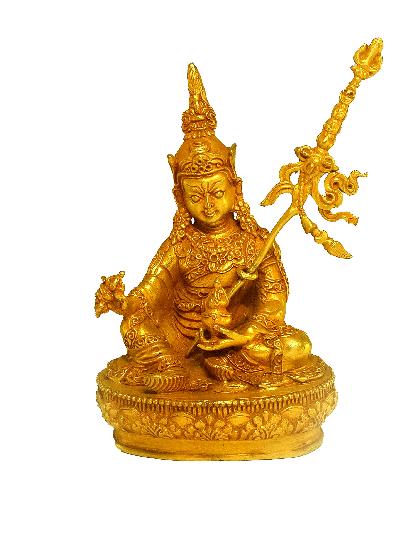
15cm Nepali Small Statue Of Padmasambhava Full Gold Plated
Weight : 0.34kg | [22017]
US$100
US$80
You Save
US$20
(20%)

17cm Manjushri Buddhist Miniature Statue, Gold Plated, Face Painted
Weight : 0.61kg | [35367]
US$215
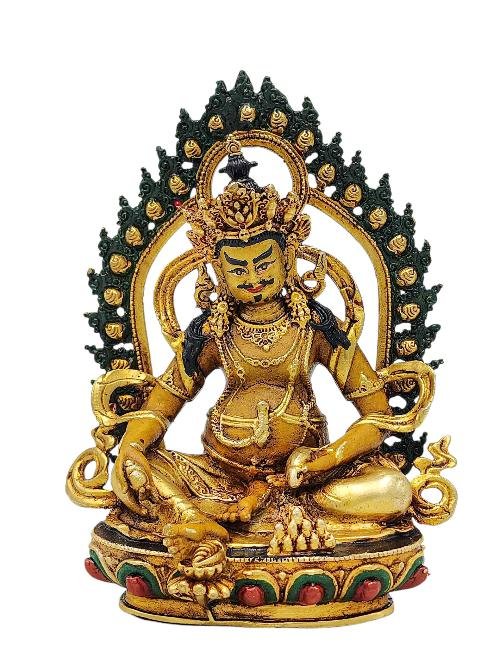
11cm Yellow Jambhala, Buddhist Miniature Statue, Partly Gold Plated Finish, Thangka Color Finish, Hand Painted Face
Weight : 0.25kg | [37193]
US$130
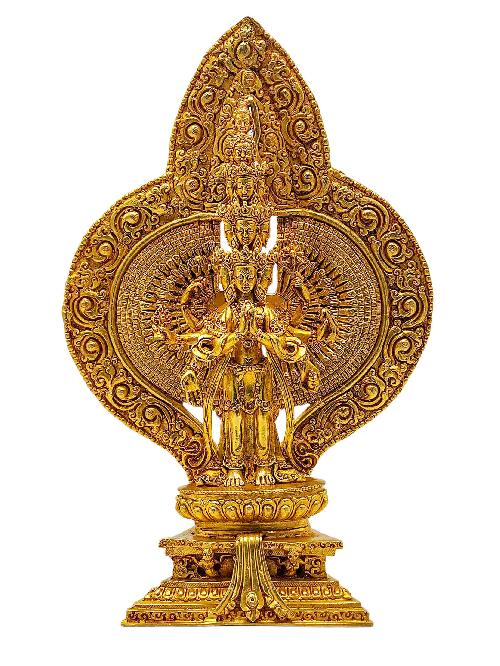
23cm Standing1000 Arm Lokeshvara, Sahasrabhuja Avalokitesvara. Buddhist Miniature Statue, Full Gold Plated
Weight : 0.85kg | [35884]
US$300
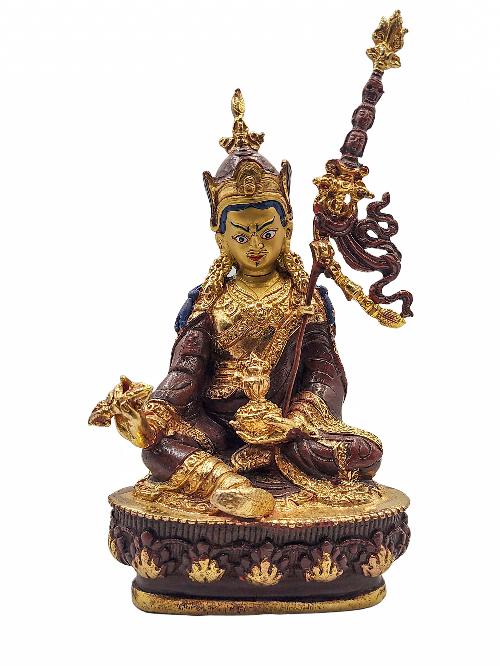
15.5cm Padmasambhava, Buddhist Miniature Statue, Partly Gold Plated, Face Painted
Weight : 0.65kg | [31438]
US$300
US$240
You Save
US$60
(20%)
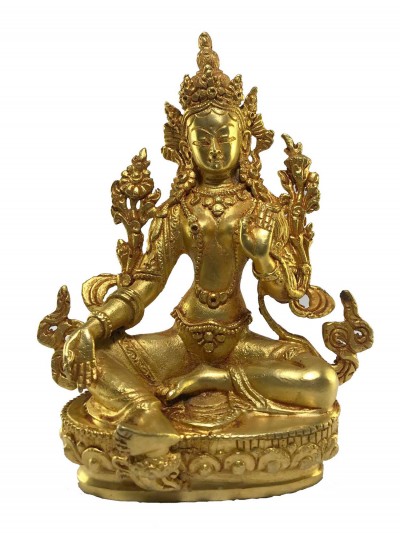
14cm Statue Of Green Tara Full Gold Plated
Weight : 0.57kg | [16282]
US$130
US$105
You Save
US$25
(20%)
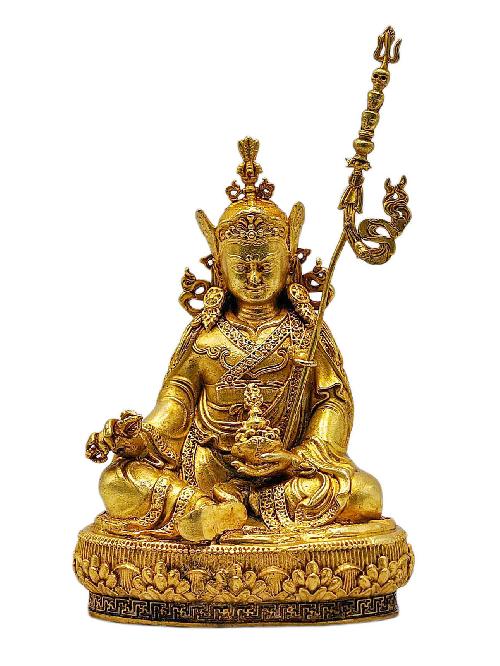
11cm Hq, Padmasambhava. Buddhist Miniature Statue, Gold Plated
Weight : 0.25kg | [35880]
US$180
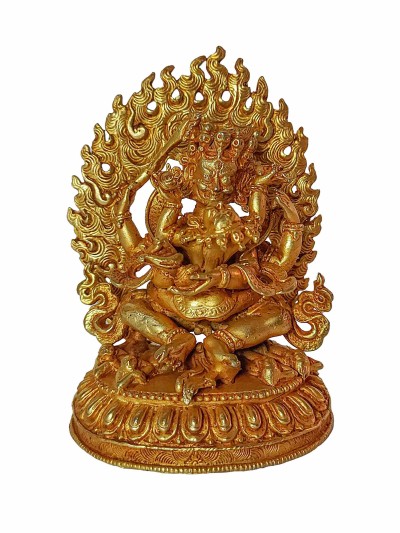
8cm Statue Of Sitting Four Arm Mahakala With Consort With Consort, Shakti, Yab-yum Full Fire Gold Plated
Weight : 0.25kg | [27065]
US$100
US$80
You Save
US$20
(20%)