![Tibetan Thangka Of Manjushri,traditional Color, [using Real Gold], With [chenrezig And Vajrapani [chana Dorje]]](https://www.handmadeexpo.com/pics/product/17550.jpg)

![Tibetan Thangka Of Manjushri,traditional Color, [using Real Gold], With [chenrezig And Vajrapani [chana Dorje]]](https://www.handmadeexpo.com/pics/product/thumb/17550.jpg)
![Tibetan Thangka Of Manjushri,traditional Color, [using Real Gold], With [chenrezig And Vajrapani [chana Dorje]]](https://www.handmadeexpo.com/pics/product/thumb/17550_0.jpg)
![Tibetan Thangka Of Manjushri,traditional Color, [using Real Gold], With [chenrezig And Vajrapani [chana Dorje]]](https://www.handmadeexpo.com/pics/product/thumb/17550_1.jpg)
![Tibetan Thangka Of Manjushri,traditional Color, [using Real Gold], With [chenrezig And Vajrapani [chana Dorje]]](https://www.handmadeexpo.com/pics/product/thumb/17550_2.jpg)
![Tibetan Thangka Of Manjushri,traditional Color, [using Real Gold], With [chenrezig And Vajrapani [chana Dorje]]](https://www.handmadeexpo.com/pics/product/thumb/17550_3.jpg)
![Tibetan Thangka Of Manjushri,traditional Color, [using Real Gold], With [chenrezig And Vajrapani [chana Dorje]]](https://www.handmadeexpo.com/pics/product/thumb/17550_4.jpg)
![Tibetan Thangka Of Manjushri,traditional Color, [using Real Gold], With [chenrezig And Vajrapani [chana Dorje]]](https://www.handmadeexpo.com/pics/product/thumb/17550_5.jpg)
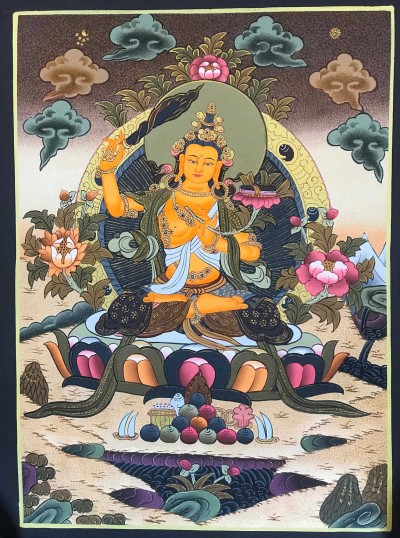
Tibetan Thangka of Manjushri,traditional Color, Using Real Gold, with Chenrezig and Vajrapani Chana Dorje
Jampelyang
In the vast tapestry of Mahayana Buddhism, few figures resonate as deeply with seekers of truth as Manjushri. Revered as the Bodhisattva of Wisdom, he embodies prajnaâthe transcendent insight required to pierce through the illusions of reality and attain ultimate liberation. Whether you are a secular student of mindfulness, an art enthusiast fascinated by Himalayan iconography, or a dedicated practitioner of Vajrayana Buddhism, understanding Manjushri offers a powerful gateway into the heart of Buddhist philosophy.
Wisdom in Buddhism is not merely intellectual knowledge or academic cleverness. Instead, it is the direct, experiential understanding of emptiness (shunyata) and the interconnected nature of all things. As a primary archetype of this profound clarity, Manjushri serves as an eternal reminder that the ultimate tool for overcoming human suffering is a sharp, awakened mind.
Use of Real Gold
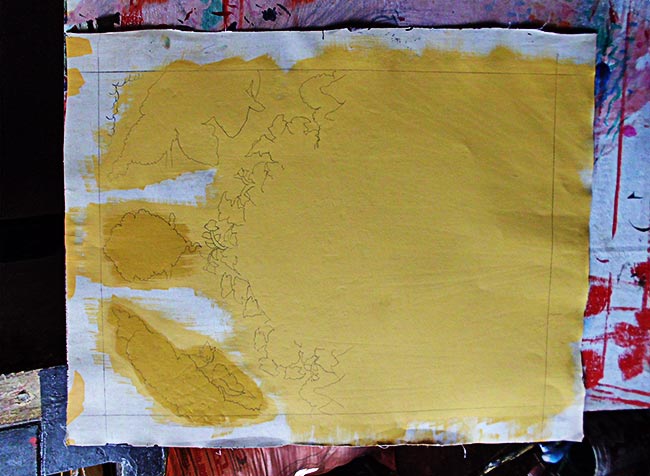
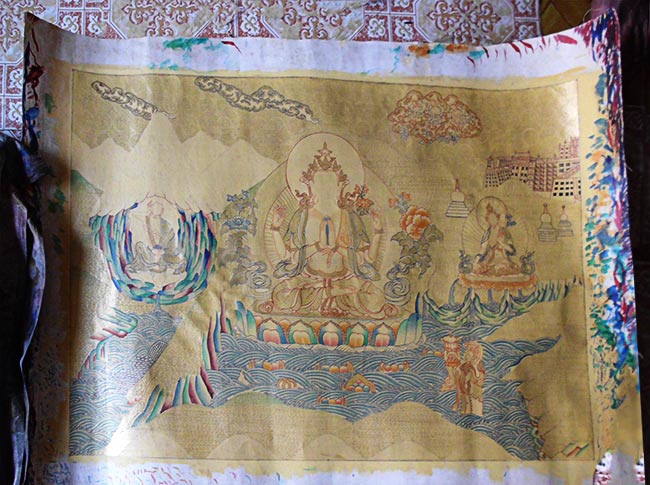
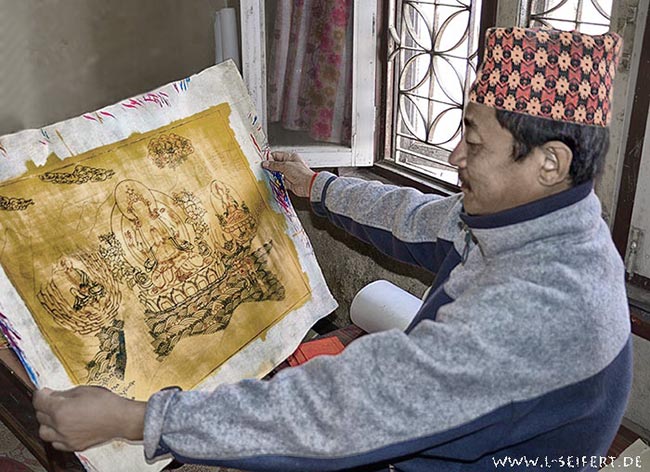
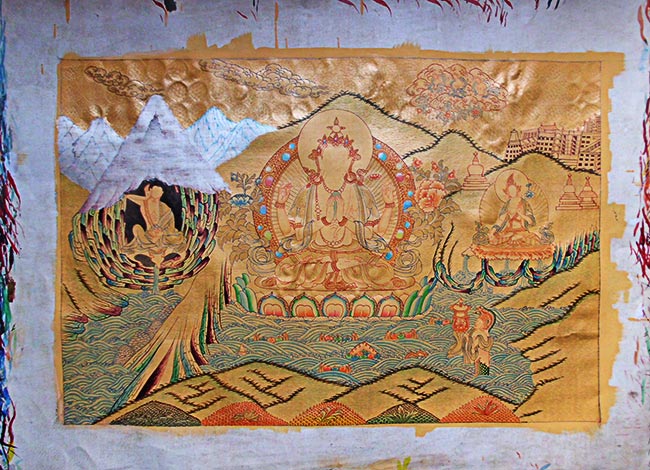
This thangka of Manjushri has real gold painted on its surface along with other paints. This is an ancient process of decorating the thangka in Tibetan Buddhism, Here gold is ground into gold dust, which is then mixed with other undisclosed material to make it paintable on the canvas. this mixture is then mixed with transparent glue and painted on the thangka. Read More . . .Introduction to Thangka
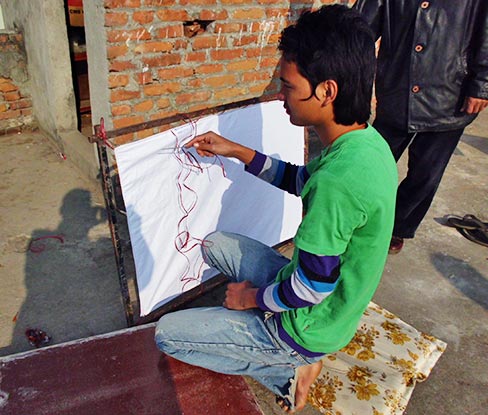
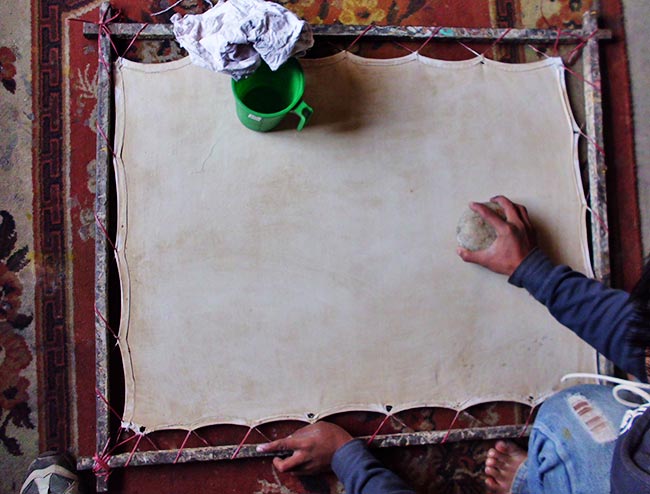
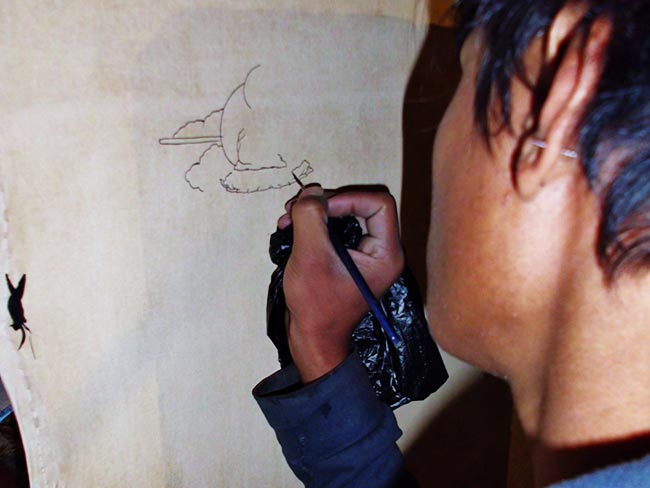
A thangka, also known as tangka, thanka, or tanka, is a vibrant and intricate Tibetan Buddhist painting that serves as a visual representation of spiritual teachings. Crafted with meticulous detail on cotton or silk appliqu?, thangkas depict a wide range of subjects including Buddhist deities, sacred scenes, mandalas, and narrative stories. These sacred artworks are traditionally kept unframed and rolled up for storage, resembling ancient scrolls. To protect their delicate nature, thangkas are mounted on textile backings and often adorned with a silk cover on the front. Proper preservation in dry environments is crucial to maintain the integrity and longevity of the silk. Read More . . .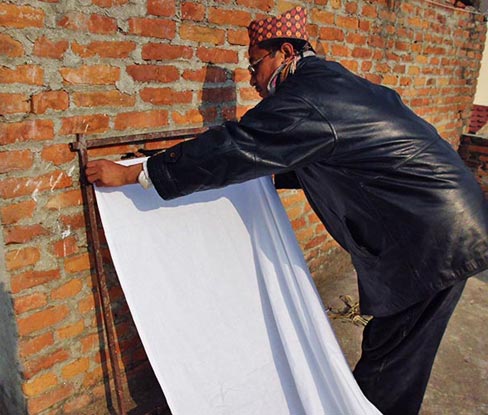
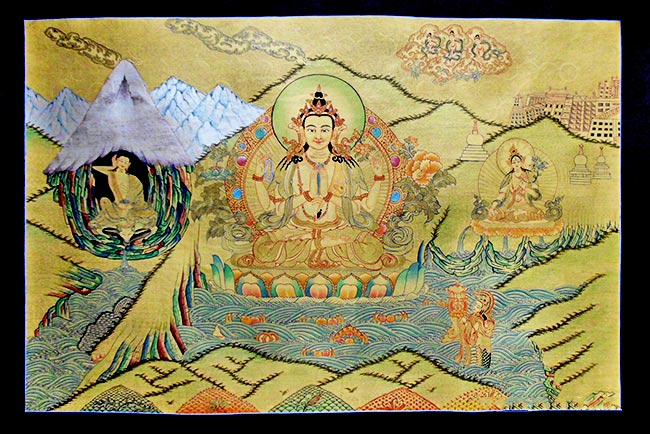
Who Is Manjushri? :
The name Manjushri translates from Sanskrit as "Gentle Glory," "Charming Splendor," or "Sweet Voice" (Manju meaning sweet or gentle, and Shri meaning glory or auspiciousness). Within the Mahayana pantheon, he is recognized as one of the oldest and most significant Bodhisattvas. A Bodhisattva is an awakened being who, out of infinite compassion, postpones their own final entry into Nirvana to remain in the cycle of rebirth and help all sentient beings achieve enlightenment.
While historical records suggest his veneration began emerging in texts around the 1st century BCE, spiritual traditions view Manjushri as an eternal, primordial presence. In several sutras (sacred discourses), he is actually described as having already attained full Buddhahood in a cosmic realm far in the past. He chooses to manifest as a Bodhisattva to act as the "master of wisdom" for disciples, even serving as a spiritual guide to historical Buddhas, including Shakyamuni Buddha.
The Meaning and Symbolism of Manjushri
Every element of Manjushriâs appearance is an externalized map of an internal psychological state. He represents the union of profound intellect, untamed spiritual power, and a heart completely open to the suffering of the world.
In Buddhist psychology, ignorance (avidya) is the root cause of all suffering, anger, and attachment. We suffer because we misperceive the world, viewing transient things as permanent and separate from us. Manjushri represents the antidote to this basic ignorance. His symbolic presence teaches us to cultivate discriminationâthe ability to tell the difference between the relative truths of daily life and the ultimate truth of reality.
Manjushri in Mahayana and Tibetan Buddhism
Manjushri occupies a position of supreme honor across various schools of Asian Buddhism, though his role evolves uniquely within each tradition.
Mahayana Core Sutras: In foundational texts like the Vimalakirti Nirdesa Sutra and the Lotus Sutra, Manjushri is the only disciple with the intellectual and spiritual weight to debate Vimalakirti, the famously enlightened layman. Here, he represents the peak of philosophical dialogue and uncompromising truth.
Zen and Chan Traditions: In Zen meditation halls (dokusan or zendo rooms), a statue of Manjushri (often riding a lion) frequently sits at the center. Zen practitioners look to him as the embodiment of sudden, sharp insight that cuts through the tangles of rational thinking during zazen (seated meditation).
Tibetan Buddhism (Vajrayana): In the Tibetan tradition, Manjushri is classified alongside Avalokiteshvara (the Bodhisattva of Compassion) and Vajrapani (the Bodhisattva of Power) to form the Three Family Protectors. Together, they represent the three essential qualities of an enlightened mind: wisdom, compassion, and spiritual strength. Tibetan lineages trace the incarnations of highly realized teachersâsuch as Lama Tsongkhapa, the founder of the Gelug schoolâdirectly back to Manjushri's mindstream.
Manjushri Iconography :
Buddhist sacred art, particularly Tibetan Thangka painting and classical sculpture, uses visual archetypes to communicate subtle philosophical concepts. When you look at a traditional representation of Manjushri, your eyes are immediately drawn to a youthful prince radiant with golden-yellow light.
The Flaming Sword of Wisdom
The most iconic attribute held by Manjushri is the double-edged, flaming sword raised high in his right hand. This is the Khadga, the sword of wisdom.
The Double Edge: Represents the dual ability to cut away internal defilements (like greed, anger, and delusion) while simultaneously cutting through external illusions and false philosophies.
The Flames: Symbolize the warmth of wisdom that consumes the cold darkness of ignorance, illuminating the true nature of reality.
The Lotus and Prajnaparamita Sutra
In his left hand, or resting on a magnificent lotus blossom blooming at his shoulder, Manjushri holds a sacred text: the Prajnaparamita Sutra (The Perfection of Wisdom Sutra). This collection of texts forms the philosophical bedrock of Mahayana Buddhism, outlining the profound doctrine of emptiness.
Holding the text close to his heart shows that true wisdom is grounded in sacred realization, study, and the cultivation of an unshakeable inner truth. The lotus flower itself symbolizes purity; just as a lotus grows from muddy water but remains unstained by dirt, the wisdom of a Bodhisattva operates within the messy realities of the world without being corrupted by it.
Manjushri's Posture and Appearance
Manjushri is almost universally depicted as a beautiful, sixteen-year-old youth. This youthfulness is a deliberate theological choice. It signifies that the experience of true wisdom is fresh, vibrant, free from the stagnation of dogmatic old age, and unburdened by past conditioning.
He sits in the full vajra (lotus) posture on a moon disc atop a lotus throne, showcasing perfect stability and meditative absorption. In some expanded iconographic variations, he is shown riding a roaring blue lion. The lion represents the wild, untamed nature of the human mind, which, through the development of wisdom, can be tamed, directed, and used as a powerful vehicle for awakening. The lion's roar also symbolizes the voice of the Dharma, which fearlessly wakes up those sleeping in the slumber of delusion.
Spiritual Significance of Manjushri
For everyday practice, Manjushri is not viewed as an external god to pray to for favors, but rather as an outer mirror of our own innate, inner intelligence. Practitioners interact with his energy to dissolve mental fog, enhance cognitive abilities, improve memory, and cultivate a deeply receptive state of mind before studying complex texts or engaging in creative endeavors.
Manjushri Mantra and Its Meaning :
One of the most widely used practices to connect with the energy of wisdom is the recitation of the Manjushri mantra. This vocalization uses sound frequencies to help still the discursive mind and tap into clear awareness.
The primary Sanskrit mantra of Manjushri is:
Om A Ra Pa Tsa Na Dhih
Unlike prayers that tell a story, seed syllables (bija) in tantric mantras represent direct states of energy. While there is no direct English translation, the traditional Tibetan and Sanskrit commentaries break down the syllables as a mnemonic tool for the foundational aspects of reality:
Om: The cosmic syllable representing the pristine body, speech, and mind of the Buddhas.
A: Leads to the realization that the core nature of all things is unproduced and primordial.
Ra: Leads to the realization that all things are pure and free from dust or defilement.
Pa: Leads to the realization that all dharmas (phenomena) have been expounded in the ultimate sense.
Tsa: Leads to the realization that the cessation or arising of things cannot be pinned down conceptually.
Na: Leads to the realization that though things appear, they lack an enduring, independent identity.
Dhih: This is the seed syllable of Manjushri himself. It is chanted with particular focus, often repeated rapidly at the end of a recitation round (Dhih, Dhih, Dhih...) to sharpen concentration and spark mental clarity.
Benefits of Chanting the Manjushri Mantra
Regular practitioners of this mantra report a wide array of mental and spiritual benefits:
Enhanced mental clarity, focus, and analytical abilities.
Improved memory retention, making it highly popular among students, writers, and scholars.
Deepened intuition and the ability to find creative solutions to stubborn life problems.
A natural calming of overwhelming emotional reactivity.
How to Practice Manjushri Meditation
If you want to integrate the energy of Manjushri into your daily routine, you can use a simple visualization and mindfulness meditation framework:
Prepare Your Space: Sit comfortably in a quiet space with your spine straight. Take a few deep breaths, releasing physical tension from your shoulders, jaw, and brow.
Set an Intention: Formulate a wish that your practice will cultivate wisdom not just for yourself, but so you can communicate clearly and compassionately with everyone you meet.
Visualize: Imagine a vibrant, warm, golden-yellow light gathering in the space right in front of your forehead or at your chest center. See this light take the form of Manjushriâyouthful, smiling, holding his raised sword of light and a pure lotus holding the book of wisdom.
Mantra Recitation: Begin quietly chanting the mantra: Om A Ra Pa Tsa Na Dhih. As you chant, imagine warm, golden nectar flowing from Manjushri's heart into yours, washing away mental fatigue, doubt, and confusion.
The Dhih Repetition: At the conclusion of your practice session, inhale deeply, and as you exhale, repeat the syllable Dhih, Dhih, Dhih, Dhih... as many times as comfortable in a single breath, imagining your mind becoming incredibly sharp and luminous.
Rest in Silence: Dissolve the visualization into clear space and sit quietly for a few minutes, enjoying the natural, open stillness of your mind.
Manjushri in Art and Buddhist Traditions
Beyond the canvas of Thangkas, Manjushri plays a massive role in sacred geography. Mount Wutai (Wutai Shan) in Shanxi Province, China, is globally recognized as the earthly sacred seat (bodhimanda) of Manjushri. For centuries, emperors, monks, and international pilgrims have journeyed to its five flat peaks, seeking visions of the Bodhisattva of Wisdom amidst its misty monasteries.
In Nepal, local legend credits Manjushri with the creation of the Kathmandu Valley. According to the Swayambhu Purana, the valley was once a massive, deep lake. Manjushri, seeing a glowing lotus representing primordial Buddhahood floating on the water, used his massive sword to cut a gorge through the southern hills of Chobar. The water drained away, creating the fertile valley where humans could live and practice the Dharmaâa beautiful physical metaphor for how wisdom clears away emotional floods to build a stable foundation for life.
What People Want to Know About Manjushri :
Why does Manjushri hold a sword?
Manjushri holds a flaming sword to symbolize the sharp power of transcendent wisdom (prajna). It is not a weapon for physical violence; rather, it cuts through psychological illusions, deep-seated ignorance, and ego-driven delusions that trap human beings in cycles of emotional suffering.
What is the meaning of the Manjushri mantra?
The mantra Om A Ra Pa Tsa Na Dhih uses sacred seed syllables that do not translate into a literal sentence. Instead, each syllable serves as a meditative mnemonic device representing a foundational teaching on the emptiness and unproduced nature of reality, concluding with Dhih, which invokes Manjushri's sharp intellect directly.
Is Manjushri a male or female deity?
In traditional Mahayana iconography, Manjushri is typically depicted as a youthful prince, representing enlightened masculine energy. However, advanced Buddhist philosophies teach that fully awakened minds transcend gender limitations. Manjushri can manifest in any formâmale, female, or non-binaryânecessary to effectively guide a practitioner toward ultimate truth.
How can a beginner start meditating with Manjushri?
A beginner can start simply by sitting quietly, focusing on a picture or statue of Manjushri, and gently reciting his mantra. Focus on cultivating a calm, bright state of mind, and set an intention to see through your own personal biases and illusions during the day ahead.
What is the difference between Manjushri and Avalokiteshvara?
While both are major tenth-stage Bodhisattvas, they specialize in different qualities of an awakened mind. Manjushri represents ultimate wisdom (prajna) and intellectual clarity, while Avalokiteshvara (known as Kuan Yin or Chenrezig) represents infinite compassion (karuna) and heart-centered empathy. Buddhism teaches that wisdom and compassion are like the two wings of a birdâboth are required to fly to enlightenment.
What animal does Manjushri ride and why?
Manjushri is frequently depicted riding a wild blue lion. The lion symbolizes the untamed, prideful, and powerful aspects of the raw human ego. By riding the lion, Manjushri demonstrates that profound spiritual wisdom can conquer, tame, and master even the fiercest mental defilements, turning raw energy into a vehicle for awakening.
Mantra of Manjushree
You may also want to read the related articles :
What is a Thangka | Making Process Of Tibetan Thangka | Videos of Thangka Making Process | Thangka Brocading OptionAt Handmade Statue, we aim to provide a seamless and user-friendly experience. While our website is not a direct online shopping platform, we have a shopping cart system to make submitting your inquiries easy. Follow these steps to place your order:
Step 1: Browse Our Products
Explore our website to discover a wide range of authentic Nepali handicrafts, including statues, thangkas, singing bowls, wood carvings, jewelry, and more. Click on any product to view detailed descriptions and images.
Step 2: Add Items to Your Inquiry Cart
Click the “Add to Inquiry Cart” button for each product you are interested in. This will help you organize your selections conveniently.
Step 3: Review Your Inquiry Cart
Once you’ve added all your items, review your cart to ensure accuracy before submitting your inquiry.
Step 4: Submit Your Inquiry
Click the “Submit Inquiry” button. Fill out the form with your contact details, selected products, and any specific questions or customization requests.
Step 5: Communicate via Email
Since we don’t have an automated payment system, our team will respond to your inquiry via email. We’ll provide guidance, answer questions, and assist with customization requests.
Step 6: Finalize Your Order
Confirm all product details and customization options with our team. Once everything is finalized, we will provide secure payment instructions.
Step 7: Complete Your Payment
Make the payment through the provided method. After confirmation, we will process and prepare your order for shipment.
Step 8: Shipping and Delivery
We offer worldwide shipping. Once your order is dispatched, we will provide tracking details and shipping information.
Step 9: Receive and Enjoy Your Handicrafts
Unpack your beautiful handmade Nepali products and enjoy the craftsmanship and cultural heritage of Nepal.
Need Assistance?
If you face any issues or have questions while placing your order, contact us via email or mobile communication apps. Our team is dedicated to providing prompt support and a smooth ordering experience.
We hope this straightforward ordering process ensures a delightful and satisfying experience with Handmade Statue. Thank you for choosing us to connect you with the rich heritage of Nepali handicrafts.
Return Policy
We have a 7 days money back policy but buyer have to pay the return shipping charges.
Shipping
- Shipping cost is calculated, based on the shipping weight of the products ordered. THe normal Shipping cost is US$25 for upto 0.5 kgs weight
- We ship Worldwide, Except Russia and India.
- The deliver duration varies for international Shipping location. We normally dispatch the product in 2 -3 business days. Else Buyer will be infromed Personally about the shipping.
Related Products
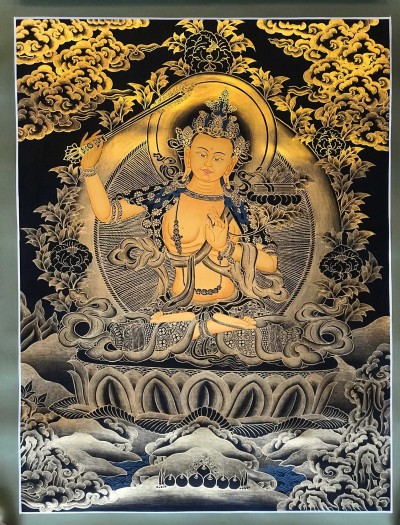
50cm Tibetan Thangka Of Manjushri
Weight : 0.1kg | [18687]
US$70
US$60
You Save
US$10
(20%)
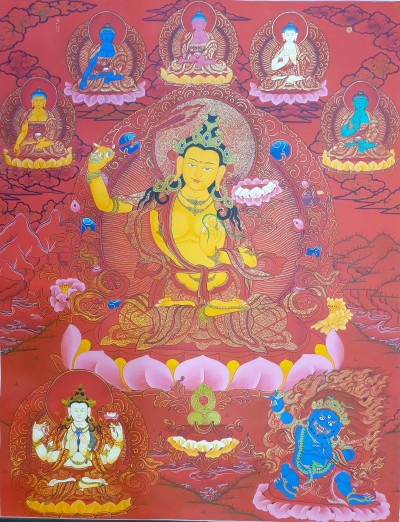
60cm Thangka Painting Of Manjushri, Real Gold
Weight : 0.1kg | [23507]
US$220
US$180
You Save
US$40
(20%)
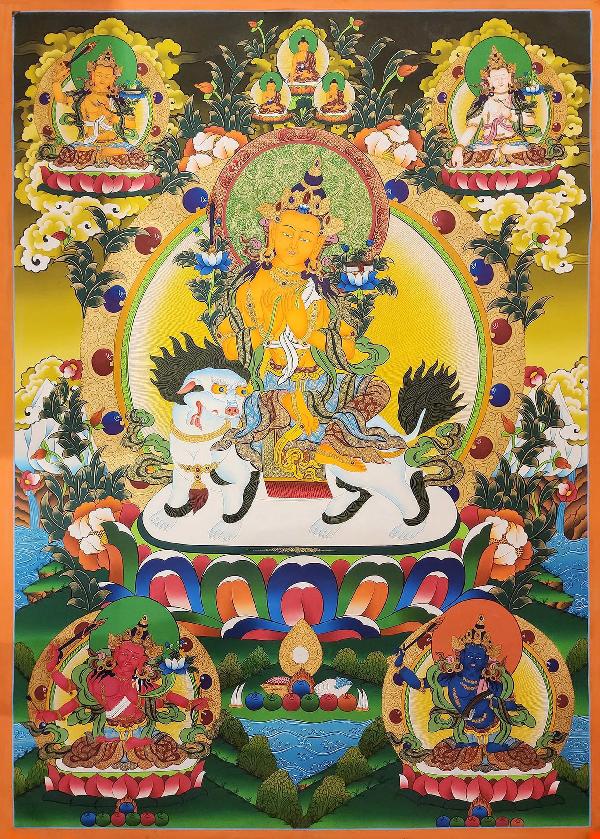
152cm Maha Manjushri, Tibetan Buddhist Art, Hand Painted, Real Gold, Five Dhyani Manjushri
Weight : 0.3kg | [30592]
US$1600
US$1280
You Save
US$320
(20%)
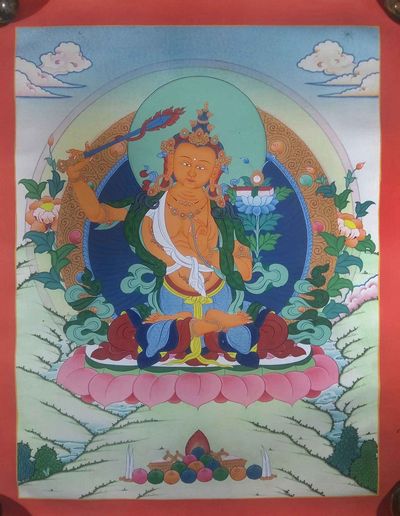
50cm Tibetan Thangka Manjushri Real Gold
Weight : 0.1kg | [13236]
US$135
US$110
You Save
US$25
(20%)
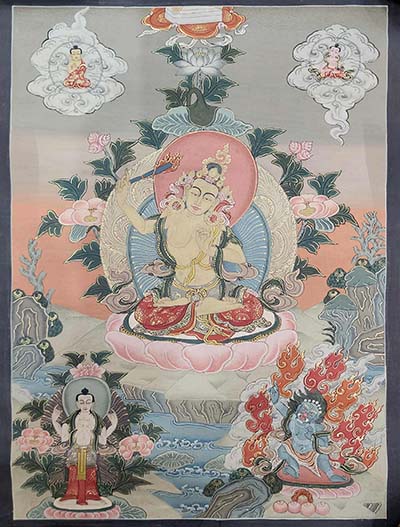
33cm Art From Bhaktapur, Buddhist Handmade Thangka Painting Of Manjushri With Three Great Bodhisattvas, Antique, Real Gold
Weight : 0.1kg | [28161]
US$140
US$115
You Save
US$25
(20%)
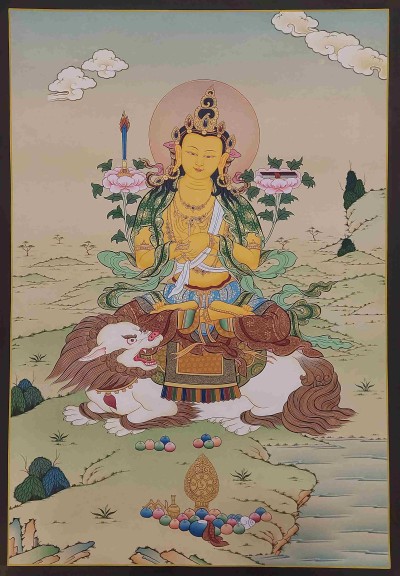
76cm Karma Gadri Art, Handmade Thangka Of Manjushri Real Gold, Hand Painted
Weight : 0.1kg | [26414]
US$580
US$465
You Save
US$115
(20%)
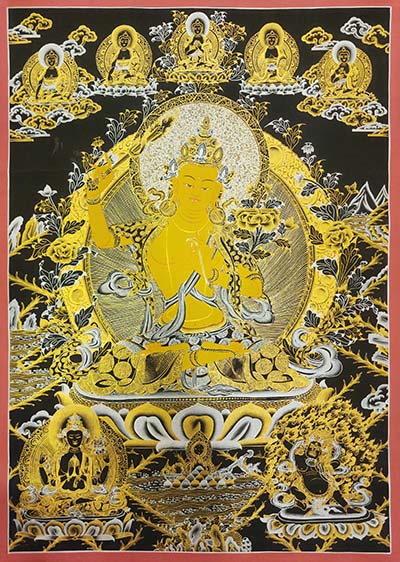
86cm Manjushri Thangka With Pancha Buddha, Buddhist Traditional Painting, Tibetan Style, Three Great Bodhisattvas, Fast Selling
Weight : 0.3kg | [29608]
US$240
US$195
You Save
US$45
(20%)
35cm Tibetan Thangka Of Manjushri
Weight : 0.1kg | [18852]
US$60
US$45
You Save
US$15
(20%)