![Tibetan Statue Of Samantabhadra, [chocolate Oxidized]](https://www.handmadeexpo.com/pics/product/17013.jpg)

![Tibetan Statue Of Samantabhadra, [chocolate Oxidized]](https://www.handmadeexpo.com/pics/product/thumb/17013.jpg)
![Tibetan Statue Of Samantabhadra, [chocolate Oxidized]](https://www.handmadeexpo.com/pics/product/thumb/17013_0.jpg)
![Tibetan Statue Of Samantabhadra, [chocolate Oxidized]](https://www.handmadeexpo.com/pics/product/thumb/17013_1.jpg)
![Tibetan Statue Of Samantabhadra, [chocolate Oxidized]](https://www.handmadeexpo.com/pics/product/thumb/17013_2.jpg)
Tibetan Statue of Samantabhadra, Chocolate Oxidized
The central concepts regarding the image
1. The original self which is perceived a pure awoken consciousness [Skt. bodhi]. The Awoken self [viz. spiritual nature] which realises the delusion of the material world which is the common perception of reality & in doing so is liberated.
1b.Understanding of the sun & moon, which themselves represent time {place} & the human condition respectively.
2a. The eternal Present moment which from the Awoken Mind of bodhi realises the union of the past, present & future.
3. The origin of all form out of which all form is derived & within to which all form dissolves into Nothingness. The nature of truth of reality, explored by the Buddhist Early Schools. These two leading schools are Sunyavada [aka. Madyamanka] & Yogacara. The realisation of the this truth of reality generates the Boddhi-sattva [the enlightened being of 'pure consciousness'.
4. According to Vajrayana Buddhism all Deities & Dakinis arose out of Samantabhadra. This idea is especially connected ot the Dhyana Buddha Familiies of Amitabha, Akshobhya, Amoghasiddhi, Ratnasambhava & Vairochana 5. Bodhissatva & figure of the Lotus Sutra [Skt. Avatamsaka Sutra] made the 10 vows to guide a bodhisattva.
About Chocolate Oxidized
This Samantabhadra has been meticulously treated with a chocolate color antique patina. The intention behind this patina is to replicate the appearance of a copper statue that has gracefully aged over a century. Unlike a simple coat of paint, this patina is not applied superficially and is designed to endure. It undergoes an artificial oxidation process that adds depth and character, while also serving as a protective layer against natural oxidation.By imitating the natural aging process, the chocolate color antique patina lends an air of authenticity and vintage charm to the Samantabhadra. This carefully crafted finish ensures that the patina remains intact for an extended period, offering longevity and resistance to wear. The result is a unique piece that captures the essence of a time-worn copper statue, evoking a sense of history and artistic heritage.
Ceramic Molding System
The Samantabhadra has been crafted using the Ceramic mold casting process, a modern approach that provides an alternative to traditional methods such as the lost-wax system or rubber molding. Also referred to as ceramic molding, this technique involves the creation of a ceramic mold to cast the statue. The process begins by making a precise and detailed wax model of the desired sculpture. The wax model is then coated with layers of ceramic material, creating a sturdy mold. Once the mold is complete, it is fired in a kiln, causing the wax to melt and escape, leaving behind a cavity that perfectly replicates the original sculpture. Molten metal is then poured into the mold, allowing it to fill the cavity and take on the desired form. Once cooled and solidified, the ceramic mold is carefully broken away, revealing the final metal statue. Read More . . .Iconography :
Commentary :
Take the example of a carefree, spontaneous & happy child compared to a stressed, tired & unhappy adult. But this state of pure consciousness does not mean we have to become children again. This is merely a good example of how change can not always be for the better. The Sambhogaya state which Samantabhadra is depicted is attained though understanding & by realising the delusion of the material world. The blissful union is one of transcendent understanding & liberated awareness rather than the spontaneous naivety of a child. B. 1b. The union of the sun & moon, which themselves represent time {place} & the human condition respectively. It is beyond the common perception of the cyclical sun & moon that a person can enter the Dharmakaya & 4th Vajrakaya realms.
2. Samantabhadra symbolises the union of two. In Hinduism this union is perceived as a union of the atman [the self] with the Brahman [infinite universe]. But in Buddhism the Brahman is perceived as merely another aspect of form, & so in being a described form a veil hindering the realisation of pure consciousness. In Buddhism this union usually refers to two leading ideas which are A. The eternal Present Moment which from the origin, the Awoken Mind of bodhi realises the union of the past, present & future within the ever flowering moment of conscious reality. The blue figure of the past embraces the white figure representing the future within the eternal present. In this way Samantabhadra presents timeless awareness who was existing befoe the very notion of time itself.
Although the school of Yogācāra evolved in the 4th CE much later than the original idea of Samantabhadra, the figure of Samantabhadra is just as useful for meditating on the Principle. The discourse is founded on the existential truth of the human condition: there is nothing that humans experience that is not mediated by mind. Yogācāra thinkers did not focus on consciousness to assert it as ultimately real (Yogācāra claims consciousness is only conventionally real since it arises from moment to moment due to fluctuating causes and conditions), but rather because it is the cause of the karmic problem they are seeking to eliminate. This is to say understand original nothingness it is worthwhile reflecting on momentariness & the transitionb of one moment to the other. In Buddhism, consciousness-only or mind-only [Skt. vij?apti-mātratā, citta-mātra] is a theory according to which unenlightened conscious experience is nothing but false discriminations or imaginations. Also known as "Yogācāra-Svatantrika-Mādhyamaka" by the Tibetan tradition. In his view the Mādhyamika [aka. Sunyavada position is ultimately true and at the same time the mind-only view is a useful way to relate to conventionalities and progress students more skillfully toward the ultimate.
3. The image of Samantabhadra embodies the idea origin of phenomena which is perceived as nothingness. Phenomenal Thought-Form, including the painting of Samantabhadra itself, is believed to be derived from an original simple form. This original form is itself a illusion & ultimately nothingness. That all objects are dependent on causes & conditions which caused the object to be form which were themselves in turn dependent on others causes & conditions & so on & the ultimate emptiness of the constantly changing nature of all things. Since everything is nothingness there is a lack of autonomous existence [Skt. Nihsvabhava]. This is related principle of dependent origination of phenomena [Skt. Pratityasamutpada]. [Skt.] By the 11th CE Tibetan Buddhists in such as Patsap Drak categorised this idea into Prasangika & Svatantrika. Out of which all form is derived & within to which all form dissolves into Nothingness. This is realisation of the Sunyavada [Madyamanka] & Yogacara Schools, & is more completely explained in the Nagarjuna Tablet.
4. Samantabhadra is more commonly associated with emanation of Deific thought-form, i.e. all the Vajrayana Buddhist Deities & Dakinis which arise out of the original inception of Samantabhadra. This idea is particularly connected to Nepalese & Tibetan Buddhism & the concept of Dhyana 'Transcendent' Buddha Families of Amitabha, Akshobhya, Amoghasiddhi, Ratnasambhava & Vairochana. However, the Kagyu & Gelug schools use Vajradhara to represent the Original Buddha.
5. Samantabhadra is a key figure in the Flower Garland Sutra, particularly the last chapter, the Gandhavyuha Sutra. The Gandavyuha Sutra details the journey of the youth Sudhana, who undertakes a pilgrimage at the behest of the bodhisattva Manjushree. Sudhana will converse with 52 masters in his quest for enlightenment. The antepenultimate master of Sudhana's pilgrimage is Maitreya. It is here that Sudhana encounters The Tower of Maitreya, which along with Indra's net is one of the most startling metaphors for the infinite to emerge in the history of literature across cultures. In the middle of the great tower... he saw the billion-world universe... and everywhere there was Sudhana at his feet... Thus Sudhana saw Maitreya's practices of... transcendence over countless eons [Skt. kalpa], from each of the squares of the check board wall... In the same way Sudhana... saw the whole supernal manifestation, was perfectly aware it, understood it, contemplated it, used it as a means, beheld it, and saw himself there. In the climax of the Gandhavyuha Sutra, the student Sudhana meets the Bodhisattva Samantabhadra, who teaches him that wisdom only exists for the sake of putting it into practice; that it is only good insofar as it benefits all living beings.
Application in Daily Life :
Mantra of Samathabhadra
You may also want to read the related articles :
Service of Filling and blessing in Statue | Altering Finishing in StatueAt Handmade Statue, we aim to provide a seamless and user-friendly experience. While our website is not a direct online shopping platform, we have a shopping cart system to make submitting your inquiries easy. Follow these steps to place your order:
Step 1: Browse Our Products
Explore our website to discover a wide range of authentic Nepali handicrafts, including statues, thangkas, singing bowls, wood carvings, jewelry, and more. Click on any product to view detailed descriptions and images.
Step 2: Add Items to Your Inquiry Cart
Click the “Add to Inquiry Cart” button for each product you are interested in. This will help you organize your selections conveniently.
Step 3: Review Your Inquiry Cart
Once you’ve added all your items, review your cart to ensure accuracy before submitting your inquiry.
Step 4: Submit Your Inquiry
Click the “Submit Inquiry” button. Fill out the form with your contact details, selected products, and any specific questions or customization requests.
Step 5: Communicate via Email
Since we don’t have an automated payment system, our team will respond to your inquiry via email. We’ll provide guidance, answer questions, and assist with customization requests.
Step 6: Finalize Your Order
Confirm all product details and customization options with our team. Once everything is finalized, we will provide secure payment instructions.
Step 7: Complete Your Payment
Make the payment through the provided method. After confirmation, we will process and prepare your order for shipment.
Step 8: Shipping and Delivery
We offer worldwide shipping. Once your order is dispatched, we will provide tracking details and shipping information.
Step 9: Receive and Enjoy Your Handicrafts
Unpack your beautiful handmade Nepali products and enjoy the craftsmanship and cultural heritage of Nepal.
Need Assistance?
If you face any issues or have questions while placing your order, contact us via email or mobile communication apps. Our team is dedicated to providing prompt support and a smooth ordering experience.
We hope this straightforward ordering process ensures a delightful and satisfying experience with Handmade Statue. Thank you for choosing us to connect you with the rich heritage of Nepali handicrafts.
Return Policy
We have a 7 days money back policy but buyer have to pay the return shipping charges.
Shipping
- Shipping cost is calculated, based on the shipping weight of the products ordered. THe normal Shipping cost is US$25 for upto 0.5 kgs weight
- We ship Worldwide, Except Russia and India.
- The deliver duration varies for international Shipping location. We normally dispatch the product in 2 -3 business days. Else Buyer will be infromed Personally about the shipping.
Related Products
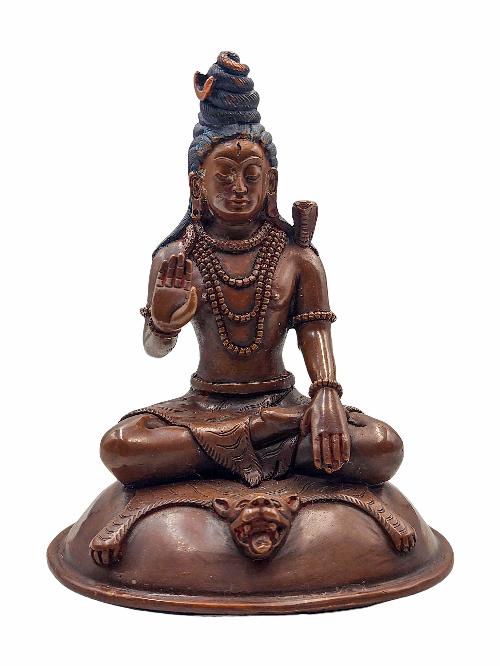
15cm Shiva, Buddhist Statue, Chocolate Oxidized
Weight : 0.62kg | [31441]
US$240
US$190
You Save
US$50
(20%)
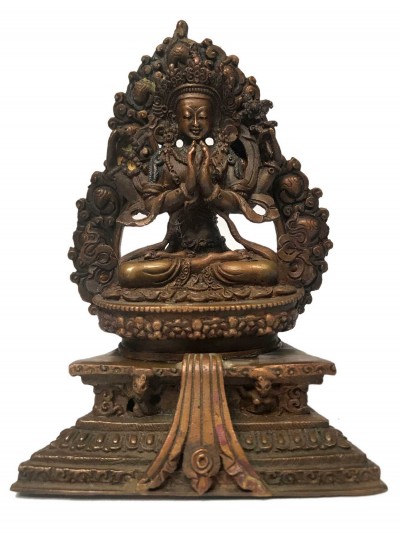
13cm Tibetan Statue Of Avalokiteshvara, Chenrezig, On Throne Chocolate Oxidized
Weight : 0.5kg | [16982]
US$100
US$80
You Save
US$20
(20%)
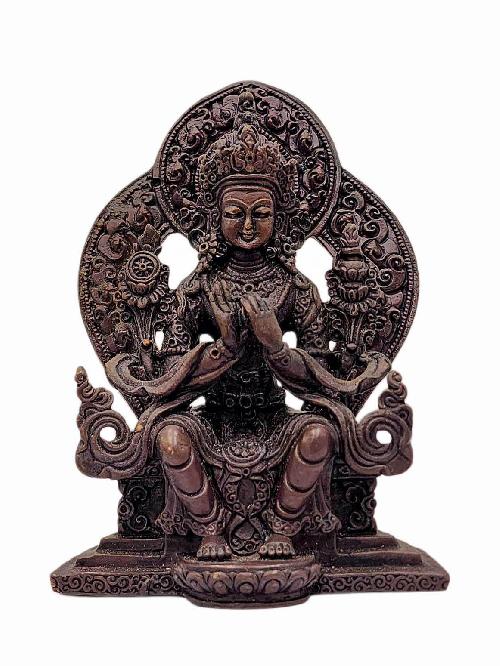
10cm Maitreya Buddha, Buddhist Miniature Statue, Chocolate Oxidized
Weight : 0.26kg | [35909]
US$60
US$55
You Save
US$5
(15%)
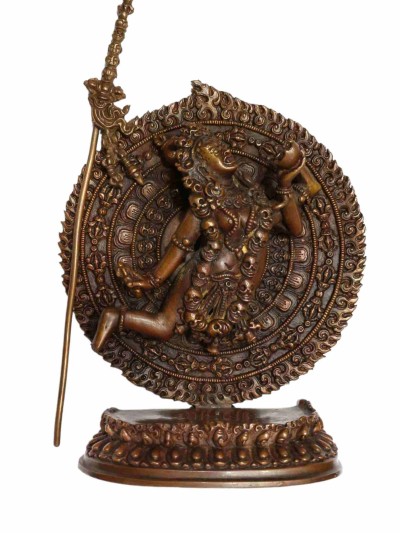
12cm Tibetan Buddhist Tantric Statue Of Akash Yogini, Oxidized
Weight : 0.5kg | [26431]
US$140
US$115
You Save
US$25
(20%)
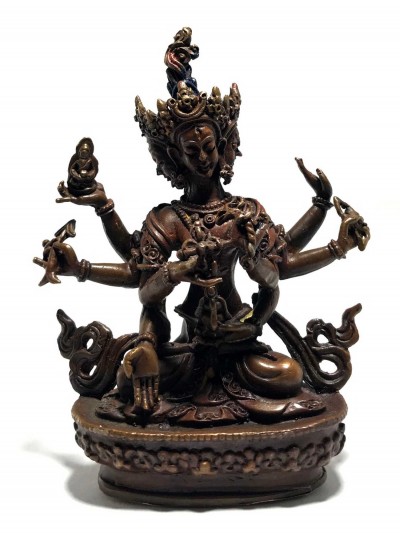
9.5cm Statue Of Namgyalma Chocolate Oxidized
Weight : 0.21kg | [16248]
US$40
US$35
You Save
US$5
(20%)
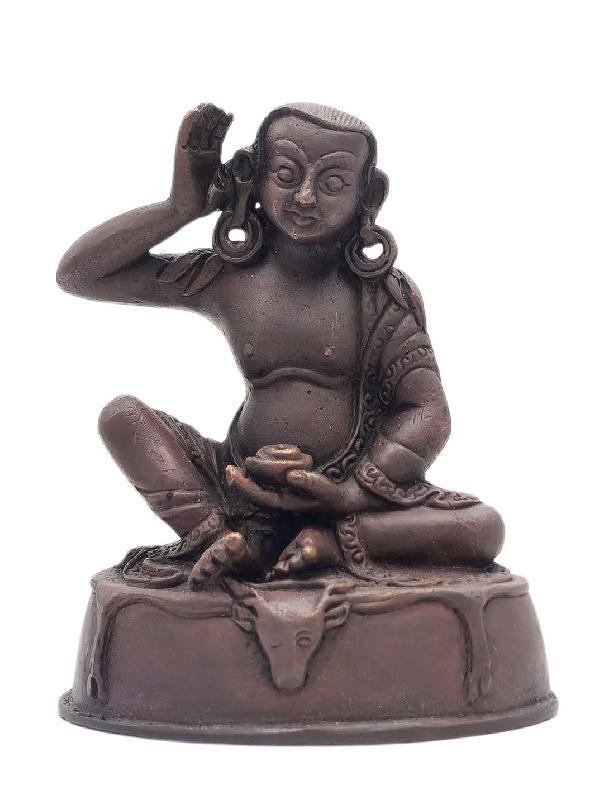
7cm Milarepa, Buddhist Miniature Statue, Chocolate Oxidized
Weight : 0.14kg | [35827]
US$60
US$55
You Save
US$5
(15%)
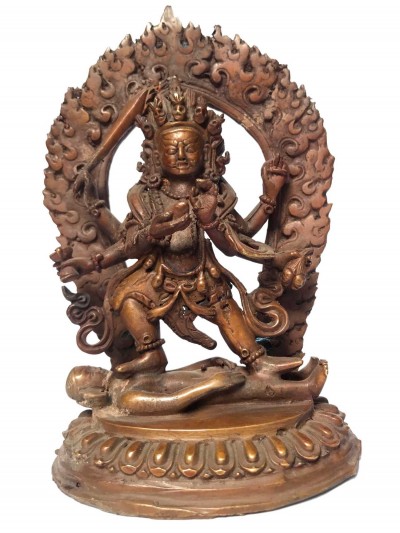
14cm Tibetan Statue Of Mahakala Black Six Arms, Chocolate Oxidized
Weight : 0.42kg | [17020]
US$80
US$65
You Save
US$15
(20%)
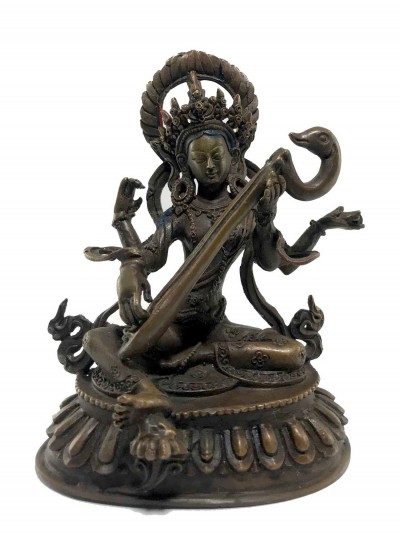
10cm Statue Of Saraswati Oxidized
Weight : 0.24kg | [16284]
US$40
US$30
You Save
US$10
(20%)