![Shakyamuni Buddha Thangka, [master Quality], Buddhist Traditional Painting, Tibetan Style, [real Gold], Sariputra And Maudgalyayana](https://www.handmadeexpo.com/pics/product/29548.jpg)

![Shakyamuni Buddha Thangka, [master Quality], Buddhist Traditional Painting, Tibetan Style, [real Gold], Sariputra And Maudgalyayana](https://www.handmadeexpo.com/pics/product/thumb/29548.jpg)
![Shakyamuni Buddha Thangka, [master Quality], Buddhist Traditional Painting, Tibetan Style, [real Gold], Sariputra And Maudgalyayana](https://www.handmadeexpo.com/pics/product/thumb/29548_0.jpg)
![Shakyamuni Buddha Thangka, [master Quality], Buddhist Traditional Painting, Tibetan Style, [real Gold], Sariputra And Maudgalyayana](https://www.handmadeexpo.com/pics/product/thumb/29548_1.jpg)
![Shakyamuni Buddha Thangka, [master Quality], Buddhist Traditional Painting, Tibetan Style, [real Gold], Sariputra And Maudgalyayana](https://www.handmadeexpo.com/pics/product/thumb/29548_2.jpg)
![Shakyamuni Buddha Thangka, [master Quality], Buddhist Traditional Painting, Tibetan Style, [real Gold], Sariputra And Maudgalyayana](https://www.handmadeexpo.com/pics/product/thumb/29548_3.jpg)
![Shakyamuni Buddha Thangka, [master Quality], Buddhist Traditional Painting, Tibetan Style, [real Gold], Sariputra And Maudgalyayana](https://www.handmadeexpo.com/pics/product/thumb/29548_4.jpg)
![Shakyamuni Buddha Thangka, [master Quality], Buddhist Traditional Painting, Tibetan Style, [real Gold], Sariputra And Maudgalyayana](https://www.handmadeexpo.com/pics/product/thumb/29548_5.jpg)
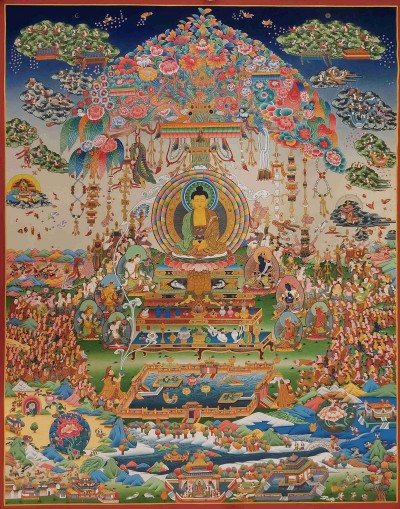
Shakyamuni Buddha Thangka, Master Quality, Buddhist Traditional Painting, Tibetan Style, Real Gold, Sariputra and Maudgalyayana
Shakya Thubpa
The Deep Meaning Behind a Shakyamuni Buddha Statue
A Buddha statue is far more than a decorative item; it is a profound educational tool and a source of spiritual inspiration. The Buddha statue meaning goes beyond mere religious idol worship. Instead, the statue serves as a mirror reflecting our own inherent potential for awakening, peace, and boundless compassion.Â
When you gaze upon a Shakyamuni Buddha statue, you are looking at the embodiment of inner peace, mindfulness, and the ultimate triumph of wisdom over ignorance. It acts as a focal point for mindfulness practices, gently reminding the observer to stay present, act with kindness, and cultivate an enlightened mind in the midst of daily chaos. For a spiritual buyer or a meditation practitioner, the statue is a silent teacher, radiating tranquility and grounding the energy of the room.
Sariputra And Maudgalyayana
: Brief Introduction Sariputra and Maudgalyayana were two prominent disciples of Gautama Buddha, the founder of Buddhism. Sariputra was revered for his exceptional wisdom and profound understanding of the Dharma, making him a respected teacher and one of the Buddha's chief disciples. Maudgalyayana, on the other hand, possessed extraordinary spiritual powers and was known for his mastery of meditative practices, utilizing his supernatural abilities to perform acts of compassion. Both disciples played vital roles in the early propagation of Buddhism and contributed significantly to the spread of the Buddha's teachings. Their unwavering devotion and spiritual accomplishments continue to inspire Buddhist practitioners around the world. Read More . . .Master Quality
: What is master Quality? The attribute of "master quality" distinguishes the Shakyamuni Buddha as an embodiment of extraordinary craftsmanship and artistic excellence. This exceptional piece is directly handcrafted by an artist or craftsman of the highest categorization, reflecting their unparalleled skill and expertise. The uniqueness of Shakyamuni Buddha lies in its exclusivity to the artist, making it a rare find with nearly impossible chances of finding an identical piece in the same category. While copies may exist, they can never truly replicate the essence of the original, as an artist or craftsman capable of creating such exceptional artistry would prefer to showcase their own creative vision rather than reproduce another's work. Read More . . .Use of Real Gold
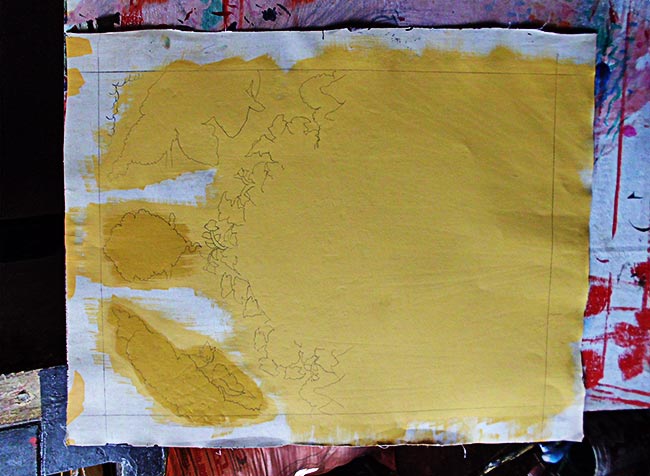
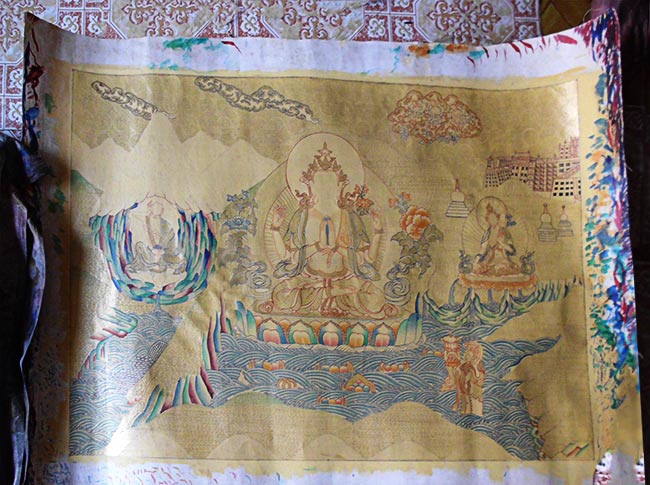
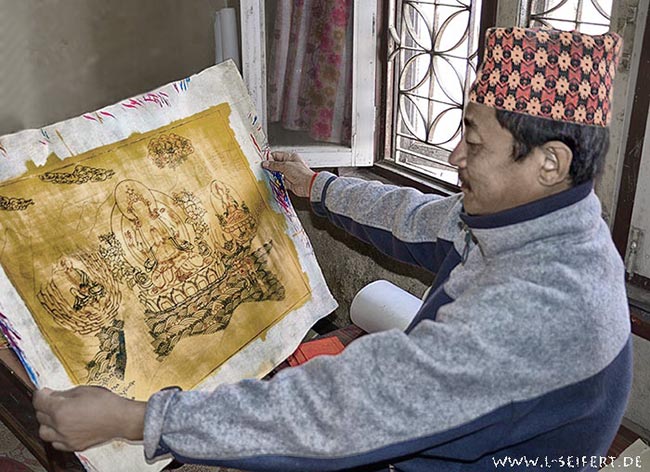
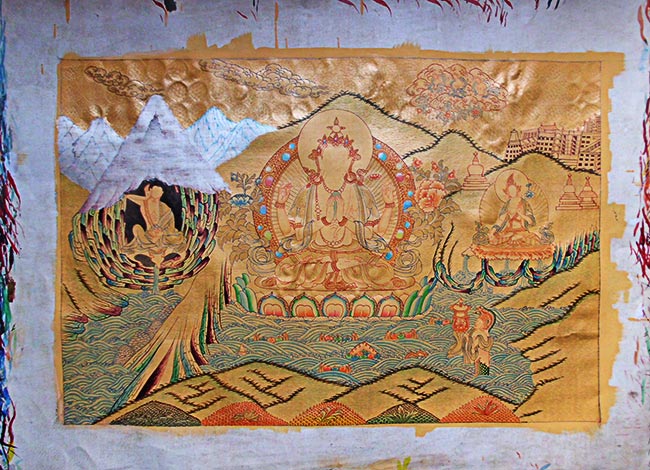
This thangka of Shakyamuni Buddha has real gold painted on its surface along with other paints. This is an ancient process of decorating the thangka in Tibetan Buddhism, Here gold is ground into gold dust, which is then mixed with other undisclosed material to make it paintable on the canvas. this mixture is then mixed with transparent glue and painted on the thangka. Read More . . .Introduction to Thangka
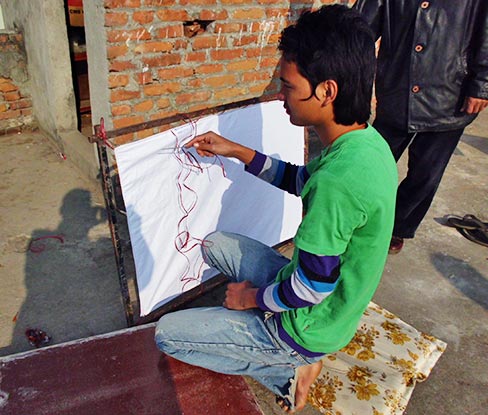
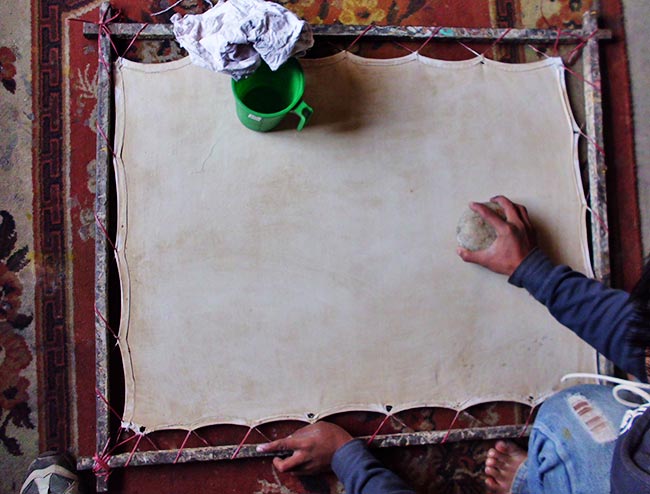
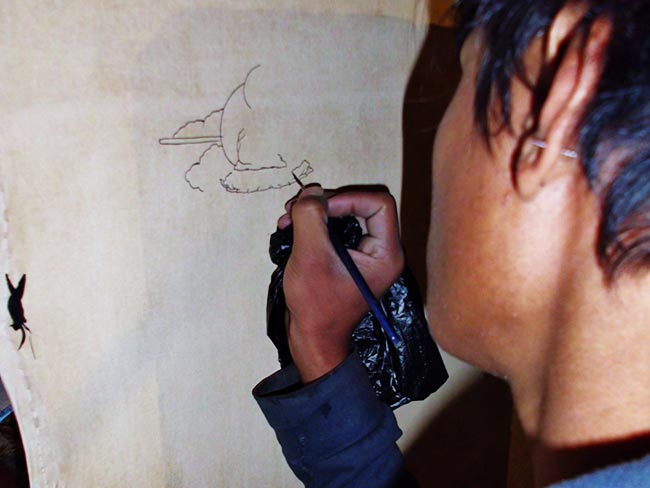
A thangka, also known as tangka, thanka, or tanka, is a vibrant and intricate Tibetan Buddhist painting that serves as a visual representation of spiritual teachings. Crafted with meticulous detail on cotton or silk appliqu?, thangkas depict a wide range of subjects including Buddhist deities, sacred scenes, mandalas, and narrative stories. These sacred artworks are traditionally kept unframed and rolled up for storage, resembling ancient scrolls. To protect their delicate nature, thangkas are mounted on textile backings and often adorned with a silk cover on the front. Proper preservation in dry environments is crucial to maintain the integrity and longevity of the silk. Read More . . .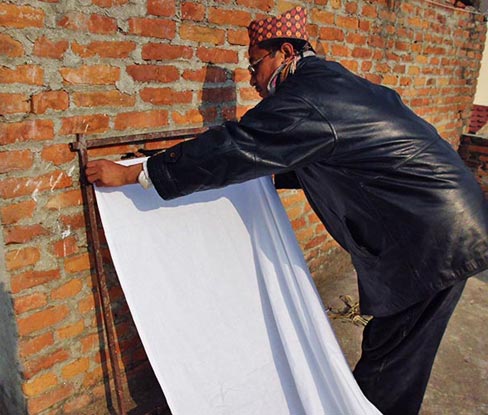
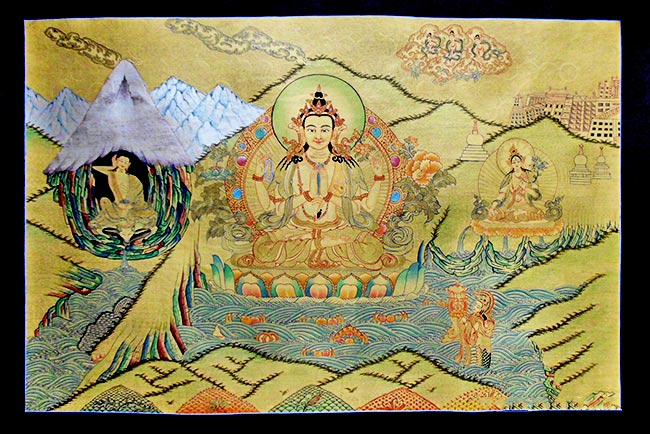
Iconography: Visual Details of a Shakyamuni Buddha Statue :
1. Sitting Posture (Asana)
2. Hand Gestures (Mudras)
3. Facial Expression
4. Clothing Style
5. Common Materials and Finishes
6. Aura and Base Elements
Shakyamuni Buddha: The Life, Teachings, and Path to Enlightenment :
To understand the profound philosophy of Buddhism, one must first look at the extraordinary life of its founder: Shakyamuni Buddha. Often referred to simply as "The Buddha," he is the historical figure whose teachings have guided millions of people toward inner peace, mindfulness, and liberation from suffering for over two and a half millennia.
The name "Shakyamuni" translates directly to "Sage of the Shakya Clan." Unlike mythical gods or celestial creators, Shakyamuni Buddha was a human being who lived, breathed, and walked this earth. Through immense dedication and self-inquiry, he unlocked the ultimate potential of the human mind.
This comprehensive guide explores the fascinating biography of Shakyamuni Buddha, his transformative journey from royalty to renunciation, his core spiritual teachings, and his enduring legacy in our modern world.
The Early Life of Prince Siddhartha Gautama
The story of Shakyamuni Buddha begins over 2,500 years ago in the lush, sacred gardens of Lumbini, located in present-day Nepal. He was born as Siddhartha Gautama into a royal family. His father, King Suddhodana, was the ruler of the Shakya clan, and his mother was Queen Maya Devi.
According to historical and spiritual texts, Siddharthaâs birth was accompanied by auspicious signs. Wise seers and astrologers predicted that the young prince would grow up to become either a great, world-conquering king or a supreme spiritual leader. Eager to see his son inherit the throne and become a powerful monarch, King Suddhodana went to great lengths to shield Siddhartha from any knowledge of human suffering, religion, or the hardships of the outside world.
Prince Siddhartha grew up in the lap of unimaginable luxury. He lived in magnificent palaces suited for different seasons, wore the finest silks, and was surrounded by beauty, music, and joy. He married a beautiful princess named Yasodhara, and together they had a son, Rahula. By all worldly measures, Siddhartha had a perfect, flawless life. Yet, a deep sense of inquiry and dissatisfaction quietly grew within his heart.
The Four Sights and the Great Renunciation
Siddhartha's life changed forever during his late twenties. Driven by a deep curiosity about the world beyond his palace walls, he asked his charioteer, Channa, to take him into the local city. During these chariot rides, the sheltered prince encountered four profound realities that shattered his illusion of a perfect world. These are known in Buddhist history as the "Four Sights":
An Old Man: Siddhartha saw the frailties of aging and realized that youth is temporary.
A Sick Man: He witnessed physical disease, realizing that health is fragile and suffering is inevitable.
A Corpse: He saw a funeral procession, bringing him face-to-face with the inescapable reality of death.
A Wandering Ascetic: Finally, he saw a peaceful, holy man who had renounced worldly life in search of spiritual truth.
Deeply moved by the suffering of humanity and inspired by the tranquility of the ascetic, Siddhartha realized that his royal wealth could not protect him or his loved ones from old age, sickness, and death. At the age of 29, he made the agonizing but necessary decision to leave his family, his kingdom, and his wealth behind. Under the cover of night, he cut his long royal hair, swapped his silk robes for the simple rags of a beggar, and set out into the forest. This pivotal moment is known as the Great Renunciation.
The Quest for Truth: Asceticism to the Middle Way
For six years, Siddhartha wandered through the forests of ancient India, seeking out the greatest spiritual teachers of his time. He mastered various meditation techniques but found that they only offered temporary relief, not the ultimate cessation of suffering.
He then joined a group of five ascetics and engaged in extreme self-mortification. He subjected his body to severe harshness, fasting until he was mere skin and bones, holding his breath, and enduring extreme heat and cold. He believed that by punishing his body, he could liberate his mind.
However, after collapsing from starvation and nearly dying in a river, he experienced a profound realization: extreme deprivation clouded the mind just as much as extreme luxury did. Neither the sensual indulgence of the palace nor the severe torment of the forest led to awakening.
Siddhartha accepted a small bowl of milk-rice from a compassionate village girl named Sujata. Nourished and revitalized, he formulated one of Buddhism's most vital concepts: The Middle Way. This is the path of balance and moderation, avoiding the extremes of indulgence and self-punishment.
The Attainment of Enlightenment
With a restored body and a focused mind, Siddhartha traveled to Bodh Gaya. He sat beneath a large fig tree (now famously known as the Bodhi Tree) and made a firm vow: he would not rise from his meditation cushion until he had discovered the absolute truth of existence.
During his deep meditation, he was challenged by Mara, a powerful celestial demon representing ego, illusion, desire, and fear. Mara sent armies of terrifying monsters and his beautiful daughters to distract Siddhartha. Yet, Siddhartha remained perfectly calm and unshaken.
When Mara challenged Siddhartha's right to attain enlightenment, demanding a witness, the soon-to-be Buddha simply reached down his right hand and touched the earth. The earth trembled, bearing witness to the countless lifetimes of merit and compassion he had cultivated. Mara vanished.
As the morning star rose, Siddhartha's mind broke through the final veils of ignorance. He saw his past lives, understood the karmic cycle of birth and death (Samsara), and realized the ultimate nature of reality. At the age of 35, Siddhartha Gautama became Shakyamuni Buddha, the "Awakened One."
Core Teachings of Shakyamuni Buddha
After attaining enlightenment, Shakyamuni Buddha spent the next 45 years walking across the Indian subcontinent, sharing his wisdom with people from all walks of life, kings and beggars, men and women, criminals and saints. His teachings (the Dharma) were highly practical, focusing not on worshipping a god, but on understanding one's own mind.
The Four Noble Truths
The foundation of the Buddha's teachings is summarized in his very first sermon at the Deer Park in Sarnath. These are the Four Noble Truths:
The Truth of Suffering (Dukkha): Life inherently involves dissatisfaction, physical pain, emotional sorrow, and the underlying anxiety of impermanence.
The Truth of the Cause of Suffering (Samudaya): The root cause of suffering is attachment, craving, and ignorance. We suffer because we cling to things that are constantly changing.
The Truth of the End of Suffering (Nirodha): It is possible to end suffering by letting go of craving and awakening to reality. This state of ultimate peace and liberation is known as Nirvana.
The Truth of the Path (Magga): The method to achieve the end of suffering is by following the Noble Eightfold Path.
The Noble Eightfold Path
To help his followers walk the Middle Way, Shakyamuni Buddha outlined an eight-step framework for ethical and mental development. This path is visually represented by the Dharmachakra, the eight-spoked Buddhist wheel:
Right View: Deeply understanding the Four Noble Truths.
Right Intention: Committing to harmlessness, compassion, and letting go.
Right Speech: Speaking truthfully, kindly, and avoiding gossip or harsh words.
Right Action: Acting ethically, abstaining from killing, stealing, and misconduct.
Right Livelihood: Earning a living in a way that does not harm others.
Right Effort: Cultivating positive states of mind and abandoning negative ones.
Right Mindfulness: Developing constant, clear awareness of the body, feelings, and thoughts.
Right Concentration: Practicing deep meditation to unify and focus the mind.
The Symbolism of Shakyamuni in Buddhist Art
While Shakyamuni Buddha was a living man, his depiction in art remains incredibly important for practitioners and collectors today. When you look at traditional Buddhist paintings (Thangkas) or Himalayan statues, his iconography tells the story of his journey:
The Bhumisparsha Mudra: Statues frequently show Shakyamuni with his right hand touching the earth. This immortalizes the precise moment of his enlightenment when he defeated the demon Mara.
The Alms Bowl: His left hand often rests in his lap holding a monk's begging bowl, symbolizing his renunciation of royal wealth, his reliance on the generosity of the community, and his role as the supreme healer of spiritual ailments.
The Monastic Robes: He is depicted wearing simple patchwork robes, completely devoid of the royal jewelry, crowns, and armor he wore as a prince.
The Ushnisha and Urna: The bump on the top of his head (ushnisha) signifies his expanded cosmic wisdom, while the dot between his eyes (urna) represents his spiritual vision and the "third eye" of enlightenment.
The Legacy of Shakyamuni Buddha
At the age of 80, in the town of Kushinagar, Shakyamuni Buddha passed into Parinirvana, he final state of enlightenment, completely breaking the cycle of rebirth. His final words to his disciples were a call to self-reliance: "All conditioned things are subject to decay. Strive on with diligence."
Today, the legacy of Shakyamuni Buddha transcends religion. His teachings on mindfulness, compassion, and the interconnectedness of all life are actively studied by psychologists, neuroscientists, and philosophers. He did not ask his followers to accept his teachings on blind faith; instead, he invited them to test his methods for themselves.
Shakyamuni Buddha was not a deity who promised salvation from above, but a human pioneer who mapped the landscape of the mind. His life story, from a sheltered prince to a wandering ascetic, and finally to an awakened teacher, remains one of the most inspiring narratives in human history.
By studying the life of Shakyamuni Buddha, we are reminded of our own profound potential. His teachings offer a timeless, practical blueprint for overcoming anxiety, developing a loving heart, and finding unshakeable peace in an ever-changing world.
The Benefits of Placing a Buddha Statue in Your Home :
Why Choose a Nepal Handmade Buddha Statue?Â
Buying Guide: Choosing the Perfect Buddha StatueÂ
- Determine the Purpose: Are you looking for a centerpiece for your living room, or an intimate statue for a small meditation altar? For an altar, an 8 to 12-inch statue is usually ideal. For a living room focal point, consider a larger 18 to 24-inch piece.
- Select the Right Mudra: If you seek a reminder of unshakeable resolve and grounding, choose the Bhumisparsha (earth-touching) mudra. If your focus is purely on cultivating a calm, meditative practice, the Dhyana (meditation) mudra is perfect.
- Material Matters: Copper is the most traditional and highly valued base metal. If budget allows, a partially or fully gold-plated statue offers unparalleled radiance and longevity. For a more subtle, rustic aesthetic, oxidized brass or copper is a wonderful choice.
- Placement Etiquette: Always treat your Buddha statue with respect. Place it elevated from the ground, ideally at or above eye level. Never place a Buddha statue in a bathroom, on the floor, or facing a toilet. Traditionally, having the statue face East (the direction the Buddha faced during his enlightenment) is considered highly auspicious.Â
A Note for Gift Buyers :
 Gifting a Shakyamuni Buddha statue is a beautiful gesture of goodwill. It signifies that you are wishing the recipient peace, good health, and spiritual protection. It is an ideal gift for housewarmings, weddings, or for someone embarking on a new spiritual journey.Â
A Shakyamuni Buddha statue is a profound synthesis of artistic brilliance and deep spiritual philosophy. It stands as a timeless testament to a prince who gave up a kingdom to conquer his own mind, eventually lighting the path to liberation for millions. Whether you appreciate it for its aesthetic elegance as stunning Buddhist home decor, or you revere it as an indispensable aid for your meditation practice, an authentic, handmade Nepalese Buddha statue is an investment in peace.Â
By bringing the Awakened One into your space, you invite an atmosphere of mindfulness, compassion, and boundless serenity into your daily life. Let the gentle smile of Shakyamuni inspire you to awaken the Buddha-nature that resides within your own heart.
Mantra of Shakyamuni buddha
You may also want to read the related articles :
What is a Thangka | Making Process Of Tibetan Thangka | Videos of Thangka Making Process | Thangka Brocading OptionAt Handmade Statue, we aim to provide a seamless and user-friendly experience. While our website is not a direct online shopping platform, we have a shopping cart system to make submitting your inquiries easy. Follow these steps to place your order:
Step 1: Browse Our Products
Explore our website to discover a wide range of authentic Nepali handicrafts, including statues, thangkas, singing bowls, wood carvings, jewelry, and more. Click on any product to view detailed descriptions and images.
Step 2: Add Items to Your Inquiry Cart
Click the “Add to Inquiry Cart” button for each product you are interested in. This will help you organize your selections conveniently.
Step 3: Review Your Inquiry Cart
Once you’ve added all your items, review your cart to ensure accuracy before submitting your inquiry.
Step 4: Submit Your Inquiry
Click the “Submit Inquiry” button. Fill out the form with your contact details, selected products, and any specific questions or customization requests.
Step 5: Communicate via Email
Since we don’t have an automated payment system, our team will respond to your inquiry via email. We’ll provide guidance, answer questions, and assist with customization requests.
Step 6: Finalize Your Order
Confirm all product details and customization options with our team. Once everything is finalized, we will provide secure payment instructions.
Step 7: Complete Your Payment
Make the payment through the provided method. After confirmation, we will process and prepare your order for shipment.
Step 8: Shipping and Delivery
We offer worldwide shipping. Once your order is dispatched, we will provide tracking details and shipping information.
Step 9: Receive and Enjoy Your Handicrafts
Unpack your beautiful handmade Nepali products and enjoy the craftsmanship and cultural heritage of Nepal.
Need Assistance?
If you face any issues or have questions while placing your order, contact us via email or mobile communication apps. Our team is dedicated to providing prompt support and a smooth ordering experience.
We hope this straightforward ordering process ensures a delightful and satisfying experience with Handmade Statue. Thank you for choosing us to connect you with the rich heritage of Nepali handicrafts.
Return Policy
We have a 7 days money back policy but buyer have to pay the return shipping charges.
Shipping
- Shipping cost is calculated, based on the shipping weight of the products ordered. THe normal Shipping cost is US$25 for upto 0.5 kgs weight
- We ship Worldwide, Except Russia and India.
- The deliver duration varies for international Shipping location. We normally dispatch the product in 2 -3 business days. Else Buyer will be infromed Personally about the shipping.
Related Products
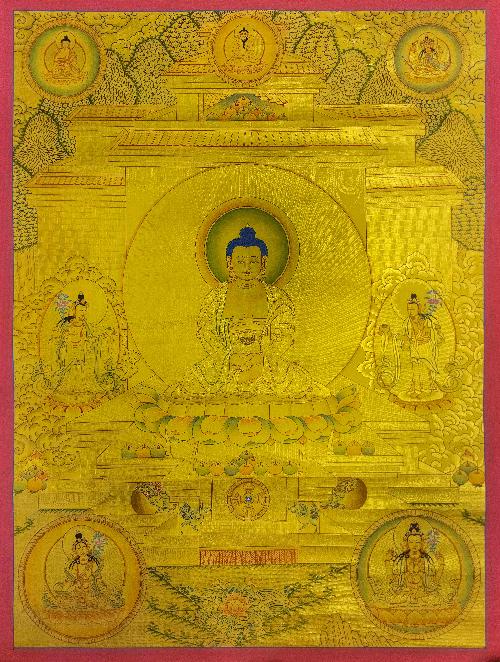
59cm Amitabha Buddha, Buddhist Traditional Painting, Hand Painted, Real Gold
Weight : 0.3kg | [33428]
US$1440
US$1225
You Save
US$215
(15%)
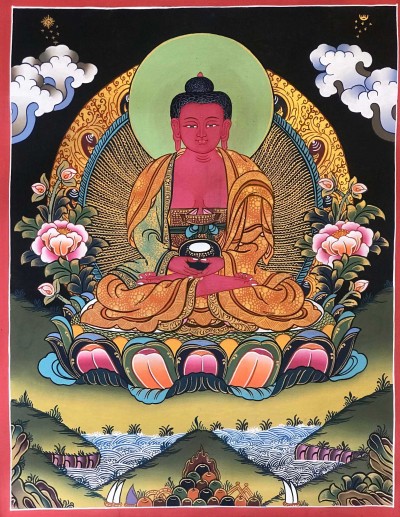
33cm Tibetan Thangka Of Amitabha Buddha
Weight : 0.1kg | [19316]
US$35
US$30
You Save
US$5
(20%)
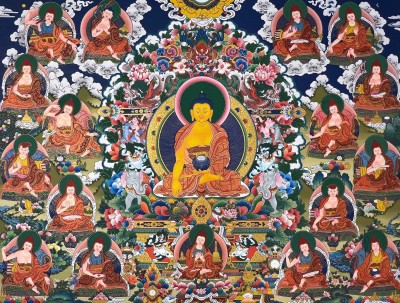
100cm Buddhist Handmade Thangka Of Shakyamuni Buddha, 24k Real Gold, Hand Painted
Weight : 0.1kg | [25345]
US$1520
US$1220
You Save
US$300
(20%)
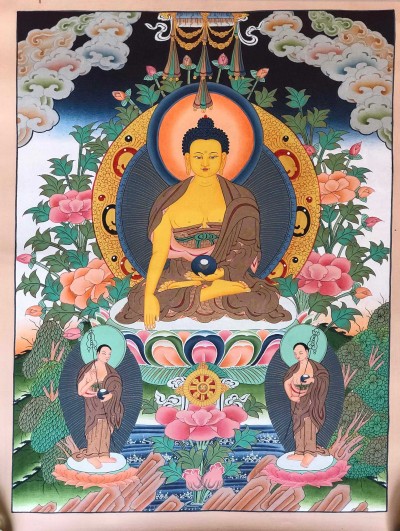
47cm Tibetan Thangka Of Shakyamuni Buddha Light Color, Real Gold
Weight : 0.1kg | [18625]
US$90
US$75
You Save
US$15
(20%)
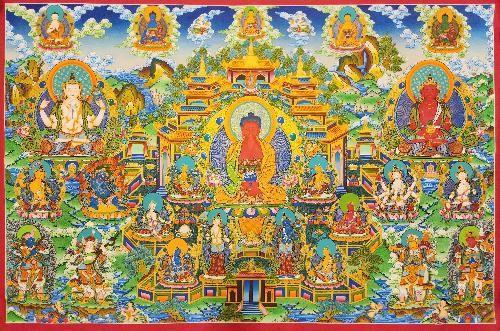
99cm Amitabha Buddha Thangka, Master Quality, Mix Gold, Rare Find, Horizontal Thangka With Chenrezig, Aparimita, And Various Teachers And Bodhisattva.
Weight : 1kg | [29860]
US$2300
US$1840
You Save
US$460
(20%)
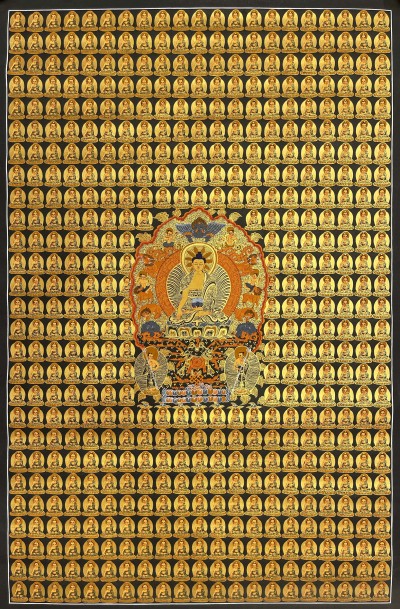
94cm Buddhist Hand Painted Thangka Of Shakyamuni Buddha, Lamas Art
Weight : 0.1kg | [23744]
US$130
US$105
You Save
US$25
(20%)
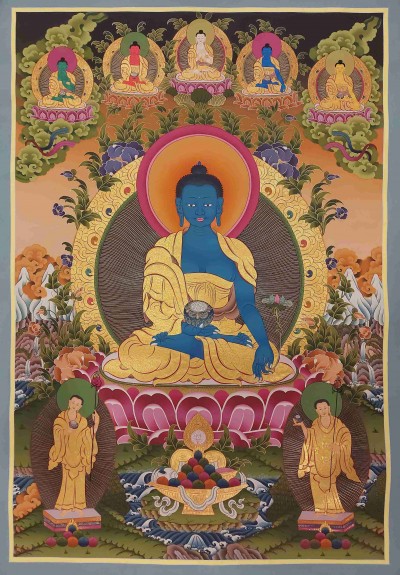
113cm Buddhist Handmade Thangka Of Medicine Buddha, Real Gold, Hand Painted, Real Gold
Weight : 0.1kg | [26265]
US$620
US$500
You Save
US$120
(20%)
122cm Buddhist Handmade Thangka Of Buddha Life Story, Real Gold, Hand Painted, Real Gold
Weight : 0.1kg | [26271]
US$3400
US$2720
You Save
US$680
(20%)