![Samantabhadra Thangka, [master Quality], Buddhist Traditional Painting, Tibetan Style, [mix Gold], [rare Find], With Pancha Buddha,green Tara And Jambhala](https://www.handmadeexpo.com/pics/product/29862.jpg)

![Samantabhadra Thangka, [master Quality], Buddhist Traditional Painting, Tibetan Style, [mix Gold], [rare Find], With Pancha Buddha,green Tara And Jambhala](https://www.handmadeexpo.com/pics/product/thumb/29862.jpg)
![Samantabhadra Thangka, [master Quality], Buddhist Traditional Painting, Tibetan Style, [mix Gold], [rare Find], With Pancha Buddha,green Tara And Jambhala](https://www.handmadeexpo.com/pics/product/thumb/29862_0.jpg)
![Samantabhadra Thangka, [master Quality], Buddhist Traditional Painting, Tibetan Style, [mix Gold], [rare Find], With Pancha Buddha,green Tara And Jambhala](https://www.handmadeexpo.com/pics/product/thumb/29862_1.jpg)
![Samantabhadra Thangka, [master Quality], Buddhist Traditional Painting, Tibetan Style, [mix Gold], [rare Find], With Pancha Buddha,green Tara And Jambhala](https://www.handmadeexpo.com/pics/product/thumb/29862_2.jpg)
![Samantabhadra Thangka, [master Quality], Buddhist Traditional Painting, Tibetan Style, [mix Gold], [rare Find], With Pancha Buddha,green Tara And Jambhala](https://www.handmadeexpo.com/pics/product/thumb/29862_3.jpg)
![Samantabhadra Thangka, [master Quality], Buddhist Traditional Painting, Tibetan Style, [mix Gold], [rare Find], With Pancha Buddha,green Tara And Jambhala](https://www.handmadeexpo.com/pics/product/thumb/29862_4.jpg)
![Samantabhadra Thangka, [master Quality], Buddhist Traditional Painting, Tibetan Style, [mix Gold], [rare Find], With Pancha Buddha,green Tara And Jambhala](https://www.handmadeexpo.com/pics/product/thumb/29862_5.jpg)
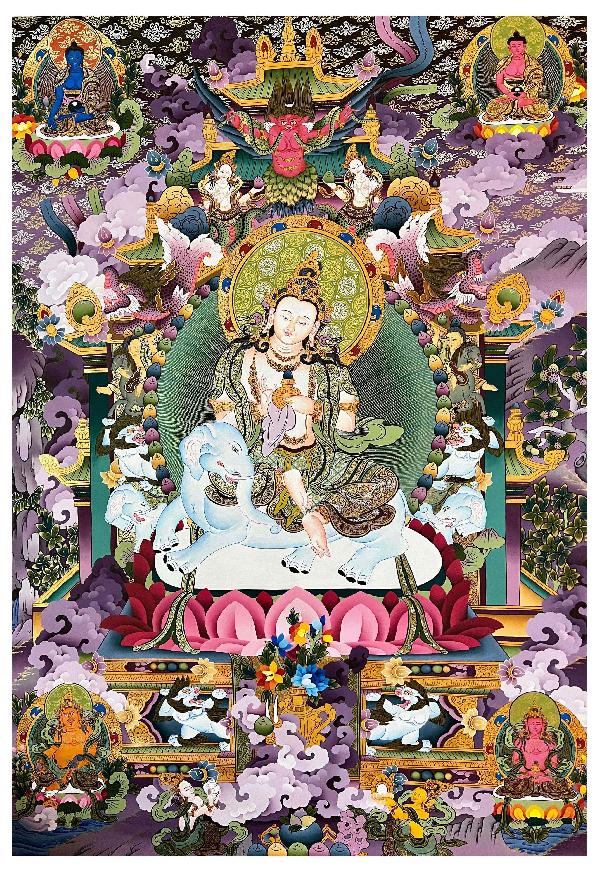
Samantabhadra Thangka, Master Quality, Buddhist Traditional Painting, Tibetan Style, Mix Gold, Rare Find, with Pancha Buddha,green Tara and Jambhala
Kuntuzangpo
In the rich tapestry of Buddhist philosophy and art, few figures possess the profound depth and dual significance of Samantabhadra. Whether celebrated as the ultimate Bodhisattva of action in Mahayana traditions or as the primordial source of all Buddhas in Vajrayana lineages, Samantabhadra stands as a pillar of enlightened activity and ultimate reality.
For practitioners, art collectors, and spiritual seekers, understanding Samantabhadra is essential. A beautifully crafted Samantabhadra statue is not merely a piece of decor; it is a profound visual scripture. This comprehensive guide explores the history, symbolism, and spiritual importance of Samantabhadra, while highlighting the exceptional craftsmanship of handmade Samantabhadra statues from Nepal.
Yellow Jambhala
: Brief Introduction Jambhala (also known as Dzambhala, Dzambala, Zambala, or Jambala) is the God of Wealth and appropriately a member of the Jewel Family (see Ratnasambhava). He is sometimes equated with the Hindu deity Kubera. Jambhala is also believed to be an emanation of Avalokitesvara or Chenrezig, the Bodhisattva of Compassion. There are five different wealth Jambhalas; each has its own practice and mantra to help eliminate poverty and create financial stability.Gyalten Sogdzin Rinpoche said that Jambhala is the protector of all Lineages and of all sentient beings from all sickness and difficulties. Jambhala is a Bodhisattva of material and spiritual wealth as well as many other things, especially of granting financial stability.
Because in this world, there are all kinds of wrathful and negative emotions or bad spirits, and sometimes they will harm you and other sentient beings, Dzambhala must take on such a wrathful and powerful form to protect us from these harmful spirits and negative karma. Especially, Dzambhala helps us minimize or decrease all misfortunes and obstacles and helps us increase all good fortune and happiness. Read More . . .
Green Tara
: Green Tara: The Compassionate Female Buddha of Swift Protection and WisdomIn the vast and profound tapestry of Tibetan Buddhism, few enlightened beings resonate as deeply with contemporary seekers as Green Tara. Revered as the ultimate manifestation of active compassion, she is the swift rescuer who steps down from her celestial throne to liberate sentient beings from fear, obstacles, and suffering. Unlike remote deities who require lifetimes of rigorous asceticism to reach, Green Tara is universally accessibleâa spiritual mother ready to respond to the sincere cry of any practitioner instantly.
For centuries, the practice of meditating on Green Tara has crossed cultural boundaries, captivating everyone from traditional monastic scholars in the Himalayas to modern western meditation practitioners. Whether you are drawn to her exquisite iconography, seeking the profound neurological peace offered by her mantra, or looking to invite the protective energy of a Green Tara statue into your living space, understanding her deep spiritual architecture can permanently enrich your inner life. This comprehensive guide explores the profound Green Tara meaning, her historical origins, her complex symbolism, and practical instructions for integrating her transformative presence into your home and daily practice.
Read More . . .Pancha Buddha
: The Ultimate Guide to Pancha Buddha: Meaning, Symbolism, and Sacred ArtWhat is Pancha Buddha?
Pancha Buddha, also widely known as the Five Dhyani Buddhas or the Five Wisdom Tathagatas, refers to a group of five primary Buddhas in Vajrayana Buddhism. They are not historical figures like Siddhartha Gautama, but rather transcendent beings representing the five fundamental qualities of the Buddha. These five deitiesâVairocana, Akshobhya, Ratnasambhava, Amitabha, and Amoghasiddhiâembody the transformation of negative human emotions into enlightened wisdom.
Importance in Vajrayana Buddhism and Mahayana Buddhism
In Vajrayana Buddhism and Mahayana Buddhism, the Pancha Buddha serves as the structural foundation for tantric teachings and iconography. They represent the cosmic mandala, a sacred map of the universe and the mind. Meditating upon the Five Dhyani Buddhas helps practitioners navigate the path to enlightenment by systematically overcoming ignorance, anger, pride, attachment, and jealousy. A complete Pancha Buddha statue set is considered essential for serious practitioners, monasteries, and collectors of sacred Buddhist art.
History and Origin of the Five Dhyani Buddhas
Historical Development
The concept of the Pancha Buddha developed progressively over centuries. While early Buddhism focused on the historical Shakyamuni Buddha, the Mahayana tradition expanded the cosmology to include countless Buddhas across different realms. By the time Vajrayana (Tantric) Buddhism flourished in India around the 6th to 8th centuries CE, the framework of the five cosmic Buddhas was fully crystallized.
Origins in Buddhist Scriptures
The primary textual origins of the Five Dhyani Buddhas are found in key tantric texts, particularly the Tattvasamgraha Tantra and the Guhyasamaja Tantra. These scriptures mapped out the Five Wisdoms and assigned specific cosmic Buddhas to represent them. They established a sophisticated system where every aspect of existenceâelements, directions, and psychological statesâwas correlated with one of these celestial beings.
Influence on Himalayan Buddhist Art and Culture
As Vajrayana teachings migrated across the Himalayas to Nepal, Tibet, and Bhutan, the Pancha Buddha became central to Himalayan Buddhist art. In Nepal, specifically within the Newar Buddhist tradition of the Kathmandu Valley, you will find their presence everywhereâfrom the towering stupas of Swayambhunath and Boudhanath (whose eyes watch over the four directions) to the intricate Nepalese Buddha statues crafted by local artisans.
Read More . . .Rare Find
: what is a Rare find? This Samantabhadra is a rare find product, The Rare Find product is an uncommon and elusive product that is difficult to find and likely the only one available for sale. Once sold, Samantabhadra will be removed from the listings or marked as sold. This rarity and exclusivity make it highly sought-after by collectors and enthusiasts, offering a unique and irreplaceable addition to any collection.Master Quality
: What is master Quality? The attribute of "master quality" distinguishes the Samantabhadra as an embodiment of extraordinary craftsmanship and artistic excellence. This exceptional piece is directly handcrafted by an artist or craftsman of the highest categorization, reflecting their unparalleled skill and expertise. The uniqueness of Samantabhadra lies in its exclusivity to the artist, making it a rare find with nearly impossible chances of finding an identical piece in the same category. While copies may exist, they can never truly replicate the essence of the original, as an artist or craftsman capable of creating such exceptional artistry would prefer to showcase their own creative vision rather than reproduce another's work. Read More . . .Introduction to Thangka
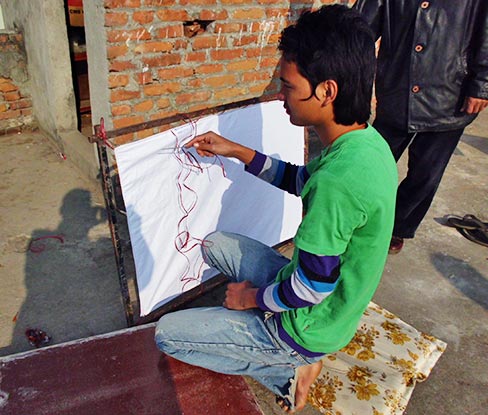
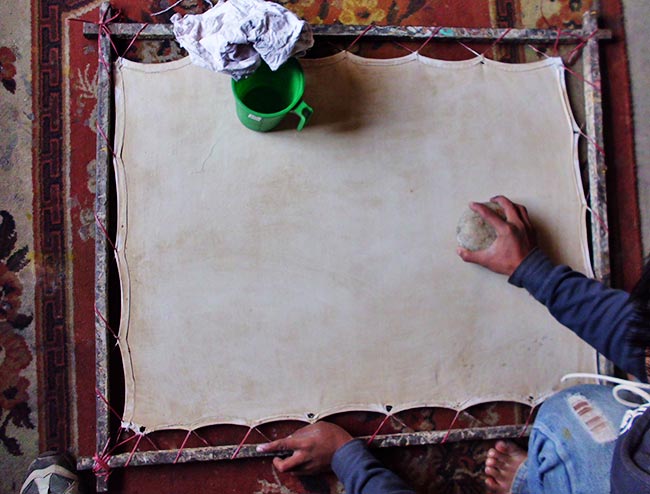
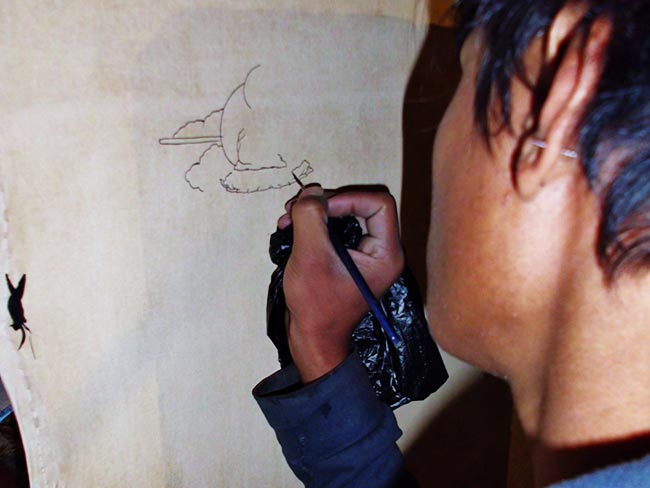
A thangka, also known as tangka, thanka, or tanka, is a vibrant and intricate Tibetan Buddhist painting that serves as a visual representation of spiritual teachings. Crafted with meticulous detail on cotton or silk appliqu?, thangkas depict a wide range of subjects including Buddhist deities, sacred scenes, mandalas, and narrative stories. These sacred artworks are traditionally kept unframed and rolled up for storage, resembling ancient scrolls. To protect their delicate nature, thangkas are mounted on textile backings and often adorned with a silk cover on the front. Proper preservation in dry environments is crucial to maintain the integrity and longevity of the silk. Read More . . .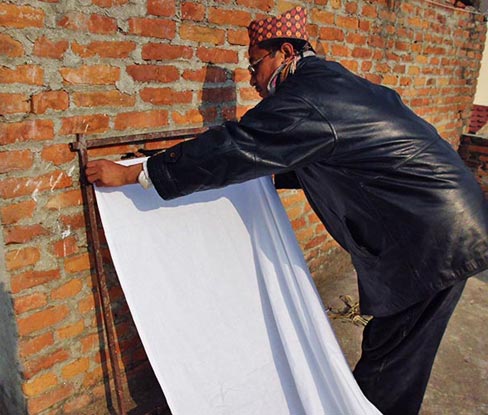
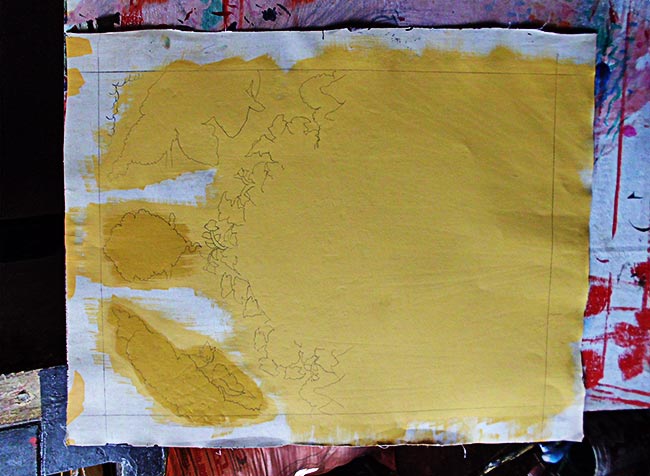
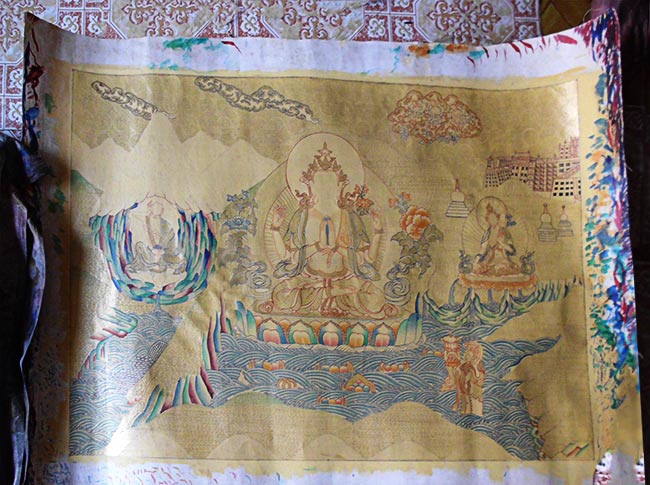
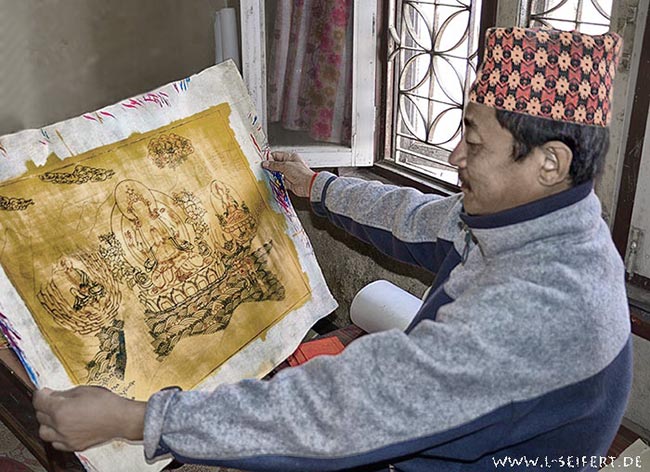
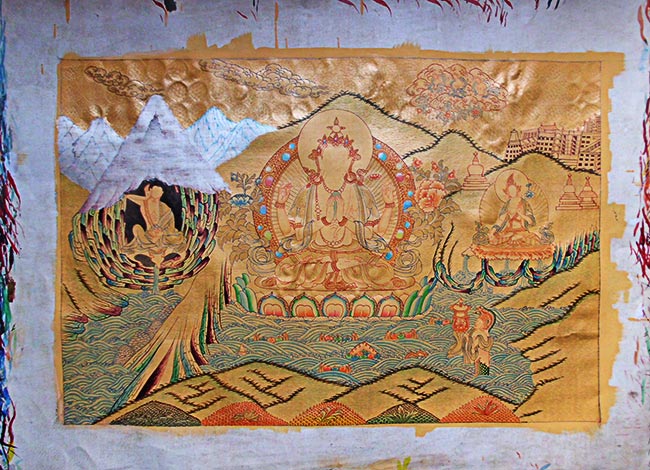
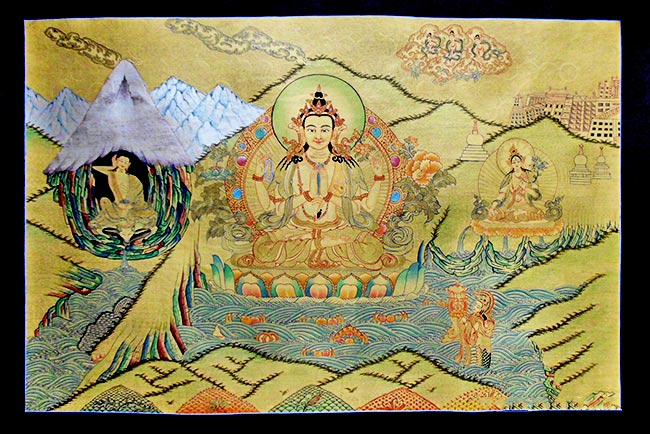
Who is Samantabhadra? :
History and Origins
Samantabhadra's origins trace back to early Mahayana sutras originating in India. As Mahayana philosophy evolved to emphasize not just personal liberation but the salvation of all beings, figures representing specific enlightened qualities emerged. Samantabhadra was conceptualized as the ultimate manifestation of Buddhist praxis (action and practice), complementing the theoretical wisdom of other deities.
Meaning of the Name
The Sanskrit name Samantabhadra translates to "Universal Worthy," "All-Good," or "He Who is All-Pervadingly Good." The prefix Samanta implies something that is universal, all-encompassing, or ubiquitous, while Bhadra means excellent, auspicious, or good. This reflects his nature: his compassionate actions reach every corner of the universe.
Role in Mahayana Buddhism
In Samantabhadra in Mahayana Buddhism, he is the Bodhisattva of Great Conduct. While many followers study Buddhist philosophy, Samantabhadra represents putting those teachings into relentless, compassionate action. He is the patron of all those who practice the dharma, guiding them through the grueling yet beautiful path of the Bodhisattva.
Role in Vajrayana Buddhism (The Primordial Buddha)
It is crucial to distinguish the Mahayana Bodhisattva from Samantabhadra in Vajrayana Buddhism. In the Nyingma school of Tibetan Buddhism, Samantabhadra (known in Tibetan as Kuntuzangpo) is recognized as the Adi-Buddha or Primordial Buddha.
In this context, Samantabhadra Buddha is not a historical figure who attained enlightenment, but the personification of the Dharmakayaâthe unconditioned, beginningless, and endless true nature of reality. He represents pure, naked awareness.
Relationship with Shakyamuni Buddha and Manjushri
In East Asian and traditional Mahayana iconography, Samantabhadra is frequently seen as part of the Shakyamuni Trinity (the Three Saints of the Hua-yan).
Shakyamuni Buddha sits in the center, representing pure enlightenment.
Manjushri Bodhisattva sits on the left (usually riding a lion), representing supreme Wisdom (Prajna).
Samantabhadra Bodhisattva sits on the right (riding an elephant), representing supreme Action/Practice (Carya).
Together, they signify that true enlightenment requires both profound wisdom and compassionate action.
Symbolism
The visual language of a Samantabhadra sculpture is rich with metaphorical meaning. Every element serves as a teaching tool.
Meaning of the Elephant Mount
When depicted as a Bodhisattva, Samantabhadra famously rides a white elephant with six tusks.
The Elephant: Symbolizes immense physical strength, grounding, steadfastness, and the power to overcome all obstacles. Just as an elephant paves a path through the densest jungle, Samantabhadra clears the path to enlightenment.
The Six Tusks: Represent the Six Paramitas (Perfections) required for enlightenment: Generosity, Morality, Patience, Diligence, Meditation, and Wisdom.
Lotus Symbolism
Samantabhadra is often seated upon a lotus flower or holding a lotus stem. The lotus roots in the mud but blossoms immaculately above the water, symbolizing purity, spiritual awakening, and the ability to exist within the suffering of Samsara without being tainted by it.
Hand Gestures (Mudras)
The Samantabhadra Mudra varies based on his depiction.
As a Bodhisattva, his hands may be in the Vitarka Mudra (teaching/discussion) or the Varada Mudra (boon-granting), showcasing his active engagement in helping beings.
As the Primordial Buddha (Kuntuzangpo), his hands rest securely in his lap in the Dhyana Mudra (meditation), signifying absolute stillness, ultimate reality, and pure awareness.
Attributes and Sacred Objects
He is frequently depicted holding a wish-fulfilling jewel (Cintamani), representing the fulfillment of the spiritual aspirations of all beings. In some traditions, he holds a scroll (representing the sutras) or a lotus supporting a vajra.
Spiritual Qualities Represented
Ultimately, the symbolism of Samantabhadra points to consistency, unshakeable vows, dynamic energy, and the harmonious balance of mind and body in the pursuit of universal liberation.
Iconography of Samantabhadra :
The Samantabhadra iconography shifts dramatically depending on the regional tradition and whether he is being depicted as a Bodhisattva or the Primordial Buddha.
Posture and Facial Expressions
As a Bodhisattva, he is commonly seated in Lalitasana (the posture of royal ease) atop his elephant, or in Padmasana (full lotus position). His facial expression is one of supreme serenity, deep compassion, and approachability.
Crown, Ornaments, and Body Color
The Bodhisattva: Adorned in the magnificent silken garments and jewel-encrusted crowns of ancient Indian royalty. This "Sambhogakaya" attire represents the richness of his spiritual merits. His body is typically depicted as white or light green.
The Primordial Buddha (Kuntuzangpo): In striking contrast, the Tibetan Vajrayana depiction shows him completely naked (without crowns or ornaments), symbolizing the unadorned, pure nature of the mind free from conceptual elaborations. His body color is a deep, luminous sky blue, representing the infinite, boundless expanse of space and consciousness.
Differences Among Artistic Traditions
Nepalese and Tibetan Art: Focuses heavily on intricate bronze and copper casting. Tibetan Samantabhadra statues often depict him in the Yab-Yum (father-mother) embrace with his consort, Samantabhadri, symbolizing the inseparable union of awareness and emptiness.
Chinese and Japanese Art: (Where he is known as Puxian and Fugen, respectively) primarily depict him as a beautiful, slightly androgynous Bodhisattva riding the six-tusked elephant, often painted in soft, flowing brushstrokes or carved from wood.
Spiritual Importance
Compassion, Practice, and Meditation
While Avalokiteshvara represents the emotion of compassion, Samantabhadra represents the action of compassion. He is the patron of practitioners who spend long hours in meditation and those who dedicate their lives to helping others.
The Ten Great Vows of Samantabhadra
Samantabhadra's spiritual importance culminates in his Ten Great Vows, as outlined in the final chapter of the Avatamsaka Sutra. These vows form a core foundational practice in Mahayana Buddhism:
To pay homage and respect to all Buddhas.
To praise the Thus Come One (Tathagata).
To make abundant offerings.
To repent misdeeds and evil karma.
To rejoice in others' merits and virtues.
To request the Buddhas to teach the Dharma.
To request the Buddhas to remain in the world.
To follow the teachings of the Buddhas at all times.
To accommodate and benefit all living beings.
To transfer all merits and virtues universally to all beings.
Mantras and Prayers
For practitioners, meditating upon a Samantabhadra Statue is often accompanied by sacred mantras.
Commonly Recited Mantras
In Vajrayana traditions, a commonly associated mantra for the Primordial Buddha Kuntuzangpo is:
"Om Ah Hung Bodhicitta Maha Sukha Jnanadhatu Ah"
(Note: Specific mantras can vary widely by lineage; practitioners should receive transmission from a qualified teacher).
Their Meanings and Use
Mantras dedicated to Samantabhadra are used to awaken one's own primordial purity. By chanting, practitioners aim to align their body, speech, and mind with the "All-Good" nature of Samantabhadra, transforming ordinary perception into pure vision.
Handmade Samantabhadra Statues from Nepal :
When acquiring a Nepalese Samantabhadra Statue, you are not just buying a piece of metal; you are investing in centuries of unbroken artistic lineage.
Traditional Lost-Wax Casting Nepal
Authentic Bronze Samantabhadra Statues from Nepal are created using the ancient cire perdue (lost-wax casting) method.
The artisan sculpts a highly detailed model out of beeswax.
The wax is coated in a mixture of clay and dried in the sun.
The mold is baked, causing the wax to melt and pour out (hence "lost wax").
Molten copper or bronze is poured into the empty clay mold.
The mold is broken away to reveal the raw metal sculpture, which is then chased, filed, and refined.
Copper Body Construction and Gold Gilding
High-quality statues feature a pure copper body. Copper is highly valued in Buddhist art for its spiritual conductivity and durability. The statues are then finished with 24K gold gilding, using traditional fire-gilding techniques that permanently bond the gold to the copper, resulting in a luminous, divine glow.
Hand Carving, Acrylic Paintings, and Gemstones
The faces of authentic statues are meticulously painted with acrylics (often featuring actual gold dust) to open the eyes and bestow a lifelike, compassionate gaze. Master Newari artisans also hand-carve intricate floral motifs into the metal robes and set the crowns and ornaments with semi-precious stones like turquoise, lapis lazuli, and coral.
Importance of Nepalese Craftsmanship
For over a thousand years, Nepalese (specifically Newari) artisans from the Kathmandu Valley have been the most sought-after statue makers in the Himalayas, historically commissioned by Tibetan monasteries. Their handcrafted Buddhist statues are considered E-E-A-T standard (Experience, Expertise, Authoritativeness, and Trustworthiness) in the realm of sacred art.
Choosing a Samantabhadra Statue
Selecting the right Samantabhadra Sculpture requires thoughtful consideration.
Home Shrine vs. Meditation Room: A smaller, serene Bodhisattva statue (6 to 12 inches) is ideal for a personal home altar. For a dedicated meditation room, a larger Adi-Buddha Kuntuzangpo statue might serve as a powerful focal point for Dzogchen or Mahamudra practice.
Temple or Center: Temples require larger, heavily gilded statues (18+ inches) to anchor the sacred space and allow for group veneration.
For a Collector or as a Gift: A finely detailed, lost-wax copper statue with gemstone embellishments makes a prestigious and spiritually meaningful gift.
Materials and Finishes: Look for pure copper or bronze. Decide between fully gilded (bright and radiant), partially gilded, or an oxidized/antique finish (which highlights the carving details).
Authenticity: Always source from reputable platforms like HandmadeStatue.com that work directly with Nepalese artisan families to ensure authentic proportions, accurate iconography, and ethical sourcing.
Caring for a Bronze Buddhist Statue
To ensure your handmade Samantabhadra statue lasts for generations, proper care is essential.
Cleaning and Maintenance
Dusting: Use a soft, dry, clean brush (like a makeup or artist's brush) to gently remove dust from crevices. Do not use cloth on the painted face, as it can scratch the delicate 24K gold paint.
Avoid Chemicals: Never use harsh chemical metal polish, water, or abrasive rags, as this will destroy the gold gilding and the protective finish.
Handling: Always handle the statue with clean hands or cotton gloves. The oils from human skin can tarnish copper and bronze over time.
Placement and Preservation
Placement: In accordance with Buddhist tradition, statues should be placed in a clean, elevated space, never on the floor or in inappropriate areas like bathrooms or directly facing beds.
Environment: Keep the statue away from direct sunlight, extreme humidity, or sudden temperature changes to preserve the acrylic face paint and prevent metal oxidation.
What people would like to know about Samantabhadra :
1. Who is Samantabhadra?
Samantabhadra is a major Buddhist figure representing perfect action, practice, and universal compassion. Depending on the tradition, he is either an exalted Mahayana Bodhisattva or the Vajrayana Primordial Buddha (Adi-Buddha).
2. What does Samantabhadra symbolize?
He symbolizes the flawless execution of Buddhist teachings (praxis), boundless compassion in action, and in Tibetan traditions, the pure, unconditioned, primordial awareness of the mind.
3. Is Samantabhadra a Buddha or Bodhisattva?
He is both, depending on the tradition. In Mahayana Buddhism, he is the Bodhisattva of Great Conduct. In Vajrayana (Tibetan Nyingma) Buddhism, a figure of the same name is revered as the Primordial Buddha.
4. What is the difference between Samantabhadra and Manjushri?
Manjushri is the Bodhisattva of Supreme Wisdom, while Samantabhadra is the Bodhisattva of Supreme Action. Together with Shakyamuni Buddha, they form the Shakyamuni Trinity, showing that enlightenment requires both wisdom and action.
5. Why does Samantabhadra ride an elephant?
The elephant represents steadfastness, grounding, and the immense strength needed to overcome obstacles on the spiritual path. Its six tusks represent the Six Paramitas (Perfections): generosity, morality, patience, diligence, meditation, and wisdom.
6. What mantra is associated with Samantabhadra?
In Tibetan traditions, the primordial Buddha Kuntuzangpo is associated with mantras like "Om Ah Hung Bodhicitta Maha Sukha Jnanadhatu Ah." Practitioners use these mantras to realize the pure nature of their own minds.
7. Where should a Samantabhadra statue be placed?
It should be placed on an elevated altar, shrine, or shelf in a clean, respectful area like a meditation room or living room. It should never be placed on the floor or near a bathroom.
8. How are handmade Samantabhadra statues made in Nepal?
They are crafted using the ancient lost-wax casting method. Artisans sculpt a wax model, create a clay mold, melt away the wax, and pour molten copper or bronze into the mold. The metal is then hand-carved, polished, and painted.
9. What materials are used?
Authentic Nepalese statues are primarily cast in pure copper or bronze. They are frequently finished with 24K gold fire gilding, decorated with acrylics and gold dust on the face, and inlaid with semi-precious stones.
10. How do I know if a statue is authentic?
Authentic statues possess intricate hand-carved details, correct traditional iconography, and high-quality materials (copper/bronze). Sourcing from reputable platforms that work directly with Kathmandu Valley artisans, such as HandmadeStatue.com, ensures authenticity.
Mantra of Samathabhadra
You may also want to read the related articles :
What is a Thangka | Making Process Of Tibetan Thangka | Videos of Thangka Making Process | Thangka Brocading OptionAt Handmade Statue, we aim to provide a seamless and user-friendly experience. While our website is not a direct online shopping platform, we have a shopping cart system to make submitting your inquiries easy. Follow these steps to place your order:
Step 1: Browse Our Products
Explore our website to discover a wide range of authentic Nepali handicrafts, including statues, thangkas, singing bowls, wood carvings, jewelry, and more. Click on any product to view detailed descriptions and images.
Step 2: Add Items to Your Inquiry Cart
Click the “Add to Inquiry Cart” button for each product you are interested in. This will help you organize your selections conveniently.
Step 3: Review Your Inquiry Cart
Once you’ve added all your items, review your cart to ensure accuracy before submitting your inquiry.
Step 4: Submit Your Inquiry
Click the “Submit Inquiry” button. Fill out the form with your contact details, selected products, and any specific questions or customization requests.
Step 5: Communicate via Email
Since we don’t have an automated payment system, our team will respond to your inquiry via email. We’ll provide guidance, answer questions, and assist with customization requests.
Step 6: Finalize Your Order
Confirm all product details and customization options with our team. Once everything is finalized, we will provide secure payment instructions.
Step 7: Complete Your Payment
Make the payment through the provided method. After confirmation, we will process and prepare your order for shipment.
Step 8: Shipping and Delivery
We offer worldwide shipping. Once your order is dispatched, we will provide tracking details and shipping information.
Step 9: Receive and Enjoy Your Handicrafts
Unpack your beautiful handmade Nepali products and enjoy the craftsmanship and cultural heritage of Nepal.
Need Assistance?
If you face any issues or have questions while placing your order, contact us via email or mobile communication apps. Our team is dedicated to providing prompt support and a smooth ordering experience.
We hope this straightforward ordering process ensures a delightful and satisfying experience with Handmade Statue. Thank you for choosing us to connect you with the rich heritage of Nepali handicrafts.
Return Policy
We have a 7 days money back policy but buyer have to pay the return shipping charges.
Shipping
- Shipping cost is calculated, based on the shipping weight of the products ordered. THe normal Shipping cost is US$25 for upto 0.5 kgs weight
- We ship Worldwide, Except Russia and India.
- The deliver duration varies for international Shipping location. We normally dispatch the product in 2 -3 business days. Else Buyer will be infromed Personally about the shipping.
Related Products
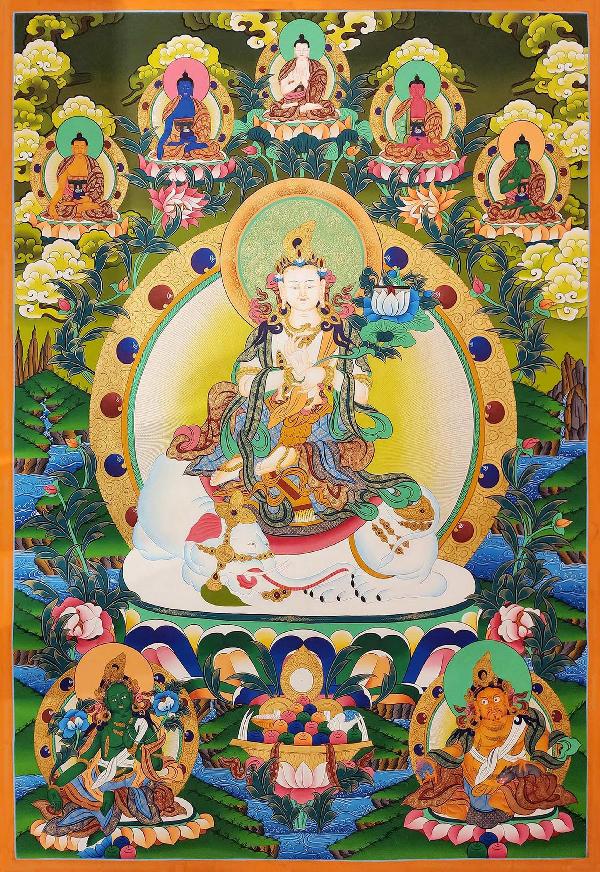
153cm Samantabhadra Thangka, Tibetan Buddhist Art, Hand Painted, Real Gold
Weight : 0.3kg | [30593]
US$1600
US$1280
You Save
US$320
(20%)
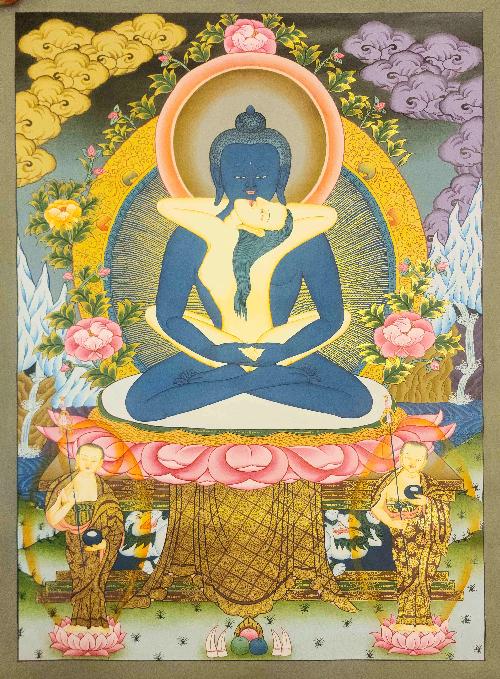
65cm Samantabhadra, Buddhist Traditional Painting, Hand Painted, Real Gold
Weight : 0.3kg | [33432]
US$1380
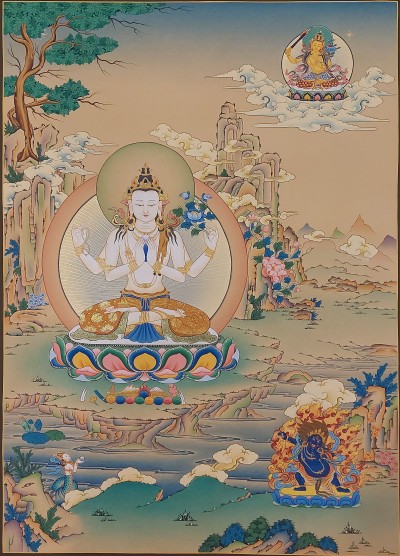
76cm Buddhist Karma Gadri Art, Handmade Thangka Of Chenrezig, Real Gold, Hand Painted Supported By Manjushri And Vajrapani
Weight : 0.1kg | [26350]
US$1000
US$800
You Save
US$200
(20%)
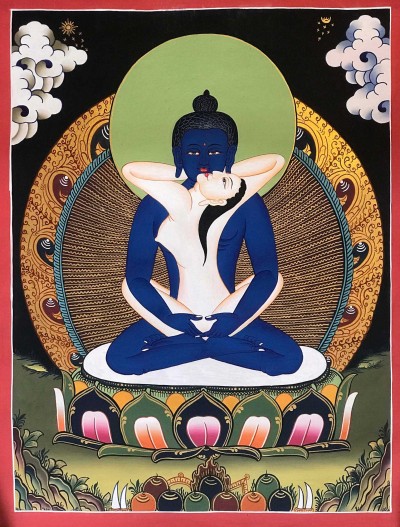
33cm Tibetan Thangka Of Samantabhadra
Weight : 0.1kg | [19314]
US$35
US$30
You Save
US$5
(20%)
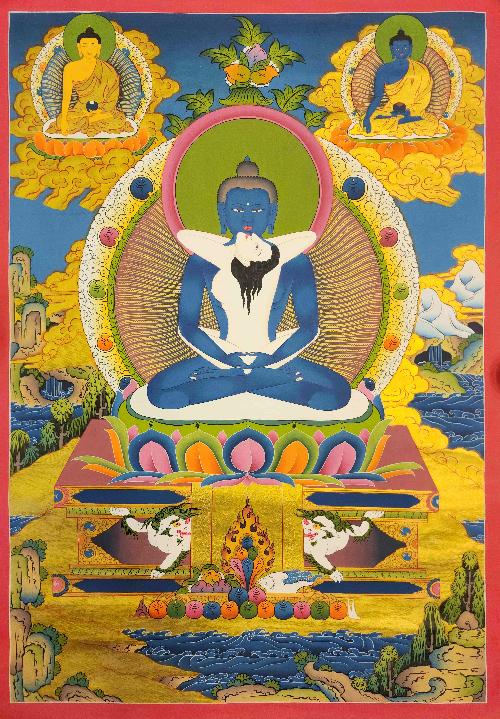
78cm Samantabhadra, Buddhist Traditional Painting, Hand Painted, Real Gold
Weight : 0.3kg | [33438]
US$1000
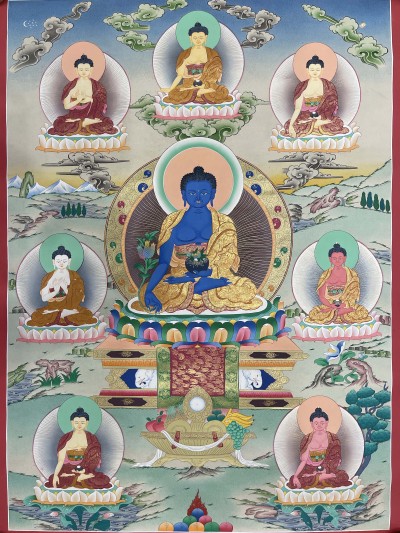
78cm Buddhist Hand Painted Thangka Of Medicine Buddha, Real Gold, Lamas Art
Weight : 0.1kg | [23731]
US$325
US$260
You Save
US$65
(20%)
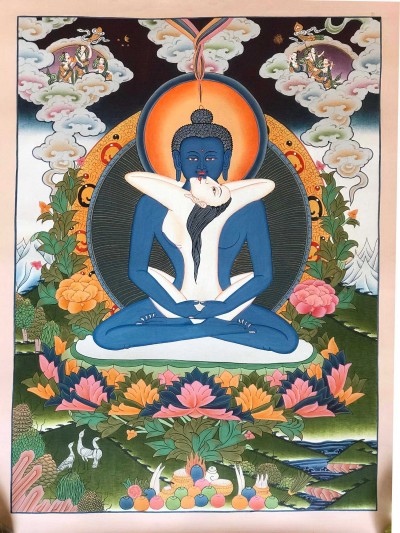
45cm Tibetan Thangka Of Samantabhadra
Weight : 0.1kg | [18615]
US$90
US$75
You Save
US$15
(20%)
100cm Samantabhadra Thangka, Tibetan Buddhist Art, Hand Painted, Real Gold
Weight : 0.3kg | [30704]
US$740
US$595
You Save
US$145
(20%)