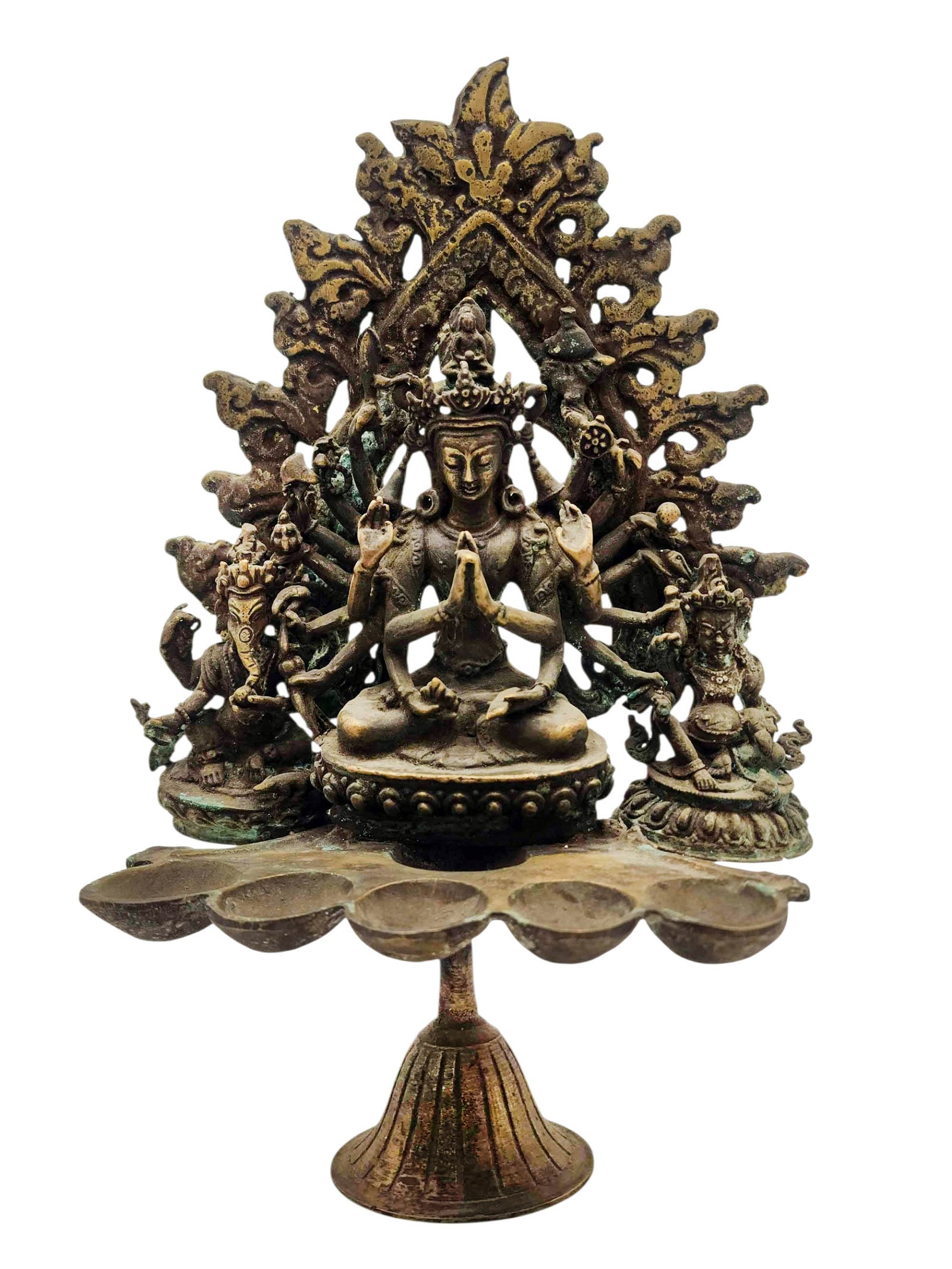
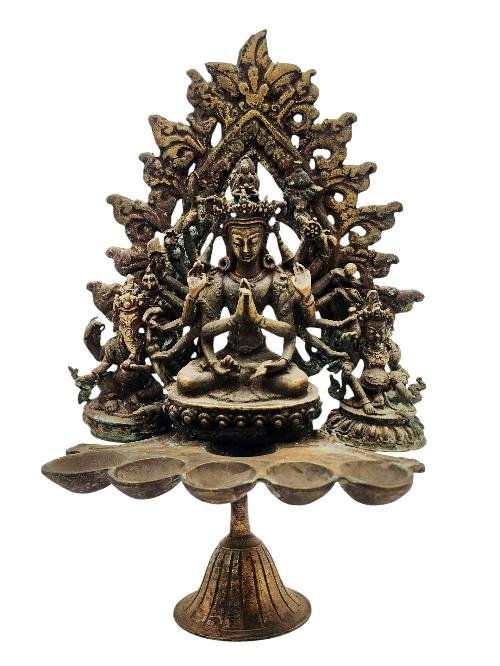
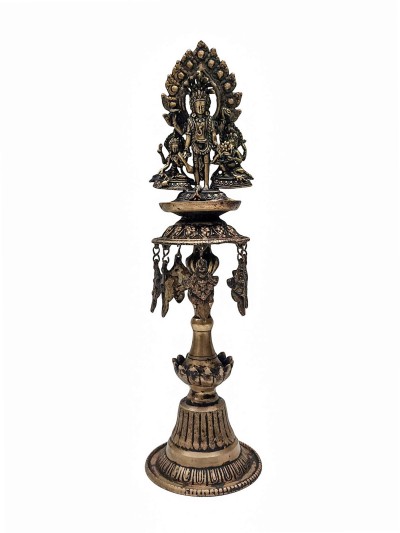
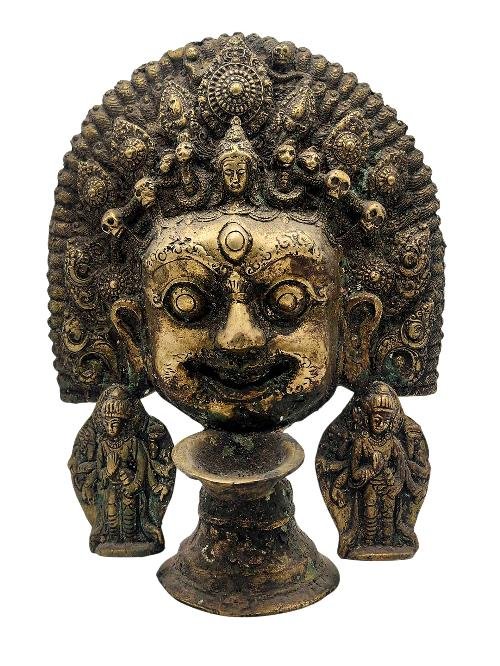
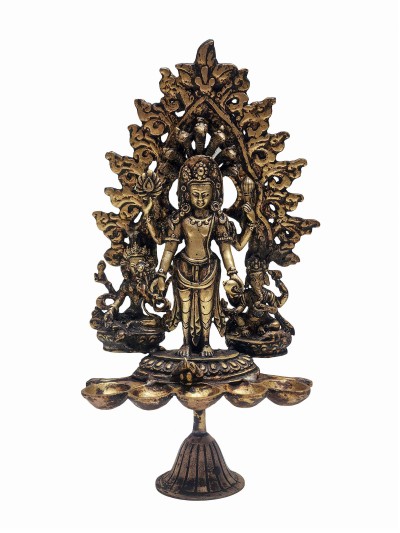
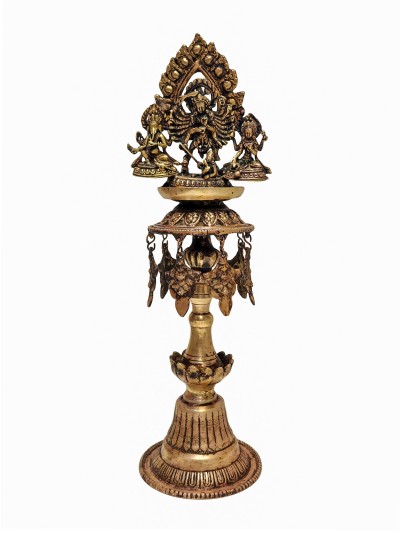
The shipping weight for 1 piece of the product is 2.50 kg, and shipping cost is USD53.00.
Note: Shipping Charge for this product will be calculated based on volumetric(dimensional) weight.
Country
Shipping Mode
We normally dispatch orders within 2 to 5 business days. If there are any delays, we will personally inform the buyer about the dispatch date.
We accept Paypal | Credit/Debit Card | Bank Transfer | Money Transfer / Remit Click Here for more Information.
We offer a simple 7-day money-back policy, with the buyer responsible for return shipping. Click Here for more Information.
Cundi :
While Cundī is less well known in Tibetan Buddhism, she is revered in T?ngm? or East Asian esoteric Buddhism. In China, she is known as Zhǔnt? P?s? or Zhǔnt? F?mǔ , "Junje" in Korean, while in Japan she is known as Jundiai Kannon.In late imperial China, the early traditions of Tangmi were still thriving in Buddhist communities. Robert Gimello has also observed that in these communities, the esoteric practices of Cundī were extremely popular among both the populace and the elite.
Yellow Jambhala
: Brief Introduction Jambhala (also known as Dzambhala, Dzambala, Zambala, or Jambala) is the God of Wealth and appropriately a member of the Jewel Family (see Ratnasambhava). He is sometimes equated with the Hindu deity Kubera. Jambhala is also believed to be an emanation of Avalokitesvara or Chenrezig, the Bodhisattva of Compassion. There are five different wealth Jambhalas; each has its own practice and mantra to help eliminate poverty and create financial stability.
Gyalten Sogdzin Rinpoche said that Jambhala is the protector of all Lineages and of all sentient beings from all sickness and difficulties. Jambhala is a Bodhisattva of material and spiritual wealth as well as many other things, especially of granting financial stability.
Because in this world, there are all kinds of wrathful and negative emotions or bad spirits, and sometimes they will harm you and other sentient beings, Dzambhala must take on such a wrathful and powerful form to protect us from these harmful spirits and negative karma. Especially, Dzambhala helps us minimize or decrease all misfortunes and obstacles and helps us increase all good fortune and happiness.
Iconography
The Yellow Jambhala is considered the most popular and powerful of the Wealth Gods. He is the emanation of Buddha Ratnasambhava. He can remove poverty within the six realms, increasing virtues, life span, and wisdom.
He is also said to be an emanation of Vaisravana, one of the "Four Great World-protecting Heavenly Kings". He is the guardian of light in Buddhism, a great charitable deity who grants fortune and protection. Lord Vaisravana lives in the northern region under the Four Heavens, at the northern crystal palace on the fourth level of Mount Sumeru. His servants are either yaksas or bhaisajya-yaksas. According to the commentary on Lotus Sutra, this heavenly king is extremely knowledgeable as his perpetual protection of the Buddhas has enabled him to receive many teachings.
Yellow Jambhala has a yellow-colored body, he sits in the vajra position with his right leg in the panhandle, his right foot is above a snail and lotus flower, and his left leg is kinked. He has one face and two arms. His left hand holds a mongoose named Nehulay which spews forth precious jewels from its mouth, while his right-hand holds gems-shaped fruit and leaf of a lotus. An ordinary image of Lord Vaisravana holds a precious pagoda in the left, which pours out various treasures. In Tibetan Tantric images, the precious pagoda is replaced by the treasure-emitting mongoose. Yellow Jambhala sits on a lotus, sun disk, and moon disk. His mantra is:
Om Jambhala Jalendraye Svaha
About Yellow Jambjala Jambala (Dzambhala) is the God of Wealth and appropriately a member of the Jewel family. In Hinduism, Mythology Jambala is known as Kuber. Jambhala is also believed to be an emanation of Avalokiteshwor Chenrezig, or the Buddha of Compassion, manifesting as the wealth-giving Buddha. There are 5 different wealth Jambhala. Each Jambhala has its mantra and practice to help eliminate poverty and create financial stability.
Mandra of Yellow Jambala
Om Dzambhala Dzalentraye Svaha
Read More . . .
Ganesh
: Introduction
In the vast and vibrant pantheon of Hinduism, few deities command as much universal love, devotion, and instant recognition as Lord Ganesh. With his distinct elephant head, magnificent belly, and gentle yet majestic demeanor, the Hindu elephant-headed god transcends regional, sectarian, and even religious boundaries. He is a fixture not just in grand temples, but on the dashboards of cars, the entryways of homes, the first pages of accounting ledgers, and the altars of students and spiritual seekers globally.
Far beyond his unique physical appearance lies a profound layer of metaphysical truth. Lord Ganesh is not merely a mythological figure; he is an archetypal force representing supreme wisdom, cosmic order, and the psychological tools needed to navigate human life. Understanding Lord Ganesh's meaning, symbolism, iconography, and spiritual significance unlocks a timeless blueprint for personal growth, intellectual clarity, and spiritual enlightenment.
Who is Lord Ganesh?
Lord Ganesh is one of the five primary deities in the Panchayatana puja tradition of Hinduism, occupying a central place of reverence across all major traditions. He is universally hailed as the remover of obstacles (Vighnaharta) and the patron of arts, sciences, letters, and wisdom.
Origins of Ganesh
Scripturally, Ganesh is the son of Lord Shiva (the destroyer and transformer within the Hindu trinity) and Goddess Parvati (the divine mother and embodiment of Shakti). Born from the divine play of the cosmos, his emergence bridges the unmanifest, absolute reality of Shiva with the manifest, material energy of Parvati.
His Role in Hinduism
Ganesh serves as the Pratham Pujya, meaning the deity who must be invoked before any other. Whether a ritual is dedicated to Vishnu, Shiva, or Durga, it invariably begins with an invocation to Ganesh. He guards the threshold between the mundane and the sacred, acting as the celestial gatekeeper.
Why Devotees Worship Ganesh First
The cosmic protocol of worshipping Ganesh first is rooted in both divine decree and practical psychology. According to Vedic lore, Lord Shiva granted his son the boon of primordial worship. Psychologically, before launching any new endeavor, one must clear the mental landscape of doubts, fears, and obstacles. Worshipping Ganesh first ensures that the mind is grounded, aligned, and ready for success.
His Importance in Daily Life and Religious Ceremonies
From purchasing a new house (Griha Pravesh) and starting a business to sitting for an exam or getting married, Ganesh worship is the foundational bedrock of Hindu life. He brings Riddhi (prosperity) and Siddhi (spiritual intellect), making him an indispensable companion in both material pursuits and spiritual evolution.
Meaning of the Name Ganesh
The names attributed to this beloved deity are rich in linguistic and philosophical depth. Analyzing his primary nomenclature reveals his cosmic governance.
Gana and Isha
The word Ganesha is a Sanskrit compound composed of two words:
Gana: Refers to a group, multitude, or collection of categories. In cosmic terms, the Ganas are the assembly of celestial attendants of Lord Shiva, representing all existing particles, life forms, and elemental forces in the universe.
Isha / Pati: Means lord, master, or ruler.
Meaning of Ganesha
Therefore, Ganesha or Ganapati literally translates to "Lord of the Multitudes" or "Master of the Cosmic Elements." He is the supreme intelligence that organizes the chaotic energies of the universe into an ordered, harmonious creation.
Other Prominent Names
Vinayaka: Meaning "the supreme leader" or "one who has no master above him."
Vighnaharta: "The destroyer of obstacles," reflecting his power to clear paths.
Ekadanta: "The single-tusked one," symbolizing focused determination and non-duality.
Lambodara: "The large-bellied lord," signifying the capacity to contain the entire universe within oneself.
Origin and Birth Story of Lord Ganesh
The Puranic accounts of Lord Ganeshâs birth are highly symbolic narratives packed with profound allegorical meanings.
Birth from Goddess Parvati
The most celebrated account from the Shiva Purana narrates that Goddess Parvati created Ganesh out of pure turmeric paste mixed with her own divine essence. Desiring a loyal guardian while she bathed, she breathed life into the form. When Lord Shiva returned to his abode on Mount Kailash, the young boy, strictly adhering to his mother's commands, barred the supreme deity from entering.
Why Lord Shiva Replaced His Head with an Elephant's Head
An intense confrontation ensued between the celestial armies and the unyielding boy. In a flash of divine fury, Shiva severed the boy's head with his trident (Trishula). Upon realizing that this was Parvati's beloved creation, and witnessing her immense grief and destructive rage, Shiva sought to restore the boy to life. He instructed his attendants to bring the head of the first living creature they encountered facing north. They returned with the head of a powerful, wise elephant. Shiva attached it to the boyâs body, breathing new life into him and ordaining him as the leader of his Ganas.
Spiritual Symbolism of the Story
This story is a profound allegory of spiritual transformation:
The original head represents the human ego (Ahamkara), which is rigid, territorial, and ignorant of ultimate reality.
Shiva represents the Guru or Supreme Consciousness that must dissolve the individual ego.
The elephant head represents cosmic wisdom, supreme intellect, and the boundless consciousness that replaces personal identity during spiritual awakening.
Youtube Mantra Link
Read More . . .
Antique Finishing
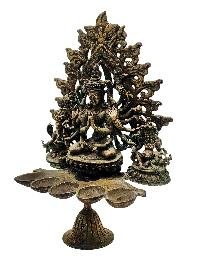
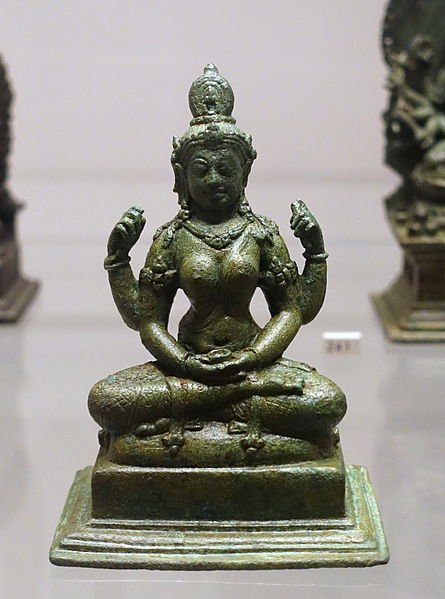
This is an antique patina-finished Cundi. This is not an antique statue. It is just an antique patina finish. This Cundi is a testament to the artisan's mastery of the art of aging. Its antique patina has been meticulously crafted to give the appearance of an aged statue, showcasing the artist's unique techniques and skills. Through undisclosed processes and careful aging treatments, the Cundi undergoes a transformation that captures the essence of time and history.
This art form is shrouded in secrecy, as each artisan holds their own closely guarded formulas and methods. With deep knowledge of materials and an artistic sensibility, they skillfully replicate the natural aging process, infusing the Cundi with a sense of authenticity and character. The result is a captivating piece that tells a visual story, evoking a bygone era and adding a touch of allure to any space.
The artist's dedication to creating an aged aesthetic goes beyond mere appearance. It is a deliberate and intentional effort to give the Cundi a unique identity, imbued with the charm and beauty of time. With every carefully applied treatment and artistic touch, the Cundi becomes a work of art that not only stands as a testament to the artisan's skill but also carries a sense of history and narrative, making it truly exceptional.
Read More . . .
Lost-Wax System
This Panas And Sukunda of Cundi is made by the process of the Lost Wax system. This is a very complicated, time consuming and historic process of making metal sculptures.Which is why it is sometimes called Precision Casting as well. Hence the sculptures made by this process are comparatively expensive. There are many new, advanced and less time consuming methods of casting metal sculptures available as well. But due to the benefits provided by the traditional lost wax system in quality control and customization, we prefer the Loss wax system over Ceramic molding, or sand casting to make our Panas And Sukunda.
Below we have tried to illustrate the process of making a loss wax system statue:
The method of metal casting in which a molten metal is poured into a mold that has been created by means of a wax model. Once the mold is made, the wax model is melted and drained away. Bronze statues come to life differently than marble statues. Instead of carving a block or marble, the bronze artist uses the lost-wax technique to make a series of molds, and then pours melted bronze into the final mold to create the sculpture. This method has been around since 4500 BCE.
There are few important steps in lost wax casting process :
Step 1: Sculpting ( It all starts in the studio with an idea, Then figuring out how to realize the vision in clay.)
Step 2: Mold Making.
Step 3: Wax Pouring.
Step 5: Wax Spruing.
Step 6: Shell Dipping.
Step 7: Bronze Pouring.
Interestingly enough Loss wax process is also called Investment casting because after layers have been formed and dried, the wax is melted out of the ceramic tree by using steam (120?C) in an autoclave. This is why it is called "lost wax casting". The majority of the molten wax which can then be regenerated and is reusable.
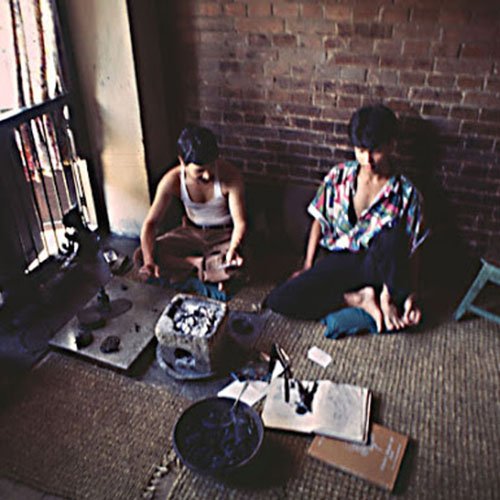
Before Making statue :At work room making the wax models.
Softening a piece of wax over a brazier.
Relaxing after softening the wax The working environment with works in progress.
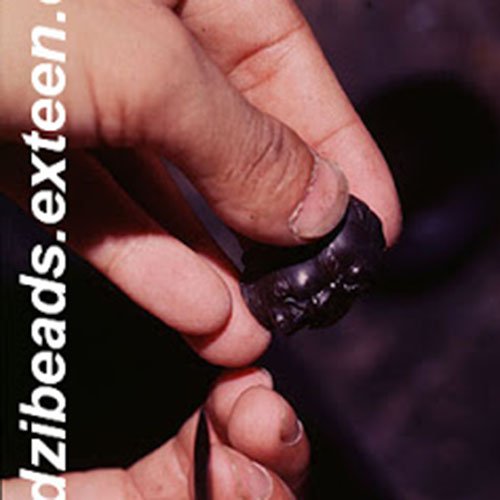
Working the face of an Ekajata wax model.
Working the face of wax model.Using a modeling tool to form the face of Ekajata.
Deatail of wax model
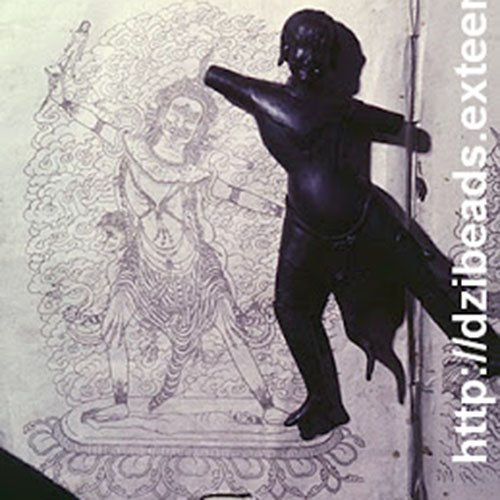
The design for Ekajata compared to the Tibetan book on which it was based.Statues Maker Are master in buddhism .
Detail of A partially finished Candamaharoshana (Acala) wax figure made in the Tibetan style.
A finished wax image of Mahakala.
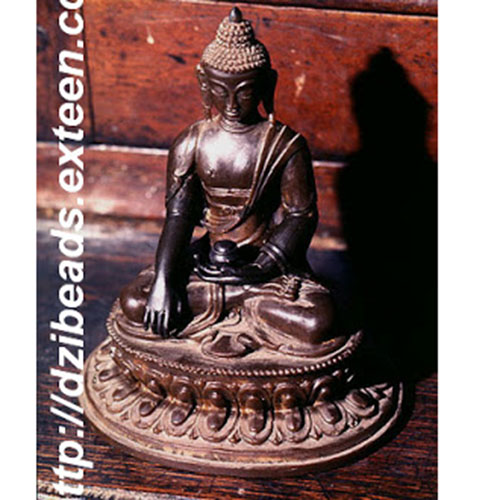
Anthor Finished Wax Model of Shakyamuni Buddha
One of the modelers working in the room shows the Pehar image on which he is working.
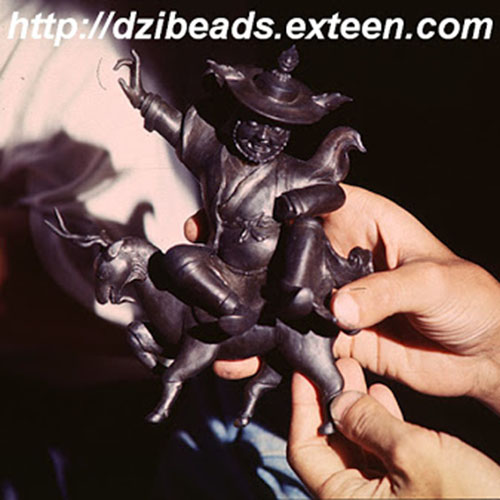
The artist showed how the goat , which had been completed earlier, fits under the image. ,
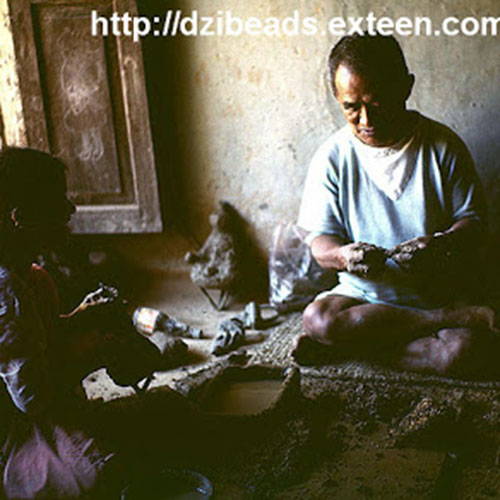
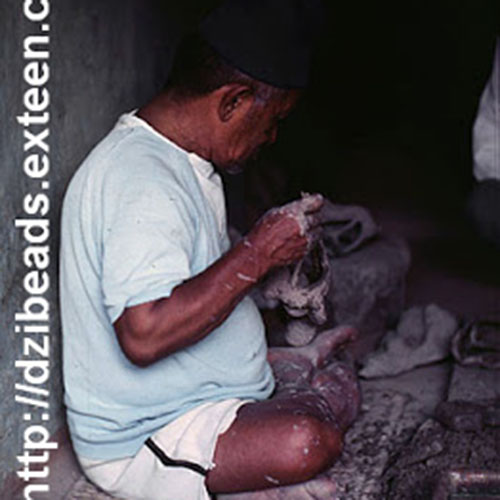
Tej Jyoti Shakya and his wife, Nani Maya Shakya Covering the wax model in a mixture of clay and dung
Pressing the mixture of clay and dung around the wax image.
The board with the clay and dung mixture ready for use.
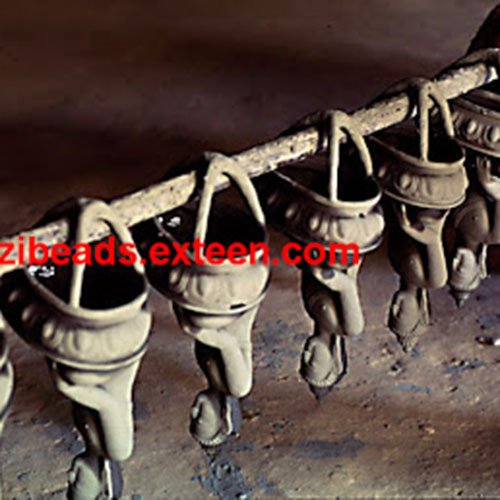
Model Pieces drying after the initial (dipped) thin layer of fine clay.
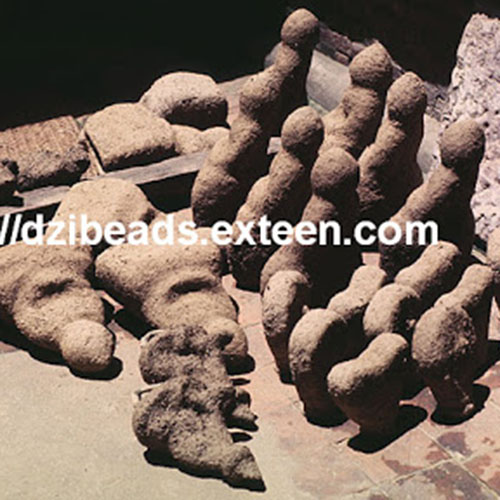
Clay-covered model pieces drying in the sun.
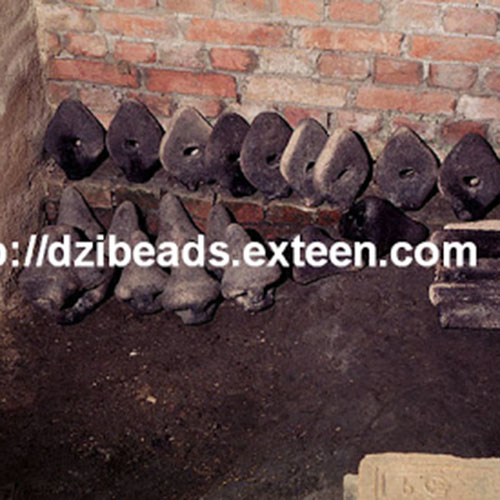
Molds waiting to be put into the burnout furnace
The same molds, seen in the previous image, in the burnout furnace
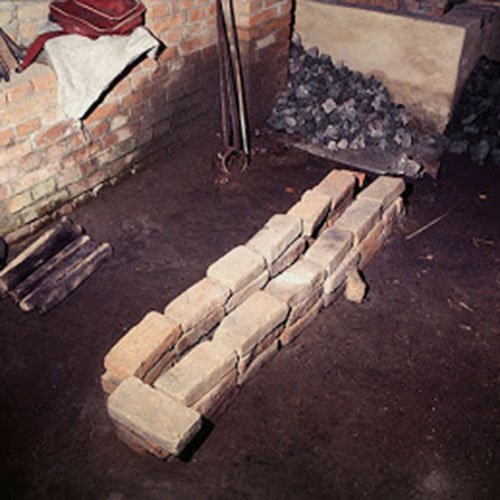
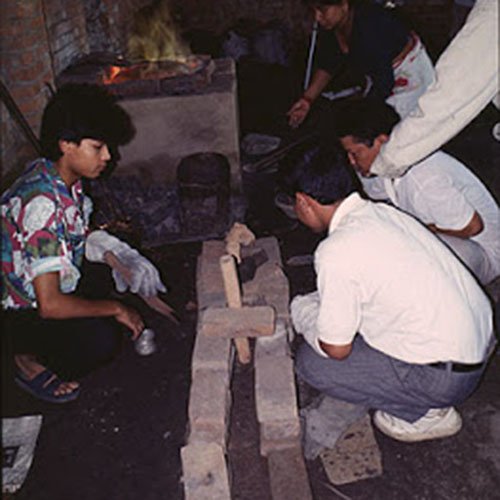
The double row of refractory bricks used to support the heated molds during casting.
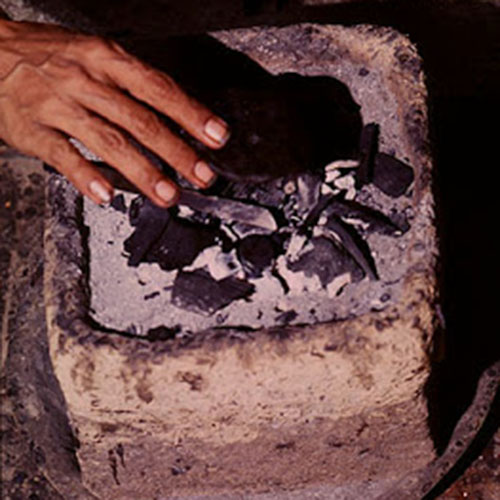
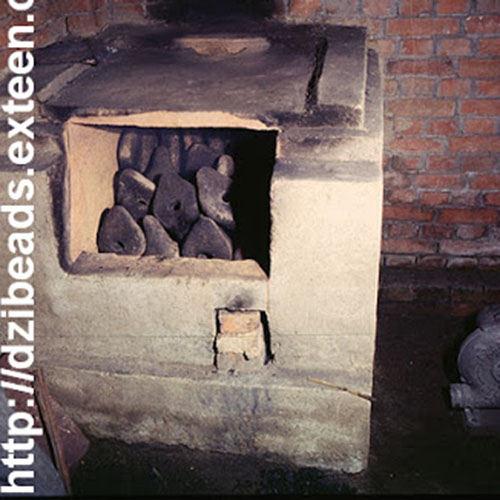
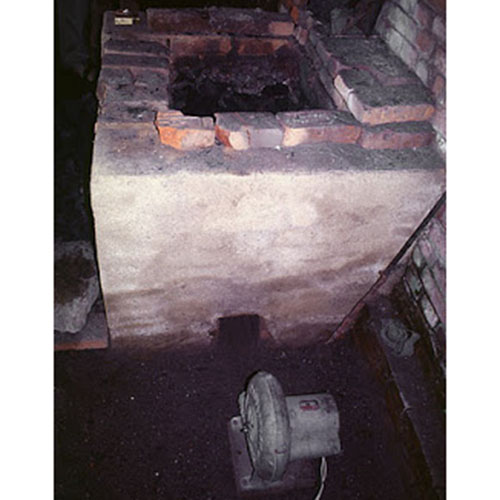
The melting furnace and a pile of coke used for melting the metals. Laying the bed of coke in the melting furnace.
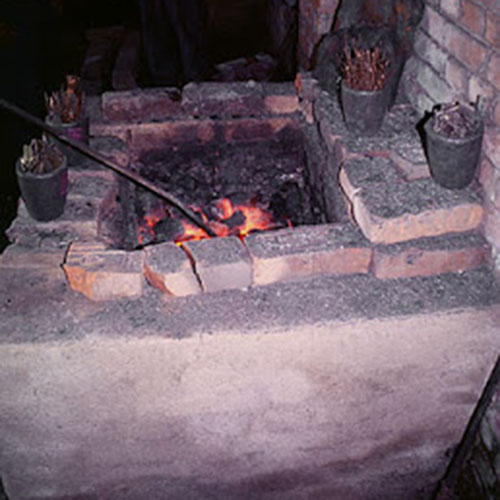
The first ignition of the coke.
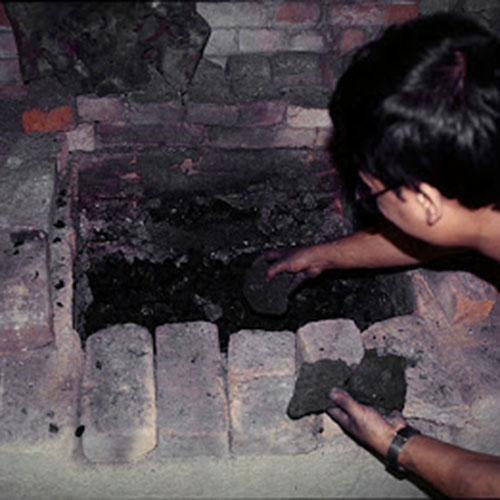
Checking the coke bed.
The electric blower used to force air into the melting furnace
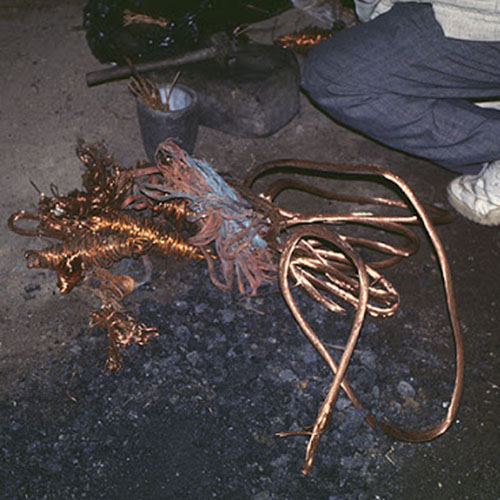
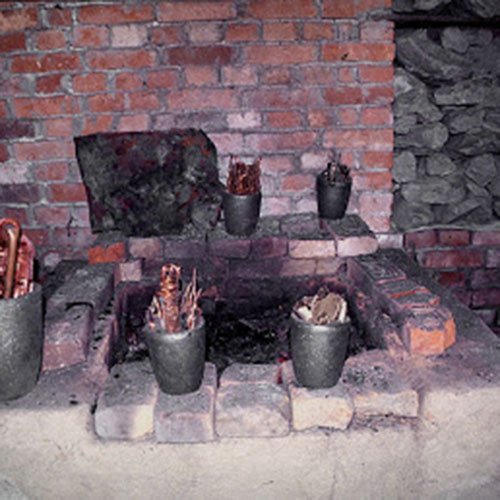
Beginning to fill the crucibles with scrap copper.
Preparing the bed of burning coke to receive the crucibles
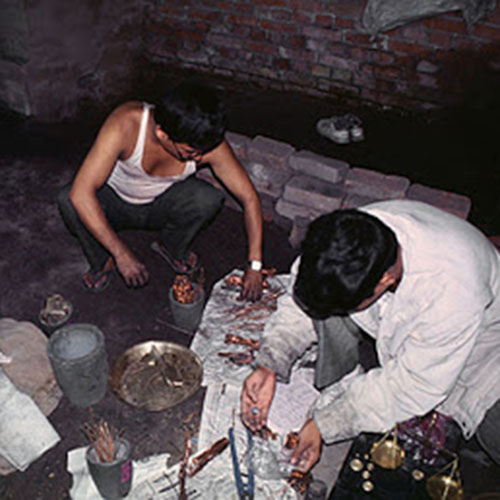
Sorting various metals used in the alloys.
Weighing precious metals that are used in the alloys
Weighing copper from Singapore to achieve a correct alloy.
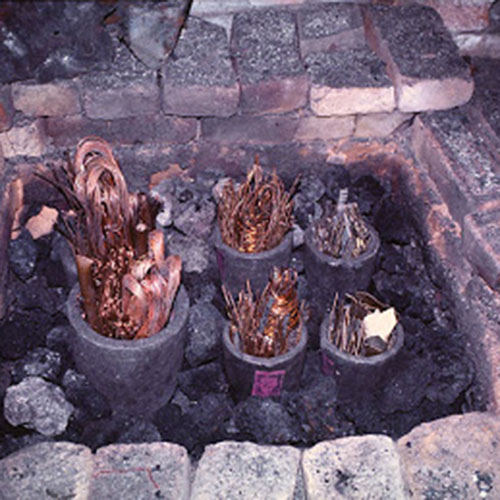
Different sizes of crucibles and various types of metals to be cast in this melt.
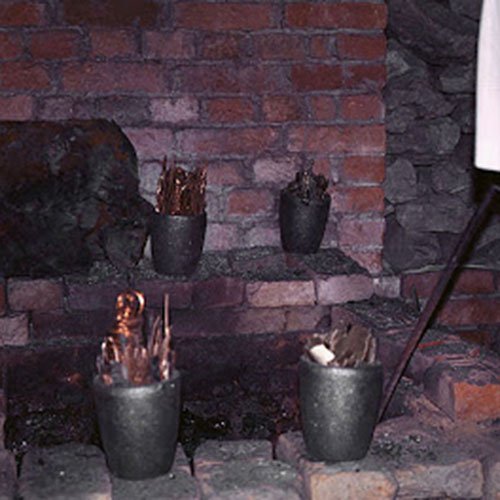
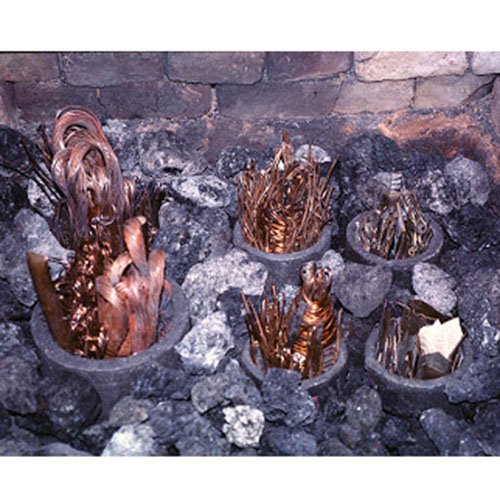
Placing the crucibles in the bed of coke filled with metal are in place.
After the crucibles are in place, more coke is piled around them.
The crucibles are covered with scrap metal to hold in the heat.
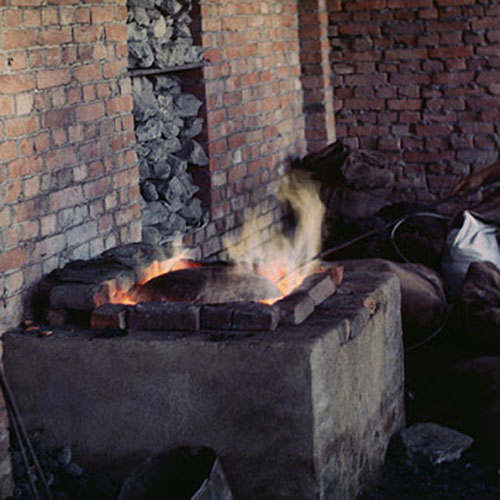
The electric fan is then connected.Soon a very hot flame is produced.
The entire furnace temperature goes up to about 1800 -1900 degrees.
Setting up molds in between the refractory bricks to receive the molten metal. Handling the molds with asbestos gloves and bracing them with fragments of bricks.
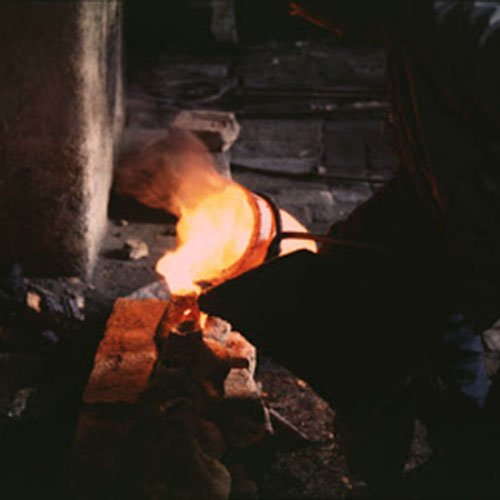
Pouring the molten metal into the base of a mold
Another view of the artists pouring the molten metal.Detailed view showing the molten metal being poured into the sprues.
Preparing to lift and pour molten metal from one of the larger crucibles.
Cooling a mold containing the recently poured metal.
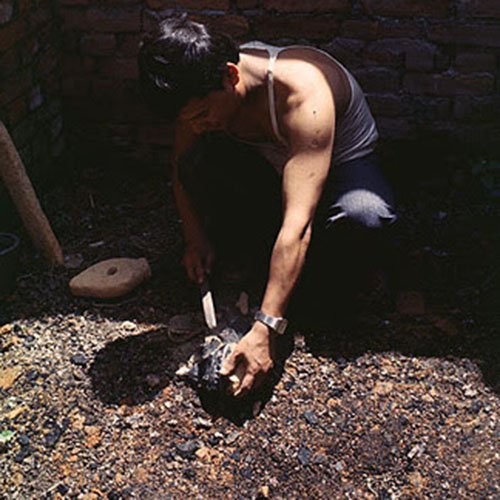
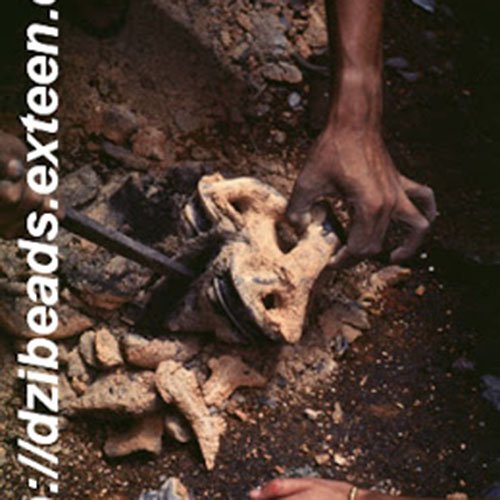
Beginning to break away the clay mold from the metal casting. The mold breaks away revealing the metal image inside
The first metal image from the day's work.
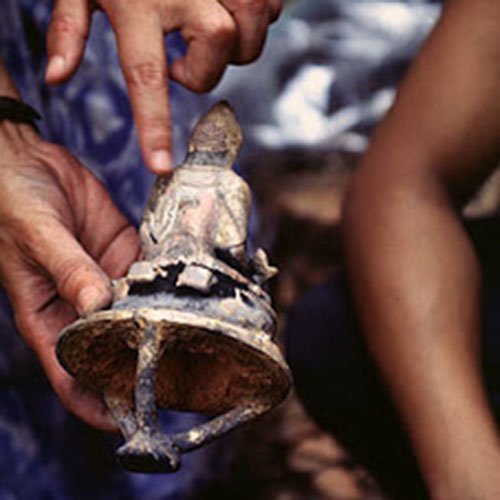
Examining the image for flaws
Two auras (prabhamandalas), one that cast perfectly and one (in front) that only partially filled.
Opening more molds
Researchers mark specific metal images for future identification.
Cleaning the details of the image with a metal tool.
Sawing off the sprues from Aura image. The sprue metal will be reused in future castings.
Two auras that worked perfectly. The one on the right has been cut off of the sprues, while the one on the left still has the sprues attached.
The finishing specialist begins the finishing process with a set of tools, including a small hammer. to give more detail
The entire surface of the image will be gently hammered to a final, almost polished finish.
The finisher's tools and the work in progress
Finishing work on an image of the Buddha.
Hammering the chest of an image that is being held against the work block
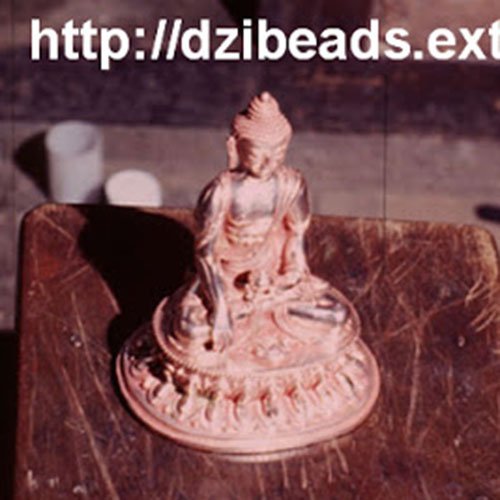
A Buddha image hammered and chased to the final, detailed finish.
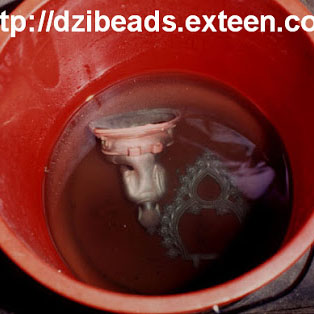
Cleaning in a very mild acid bath. The image and prabhamandala are placed in a final acidic bath to make sure the surface is absolutely clean.
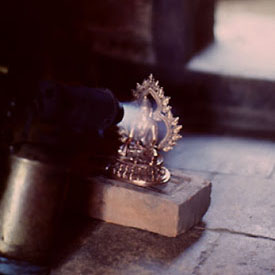
Drying the image with a blow torch.
Read More . . .
Iconography :
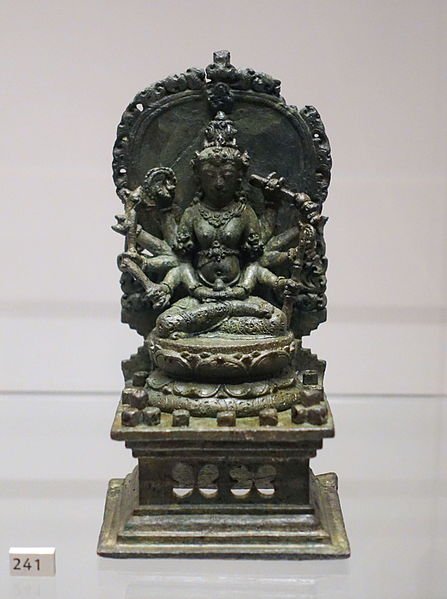
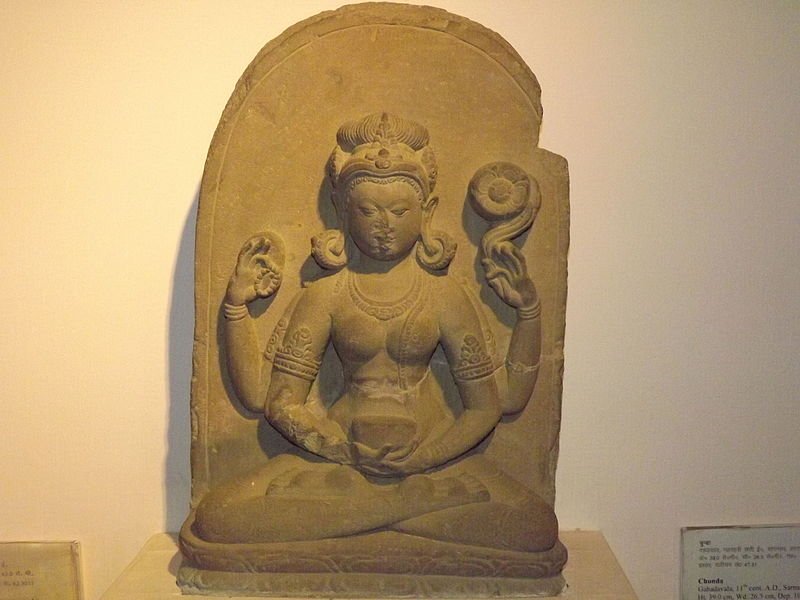
Cundī is depicted with eighteen arms, each wielding implements that symbolize upaya. Her eighteen arms also represent the eighteen merits of attaining Buddhahood as described in an appendix to the Cundī Dhāraṇī Sūtra.
You may also want to read the related articles :
At Handmade Statue, we aim to provide a seamless and user-friendly experience. While our website is not a direct online shopping platform, we have a shopping cart system to make submitting your inquiries easy. Follow these steps to place your order:
Step 1: Browse Our Products
Explore our website to discover a wide range of authentic Nepali handicrafts, including statues, thangkas, singing bowls, wood carvings, jewelry, and more. Click on any product to view detailed descriptions and images.
Step 2: Add Items to Your Inquiry Cart
Click the “Add to Inquiry Cart” button for each product you are interested in. This will help you organize your selections conveniently.
Step 3: Review Your Inquiry Cart
Once you’ve added all your items, review your cart to ensure accuracy before submitting your inquiry.
Step 4: Submit Your Inquiry
Click the “Submit Inquiry” button. Fill out the form with your contact details, selected products, and any specific questions or customization requests.
Step 5: Communicate via Email
Since we don’t have an automated payment system, our team will respond to your inquiry via email. We’ll provide guidance, answer questions, and assist with customization requests.
Step 6: Finalize Your Order
Confirm all product details and customization options with our team. Once everything is finalized, we will provide secure payment instructions.
Step 7: Complete Your Payment
Make the payment through the provided method. After confirmation, we will process and prepare your order for shipment.
Step 8: Shipping and Delivery
We offer worldwide shipping. Once your order is dispatched, we will provide tracking details and shipping information.
Step 9: Receive and Enjoy Your Handicrafts
Unpack your beautiful handmade Nepali products and enjoy the craftsmanship and cultural heritage of Nepal.
Need Assistance? If you face any issues or have questions while placing your order, contact us via email or mobile communication apps. Our team is dedicated to providing prompt support and a smooth ordering experience. We hope this straightforward ordering process ensures a delightful and satisfying experience with Handmade Statue. Thank you for choosing us to connect you with the rich heritage of Nepali handicrafts.
Return Policy
We have a 7 days money back policy but buyer have to pay the return shipping charges.
Shipping
Shipping cost is calculated, based on the shipping weight of the products ordered. THe normal Shipping cost is US$25 for upto 0.5 kgs weight
We ship Worldwide, Except Russia and India.
The deliver duration varies for international Shipping location. We normally dispatch the product in 2 -3 business days. Else Buyer will be infromed Personally about the shipping.
This is not a direct shopping website. So no payments are needed for placing an order. Please feel free to send us an order for the product you are interested in, mentioning the approximate quantity. Based on which we will send you a wholesale price quotation.
Related Products
40cm Traditional Handmade Oil Lamp Stand, Sand Casting, Glossy Finishing