![Buddhist Statue Of Bodhisattva, [sand Casting], [chocolate Oxidized]](https://www.handmadeexpo.com/pics/product/27806.jpg)

![Buddhist Statue Of Bodhisattva, [sand Casting], [chocolate Oxidized]](https://www.handmadeexpo.com/pics/product/thumb/27806.jpg)
![Buddhist Statue Of Bodhisattva, [sand Casting], [chocolate Oxidized]](https://www.handmadeexpo.com/pics/product/thumb/27806_0.jpg)
![Buddhist Statue Of Bodhisattva, [sand Casting], [chocolate Oxidized]](https://www.handmadeexpo.com/pics/product/thumb/27806_1.jpg)
![Buddhist Statue Of Bodhisattva, [sand Casting], [chocolate Oxidized]](https://www.handmadeexpo.com/pics/product/thumb/27806_2.jpg)
Buddhist Statue of Bodhisattva, Sand Casting, Chocolate Oxidized
Ariyapariyesana Sutta
While Maitreya is mentioned in the Pāli canon, he is not referred to as a bodhisattva, but simply the next fully awakened Buddha to come into existence long after the current teachings of the Buddha are lost.
In later Theravāda literature, the term "bodhisatta" is used fairly frequently in the sense of someone on the path to liberation. The later tradition of commentary also recognizes the existence of two additional types of bodhisattas: the paccekabodhisatta who will attain Paccekabuddhahood, and the savakabodhisatta who will attain enlightenment as a disciple of a Buddha. According to the Theravāda teacher Bhikkhu Bodhi the bodhisattva path was not taught by Buddha
This Bodhisattva has been meticulously treated with a chocolate color antique patina. The intention behind this patina is to replicate the appearance of a copper statue that has gracefully aged over a century. Unlike a simple coat of paint, this patina is not applied superficially and is designed to endure. It undergoes an artificial oxidation process that adds depth and character, while also serving as a protective layer against natural oxidation.
By imitating the natural aging process, the chocolate color antique patina lends an air of authenticity and vintage charm to the Bodhisattva. This carefully crafted finish ensures that the patina remains intact for an extended period, offering longevity and resistance to wear. The result is a unique piece that captures the essence of a time-worn copper statue, evoking a sense of history and artistic heritage.
This Bodhisattva has been created using the sand casting system, also known as sand molding casting. This widely employed manufacturing process utilizes a sand mold to produce metal products and components in various sizes and shapes. Sand casting holds significant popularity in the industry, accounting for approximately 60% of all metal castings. The sand casting process involves six primary steps. First, a pattern or replica of the desired sculpture, in this case, Bodhisattva, is created using a material like wood or metal. The pattern is then placed in a flask, which is a box-like structure divided into two halves. The next step involves packing the flask tightly with specially formulated molding sand, creating a mold cavity that matches the shape of the pattern. The pattern is subsequently removed, leaving behind a negative impression of the sculpture within the sand mold. Read More . . .
Mahāyāna Buddhism is based principally upon the path of a bodhisattva. The term Mahāyāna was originally synonym for Bodhisattvayāna, or the "Bodhisattva Vehicle."The holly book of Mahayana contains a simple and brief definition for the term bodhisattva, which is also the earliest known Mahāyāna definition. This definition is given as the following.
"Because he has enlightenment as his aim, a bodhisattva-mahāsattva is so called."
Mahāyāna Buddhism encourages everyone to become bodhisattvas and to take the bodhisattva vows. With these vows, one makes the promise to work for the complete enlightenment of all sentient beings by practicing the six perfections. Indelibly entwined with the bodhisattva vow is merit transference
In Mahāyāna Buddhism life in this world is compared to people living in a house that is on fire. People take this world as reality pursuing worldly projects and pleasures without realizing that the house is on fire and will soon burn down (due to the inevitability of death). A bodhisattva is one who has a determination to free sentient beings from universe and its cycle of death, rebirth and suffering. This type of mind is known as the mind of awakening (bodhicitta). Bodhisattvas take bodhisattva vows in order to progress on the spiritual path towards buddhahood.
There are a variety of different conceptions of the nature of a bodhisattva in Mahāyāna. According to some Mahāyāna sources a bodhisattva is someone on the path to full Buddhahood. Others speak of bodhisattvas renouncing Buddhahood.
A bodhisattva can choose any of three paths to help sentient beings in the process of achieving buddhahood. They are:
king-like bodhisattva - one who aspires to become buddha as soon as possible and then help sentient beings in full fledge;
boatman-like bodhisattva - one who aspires to achieve buddhahood along with other sentient beings and
shepherd-like bodhisattva - one who aspires to delay buddhahood until all other sentient beings achieve buddhahood. Bodhisattvas like Avalokiteśvara and Śāntideva are believed to fall in this category.
Great Joy: It is said that being close to enlightenment and seeing the benefit for all sentient beings, one achieves great joy, hence the name. In this bhūmi the bodhisattvas practice all perfections (pāramitās), but especially emphasizing generosity .
Stainless: In accomplishing the second bhūmi, the bodhisattva is free from the stains of immorality, therefore, this bhūmi is named "stainless". The emphasized perfection is moral discipline.
Luminous: The third ground is named "luminous", because, for a bodhisattva who accomplishes this bhūmi, the light of Dharma is said to radiate for others from the bodhisattva. The emphasized perfection is patience .
Radiant: This ground is called "radiant", because it is said to be like a radiating light that fully burns that which opposes enlightenment. The emphasized perfection is vigor.
Very difficult to train: Bodhisattvas who attain this bhūmi strive to help sentient beings attain maturity, and do not become emotionally involved when such beings respond negatively, both of which are difficult to do. The emphasized perfection is meditative concentration.
Obviously Transcendent: By depending on the perfection of wisdom, [the bodhisattva] does not abide in either saṃsāra or nirvāṇa, so this state is "obviously transcendent". The emphasized perfection is wisdom.
Gone afar: Particular emphasis is on the perfection of skillful means (upāya), to help others.
Immovable: The emphasized virtue is aspiration. This, the "immovable" bhūmi, is the bhūmi at which one becomes able to choose his place of rebirth.
Good Discriminating Wisdom: The emphasized virtue is power.
Cloud of Dharma: The emphasized virtue is the practice of primordial wisdom.
Kṣitigarbha is another popular bodhisattva in Japan and China. He is known for aiding those who are lost. His greatest compassionate vow is:"If I do not go to the hell to help the suffering beings there, who else will go? ... if the hells are not empty I will not become a Buddha. Only when all living beings have been saved, will I attain Bodhi."
The place of a bodhisattva's earthly deeds, such as the achievement of enlightenment or the acts of dharma, is known as a bodhimanda, and may be a site of pilgrimage. Many temples and monasteries are famous as bodhimandas;
for instance, the island of Putuoshan, located off the coast of Ningbo, is venerated by Chinese Buddhists as the bodhimanda of Avalokitesvara. Perhaps the most famous bodhimanda of all is the bodhi tree under which shakyamuṇi achieved buddhahood.
Bodhisattvas are enlightened beings who have denied Nirvana or has not entered the paradise to help all the other sentient being attain enlightenment. There are many different Bodhisattvas, but the most famous is Avalokitesvara, the god of compassion, and Manjushree the god of wisdom.
Bodhisattvas are usually depicted as less austere or inward than the Buddha. Renouncing their own salvation and immediate entrance into nirvana, they devote all their power and energy to saving suffering beings in this world. As the deity of compassion, Bodhisattvas are typically represented with precious jewelry, elegant garments and graceful postures.
You may also want to read the related articles :
Service of Filling and blessing in Statue | Altering Finishing in StatueAt Handmade Statue, we aim to provide a seamless and user-friendly experience. While our website is not a direct online shopping platform, we have a shopping cart system to make submitting your inquiries easy. Follow these steps to place your order:
Step 1: Browse Our Products
Explore our website to discover a wide range of authentic Nepali handicrafts, including statues, thangkas, singing bowls, wood carvings, jewelry, and more. Click on any product to view detailed descriptions and images.
Step 2: Add Items to Your Inquiry Cart
Click the “Add to Inquiry Cart” button for each product you are interested in. This will help you organize your selections conveniently.
Step 3: Review Your Inquiry Cart
Once you’ve added all your items, review your cart to ensure accuracy before submitting your inquiry.
Step 4: Submit Your Inquiry
Click the “Submit Inquiry” button. Fill out the form with your contact details, selected products, and any specific questions or customization requests.
Step 5: Communicate via Email
Since we don’t have an automated payment system, our team will respond to your inquiry via email. We’ll provide guidance, answer questions, and assist with customization requests.
Step 6: Finalize Your Order
Confirm all product details and customization options with our team. Once everything is finalized, we will provide secure payment instructions.
Step 7: Complete Your Payment
Make the payment through the provided method. After confirmation, we will process and prepare your order for shipment.
Step 8: Shipping and Delivery
We offer worldwide shipping. Once your order is dispatched, we will provide tracking details and shipping information.
Step 9: Receive and Enjoy Your Handicrafts
Unpack your beautiful handmade Nepali products and enjoy the craftsmanship and cultural heritage of Nepal.
Need Assistance?
If you face any issues or have questions while placing your order, contact us via email or mobile communication apps. Our team is dedicated to providing prompt support and a smooth ordering experience.
We hope this straightforward ordering process ensures a delightful and satisfying experience with Handmade Statue. Thank you for choosing us to connect you with the rich heritage of Nepali handicrafts.
Return Policy
We have a 7 days money back policy but buyer have to pay the return shipping charges.
Shipping
- Shipping cost is calculated, based on the shipping weight of the products ordered. THe normal Shipping cost is US$25 for upto 0.5 kgs weight
- We ship Worldwide, Except Russia and India.
- The deliver duration varies for international Shipping location. We normally dispatch the product in 2 -3 business days. Else Buyer will be infromed Personally about the shipping.
Related Products
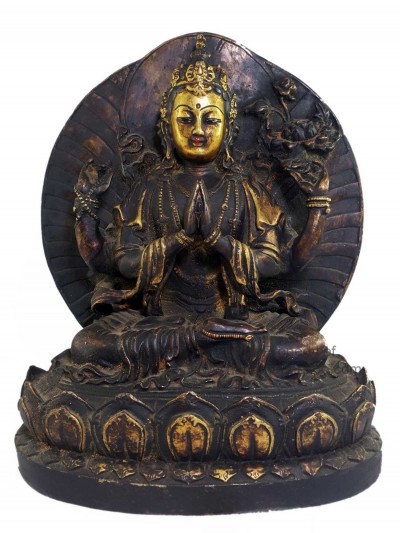
25cm Statue Of, Antique Finishing
Weight : 5.5kg | [18321]
US$180
US$144
You Save
US$36
(20%)
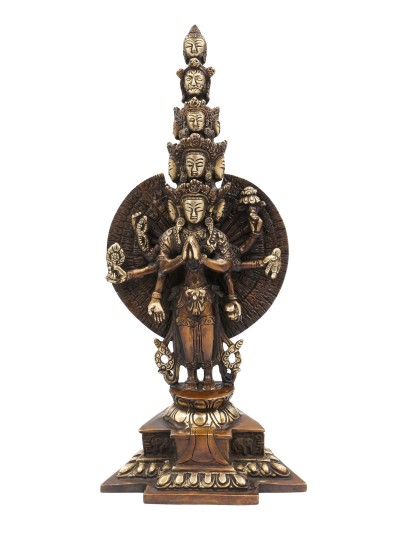
36cm Buddhist Statue Of Sahasrabhuja Avalokitesvara, Sand Casting, Chocolate Oxidized
Weight : 3.09kg | [28628]
US$139
US$111.2
You Save
US$27.8
(20%)
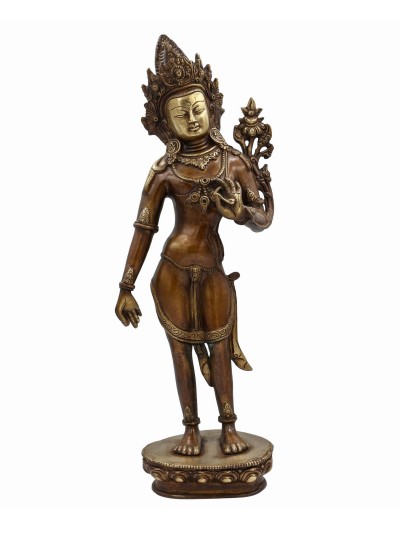
44cm Buddhist Statue Of Standing Avalokitesvara, Sand Casting, Chocolate Oxidized
Weight : 3.38kg | [27811]
US$145.25
US$116.2
You Save
US$29.05
(20%)
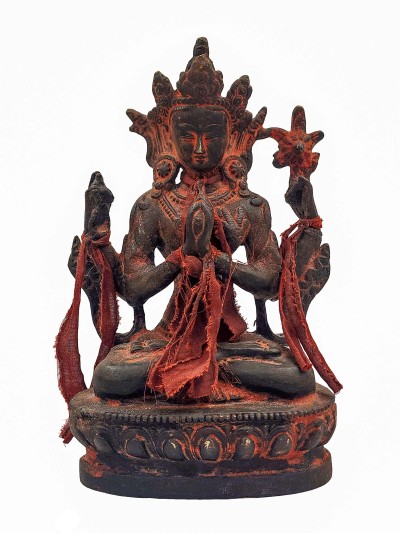
22cm Buddhist Statue Of Chenrezig, Sand Casting, Antique Finishing
Weight : 2.15kg | [28915]
US$107.25
US$85.8
You Save
US$21.45
(20%)
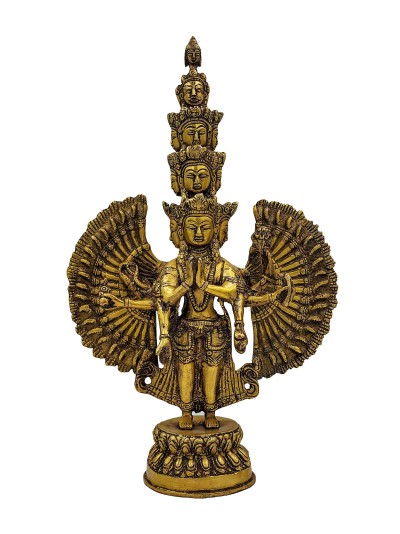
36cm Buddhist Statue Of 1000 Arms, Sahasrabhuja Avalokitesvara, Sand Casting, Glossy Finishing
Weight : 3.6kg | [28818]
US$158.4
US$126.72
You Save
US$31.68
(20%)
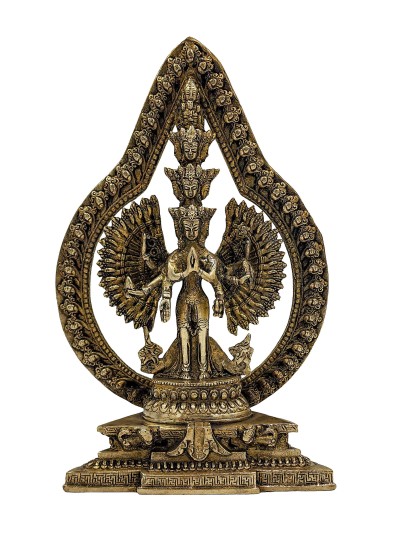
31cm Buddhist Statue Of Sahasrabhuja Avalokitesvara, Sand Casting, Glossy Finishing
Weight : 3kg | [28822]
US$150
US$120
You Save
US$30
(20%)
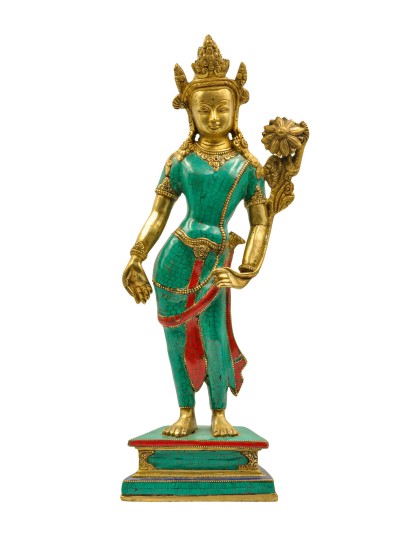
41cm Buddhist Statue Of Standing Padmapani Lokeshvara, Sand Casting, Stone Setting
Weight : 3.92kg | [28577]
US$272.5
US$218
You Save
US$54.5
(20%)
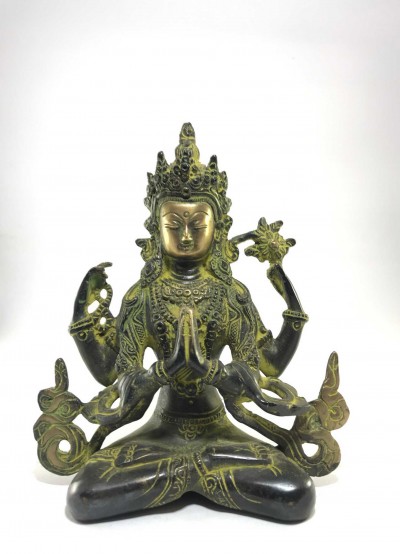
18cm Statue Of Avalokitesvara Antique Finishing
Weight : 0.94kg | [16315]
US$47
US$37.6
You Save
US$9.4
(20%)