![Buddhist Handmade [chau Gong], Tam-tam Gong, Symphonic Gong](https://www.handmadeexpo.com/pics/product/36337.jpg)

![Buddhist Handmade [chau Gong], Tam-tam Gong, Symphonic Gong](https://www.handmadeexpo.com/pics/product/thumb/36337.jpg)
![Buddhist Handmade [chau Gong], Tam-tam Gong, Symphonic Gong](https://www.handmadeexpo.com/pics/product/thumb/36337_0.jpg)
![Buddhist Handmade [chau Gong], Tam-tam Gong, Symphonic Gong](https://www.handmadeexpo.com/pics/product/thumb/36337_1.jpg)
![Buddhist Handmade [chau Gong], Tam-tam Gong, Symphonic Gong](https://www.handmadeexpo.com/pics/product/thumb/36337_2.jpg)
![Buddhist Handmade [chau Gong], Tam-tam Gong, Symphonic Gong](https://www.handmadeexpo.com/pics/product/thumb/36337_3.jpg)
![Buddhist Handmade [chau Gong], Tam-tam Gong, Symphonic Gong](https://www.handmadeexpo.com/pics/product/thumb/36337_4.jpg)
Buddhist Handmade Chau Gong, Tam-tam Gong, Symphonic Gong
We personally check Chau Gong to ensure the quality of the sound and its resonance. However, if you still require to listen to the sound before purchase. To maintain the quality of service we have introduced a nominal fee of $2 for this service. This non-refundable deposit will be deducted from your invoice upon purchase. Please note due to the limitation of the microphone and the speaker quality, the effectiveness of experiencing the sound will not be the same.
If you have any further questions or require assistance, please do not hesitate to contact us. WhatsApp: +9779841614206 Read More . . .
When you purchase this Gong, it will come with a Felt Hitting Mallet that you can use to play the Gong. This mallet is included with your purchase and you do not need to buy it separately. If you would like additional accessories to use with your Gong, such as different types of mallets or stands, you can purchase them separately from the options provided above. These additional accessories are not included with your purchase of the Gong and must be added to your cart if you would like to buy them. Read More . . .
The Burmese gong has influenced other gong types in this region and is very similar to those found in Thailand, so they are often grouped together. Although there are several types of Burmese gong, the most common are the temple gongs and the triangular-shaped Kyeezee or 'spinning' gong. Read More . . .
The Chau Gong's history dates back to ancient China, with its earliest known existence found in a tomb from the early Western Han Dynasty, discovered at the Guixian site in the Guangxi Zhuang Autonomous Region of China. Throughout Chinese history, gongs, including the Chau Gong, were integral to cultural and spiritual practices, being used in intense and spiritual drumming during rituals and tribal meetings. Notably, Chau Gongs were employed to clear the way for important officials and processions, much like a modern-day police siren. In this context, the number of gong strokes was sometimes used to indicate the seniority of an official, helping to determine the proper etiquette when officials met unexpectedly.
Use:
The Chau Gong, or tam-tam, has made its way into symphony orchestras, becoming a fundamental part of the percussion section. Introduced to orchestral music by François-Joseph Gossec in 1790, it gained popularity and was adopted by renowned composers such as Hector Berlioz, Gioachino Rossini, Vincenzo Bellini, Richard Wagner, Peter Ilyich Tchaikovsky, Gustav Mahler, Dmitri Shostakovich, Sergei Rachmaninov, and Sergei Prokofiev, among others. This widespread adoption showcases the versatility and emotional range of the Chau Gong. Composers often use it to evoke scenes of mourning or to add dramatic intensity and horror to their compositions. In operas, the Chau Gong has been employed to heighten suspense and create powerful, unforgettable moments. Igor Stravinsky pushed the boundaries of Chau Gong playing techniques in his composition "The Rite Of Spring," introducing innovative techniques like quick crescendos, short, quickly damped notes, and using a triangle beater to scrape across the front of the instrument.
How to Play:
Playing the Chau Gong requires a skilled percussionist who understands its nuances and techniques. The player typically holds the gong vertically by a rope or cord attached to the rim. Striking the gong with a mallet or beater can produce a broad spectrum of sounds, from soft and subtle to thunderous and booming, depending on the striking force and location. By varying the striking point, angle, and force, the player can control the gong's resonance and create a range of expressive sounds. Additionally, certain techniques like scraping the surface with a beater or using quick, damped strokes can produce unique effects that add to the instrument's expressive capabilities. Mastering the Chau Gong requires a keen sense of timing, dynamics, and artistry to harness its full potential and bring out its mesmerizing qualities in various musical contexts.
You may also want to read the related articles :
At Handmade Statue, we aim to provide a seamless and user-friendly experience. While our website is not a direct online shopping platform, we have a shopping cart system to make submitting your inquiries easy. Follow these steps to place your order:
Step 1: Browse Our Products
Explore our website to discover a wide range of authentic Nepali handicrafts, including statues, thangkas, singing bowls, wood carvings, jewelry, and more. Click on any product to view detailed descriptions and images.
Step 2: Add Items to Your Inquiry Cart
Click the “Add to Inquiry Cart” button for each product you are interested in. This will help you organize your selections conveniently.
Step 3: Review Your Inquiry Cart
Once you’ve added all your items, review your cart to ensure accuracy before submitting your inquiry.
Step 4: Submit Your Inquiry
Click the “Submit Inquiry” button. Fill out the form with your contact details, selected products, and any specific questions or customization requests.
Step 5: Communicate via Email
Since we don’t have an automated payment system, our team will respond to your inquiry via email. We’ll provide guidance, answer questions, and assist with customization requests.
Step 6: Finalize Your Order
Confirm all product details and customization options with our team. Once everything is finalized, we will provide secure payment instructions.
Step 7: Complete Your Payment
Make the payment through the provided method. After confirmation, we will process and prepare your order for shipment.
Step 8: Shipping and Delivery
We offer worldwide shipping. Once your order is dispatched, we will provide tracking details and shipping information.
Step 9: Receive and Enjoy Your Handicrafts
Unpack your beautiful handmade Nepali products and enjoy the craftsmanship and cultural heritage of Nepal.
Need Assistance?
If you face any issues or have questions while placing your order, contact us via email or mobile communication apps. Our team is dedicated to providing prompt support and a smooth ordering experience.
We hope this straightforward ordering process ensures a delightful and satisfying experience with Handmade Statue. Thank you for choosing us to connect you with the rich heritage of Nepali handicrafts.
Return Policy
We have a 7 days money back policy but buyer have to pay the return shipping charges.
Shipping
- Shipping cost is calculated, based on the shipping weight of the products ordered. THe normal Shipping cost is US$25 for upto 0.5 kgs weight
- We ship Worldwide, Except Russia and India.
- The deliver duration varies for international Shipping location. We normally dispatch the product in 2 -3 business days. Else Buyer will be infromed Personally about the shipping.
Related Products
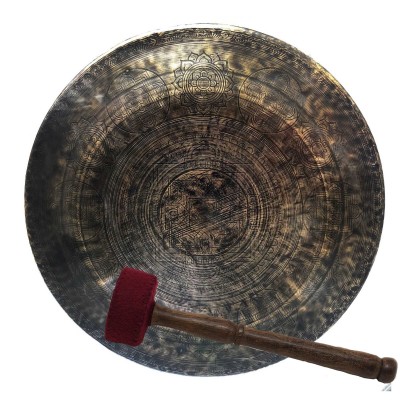
45cm Handmade Gong, Bronze Chau Gong, Tam-tam Gong, Symphonic Gong With Antique Finishing
Weight : 2.26kg | [17563]
US$270
US$256.5
You Save
US$13.5
(5%)
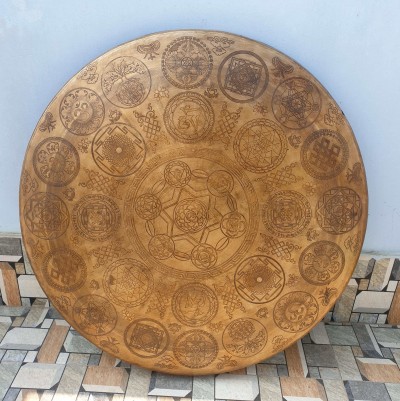
50cm Handmade Gong, Bronze Chau Gong, Tam-tam Gong, Symphonic Gong With Mandala Etching
Weight : 5kg | [23528]
US$504
US$478.8
You Save
US$25.2
(5%)
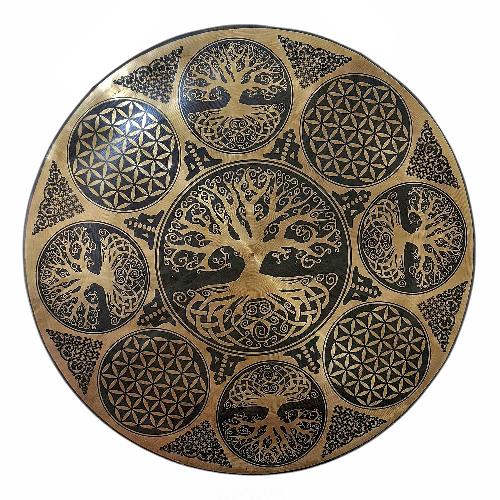
45cm Handmade Gong, Bronze Chau Gong, Tam-tam Gong, Symphonic Gong With Mandala Etching
Weight : 2.41kg | [34189]
US$316.3
US$253.04
You Save
US$63.26
(20%)
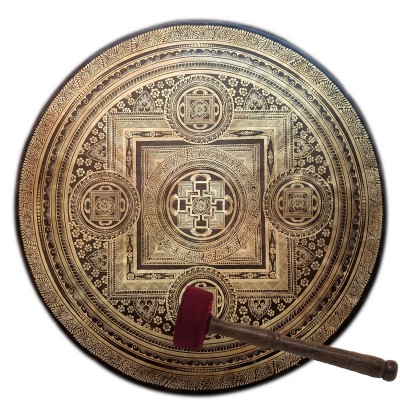
90cm Handmade Gong, Bronze Chau Gong, Tam-tam Gong, Symphonic Gong With Mandala Etching
Weight : 14.5kg | [17584]
US$2400
US$2280
You Save
US$120
(5%)
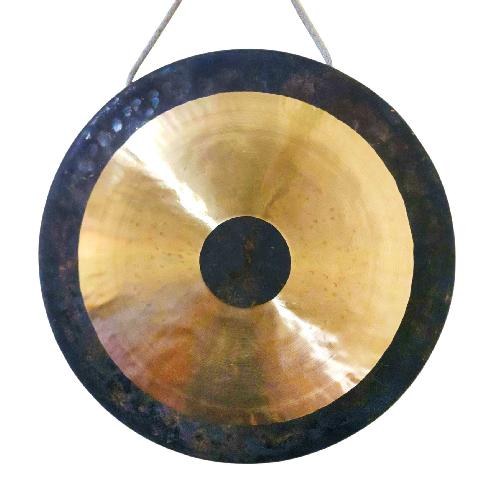
35cm Buddhist Handmade Chau Gong, Tam-tam Gong, Symphonic Gong
Weight : 1.5kg | [36323]
US$161.5
US$129.2
You Save
US$32.3
(20%)
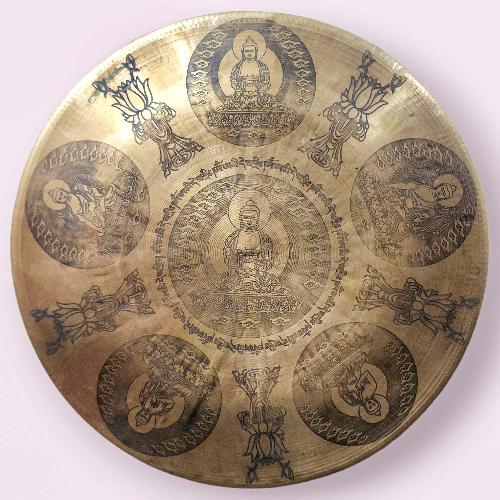
23cm Handmade Gong, Bronze Chau Gong, Tam-tam Gong, Symphonic Gong With Pancha Buddha Etching
Weight : 0.71kg | [30444]
US$97.17
US$77.736
You Save
US$19.434
(20%)
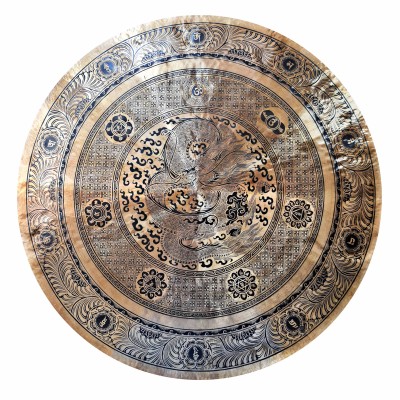
80cm Handmade Gong, Bronze Chau Gong, Tam-tam Gong, Symphonic Gong With Dragon Etching
Weight : 10.5kg | [26475]
US$1365
US$1296.75
You Save
US$68.25
(5%)
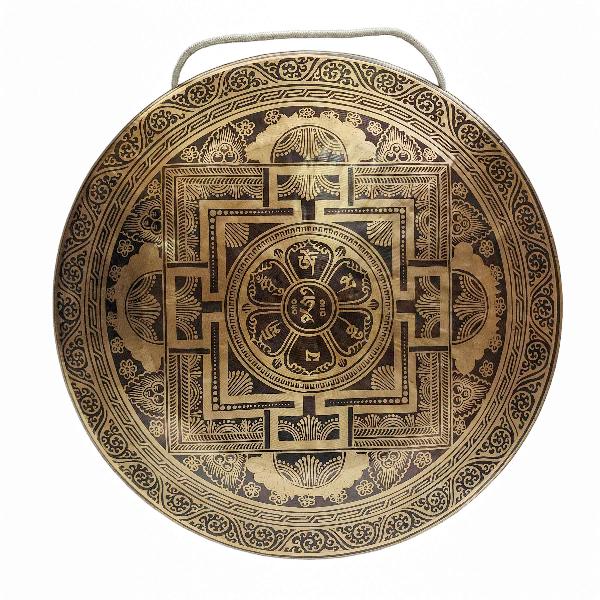
44cm Handmade Gong, Bronze Chau Gong, Tam-tam Gong, Symphonic Gong With Mandala Etching
Weight : 2.6kg | [31844]
US$288
US$230.4
You Save
US$57.6
(20%)