![Buddhist Hand Painting Thangka Of Vajrasattva With Consort, [shakti], Amitabha Buddha On Top [hand Painted], Lamas Art, Coffee Wash Color, Yab-yum](https://www.handmadeexpo.com/pics/product/26050.jpg)

![Buddhist Hand Painting Thangka Of Vajrasattva With Consort, [shakti], Amitabha Buddha On Top [hand Painted], Lamas Art, Coffee Wash Color, Yab-yum](https://www.handmadeexpo.com/pics/product/thumb/26050.jpg)
![Buddhist Hand Painting Thangka Of Vajrasattva With Consort, [shakti], Amitabha Buddha On Top [hand Painted], Lamas Art, Coffee Wash Color, Yab-yum](https://www.handmadeexpo.com/pics/product/thumb/26050_0.jpg)
![Buddhist Hand Painting Thangka Of Vajrasattva With Consort, [shakti], Amitabha Buddha On Top [hand Painted], Lamas Art, Coffee Wash Color, Yab-yum](https://www.handmadeexpo.com/pics/product/thumb/26050_1.jpg)
![Buddhist Hand Painting Thangka Of Vajrasattva With Consort, [shakti], Amitabha Buddha On Top [hand Painted], Lamas Art, Coffee Wash Color, Yab-yum](https://www.handmadeexpo.com/pics/product/thumb/26050_2.jpg)
![Buddhist Hand Painting Thangka Of Vajrasattva With Consort, [shakti], Amitabha Buddha On Top [hand Painted], Lamas Art, Coffee Wash Color, Yab-yum](https://www.handmadeexpo.com/pics/product/thumb/26050_3.jpg)
![Buddhist Hand Painting Thangka Of Vajrasattva With Consort, [shakti], Amitabha Buddha On Top [hand Painted], Lamas Art, Coffee Wash Color, Yab-yum](https://www.handmadeexpo.com/pics/product/thumb/26050_4.jpg)
![Buddhist Hand Painting Thangka Of Vajrasattva With Consort, [shakti], Amitabha Buddha On Top [hand Painted], Lamas Art, Coffee Wash Color, Yab-yum](https://www.handmadeexpo.com/pics/product/thumb/26050_5.jpg)
Buddhist Hand Painting Thangka of Vajrasattva with Consort, Shakti, Amitabha Buddha On Top Hand Painted, Lamas Art, Coffee Wash Color, Yab-yum
Dorje Sempa
In Vajrayana Buddhism, Vajrasattva represents the ultimate primordial purity of mind. As a central Tibetan Buddhist deity, he is not merely a historical figure, but an archetype of spiritual transformation. If you are a practitioner looking to deepen your daily meditation, a collector of sacred art, or an interior designer seeking a piece with profound spiritual resonance, an authentic Vajrasattva statue serves as a powerful focal point for your space.
For centuries, the Kathmandu Valley in Nepal has been the global epicenter for crafting high-realization Buddhist art. When you bring a handmade Buddhist statue of Vajrasattva into your home, you are not just acquiring a beautiful decor piece; you are welcoming a living lineage of devotion, precision, and sacred geometry.
Amitabha Buddha
: Who Is Amitabha Buddha?Among the vast pantheon of enlightened beings in Mahayana Buddhism, few figures evoke as much profound devotion, hope, and artistic beauty as Amitabha Buddha. Known as the Buddha of Infinite Light and Infinite Life, Amitabha stands as a beacon of universal salvation, promising an accessible path to enlightenment for all sentient beings, regardless of their karmic status.
For beginners, Amitabha represents an entry point into a compassionate spiritual ecosystem. For seasoned practitioners, researchers, and collectors of Buddhist art, he embodies the absolute transformation of human desire into all-discerning wisdom. This article explores the rich scriptural origins, profound symbolism, intricate iconography, and enduring cultural practices surrounding Amitabha Buddha.
Why Amitabha Buddha is Revered in Mahayana Buddhism
In the Mahayana tradition, the path to liberation is built on the twin pillars of wisdom (prajna) and compassion (karuna). Amitabha Buddha is the ultimate manifestation of these principles. Unlike historical Buddhas who taught within the constraints of our physical world, Amitabha rules over a pristine celestial realm. His cross-cultural veneration bridges distinct geographies, from the high-altitude monasteries of Tibet and Nepal to the sprawling temples of China, Japan, and Vietnam.
His Importance in Pure Land Buddhism
Amitabha Buddha is the central figure of Pure Land Buddhism, one of the most widely practiced traditions in East Asia. The core tenet of this school is remarkably egalitarian: liberation from the cycle of rebirth (samsara) does not require decades of rigorous asceticism or complex intellectual mastery. Instead, through single-minded faith, devotion, and the recitation of Amitabhaâs sacred name, anyone can secure rebirth in his paradise, Sukhavati.
What Does Amitabha Mean?
The name "Amitabha" carries layers of metaphysical and symbolic significance rooted in ancient Sanskrit. Breaking down the linguistic components reveals why this cosmic figure holds such power over the human imagination.
Sanskrit Meaning
The word AmitÄbha is a Sanskrit compound:
Amita: Boundless, unmeasured, or infinite.
Äbha: Light, splendor, or radiance.
Therefore, Amitabha translates directly to "Infinite Light" or "Boundless Splendor."
A closely related aspect of this deity is AmitÄyus, a compound of Amita and Äyus (Life). Thus, he is simultaneously the Buddha of "Infinite Life." While East Asian traditions generally view Amitabha and Amitayus as the same entity under the name Amida, Himalayan art and Vajrayana Buddhism distinguish them visually based on their active roles in ritual practice.
Symbolic Significance of Light and Life
In Buddhist philosophy, "Light" is not merely physical illumination; it is a universal metaphor for wisdom that dispels the darkness of ignorance (avidya). Amitabhaâs boundless light shines universally, penetrating the deepest psychological shadows of sentient beings.
"Life," on the other hand, symbolizes his infinite compassion and skillful means (upaya). His vow to save living beings is timeless, extending across past, present, and future kalpas (cosmic eons). Together, Infinite Light and Infinite Life represent an unshakeable spiritual refuge.
Read More . . .Introduction to Thangka
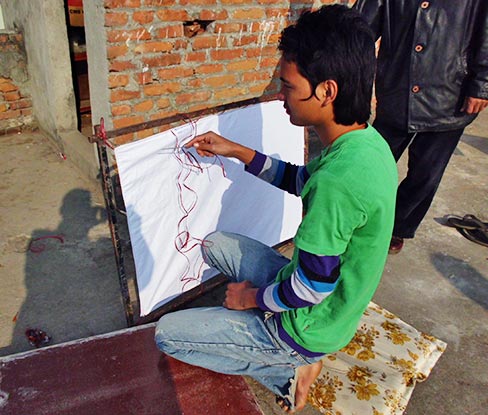
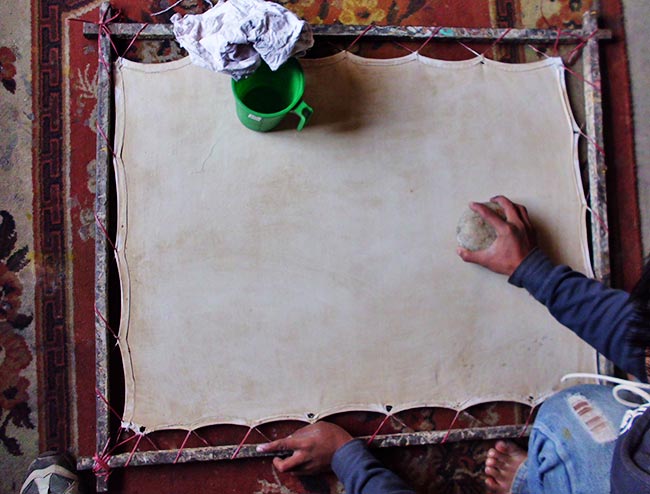
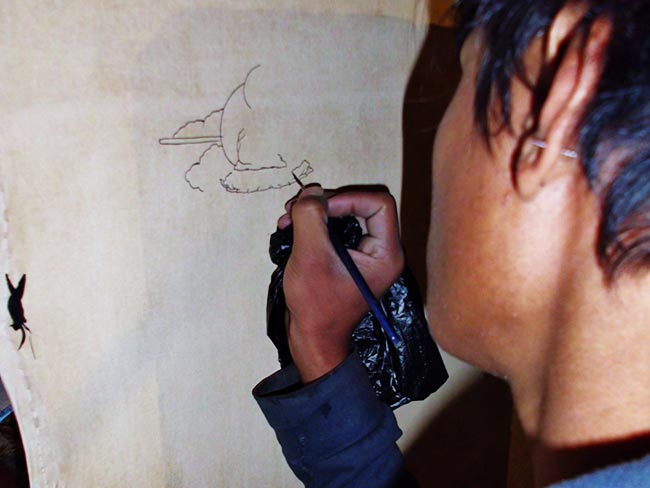
A thangka, also known as tangka, thanka, or tanka, is a vibrant and intricate Tibetan Buddhist painting that serves as a visual representation of spiritual teachings. Crafted with meticulous detail on cotton or silk appliqu?, thangkas depict a wide range of subjects including Buddhist deities, sacred scenes, mandalas, and narrative stories. These sacred artworks are traditionally kept unframed and rolled up for storage, resembling ancient scrolls. To protect their delicate nature, thangkas are mounted on textile backings and often adorned with a silk cover on the front. Proper preservation in dry environments is crucial to maintain the integrity and longevity of the silk. Read More . . .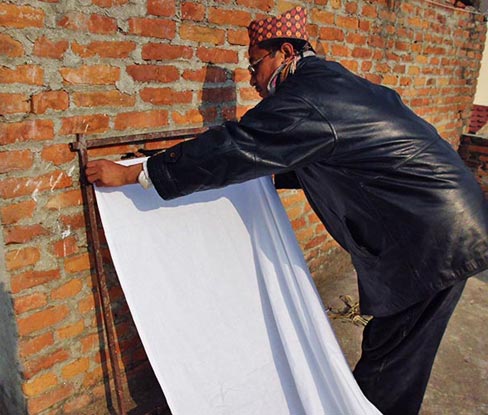
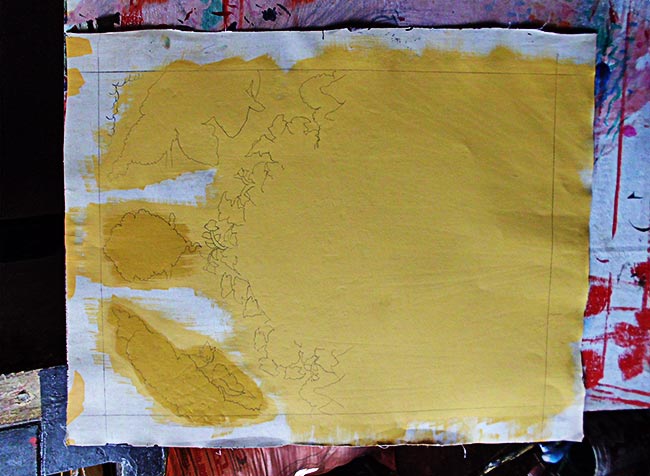
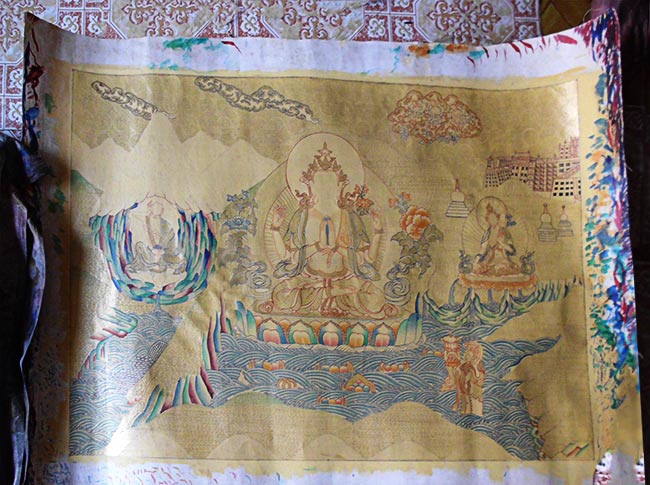
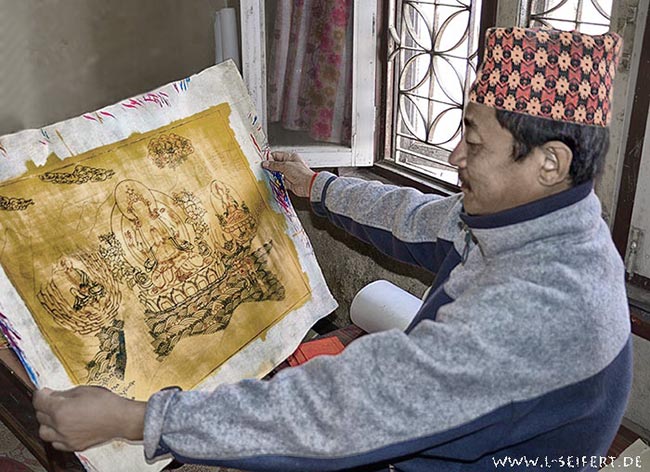
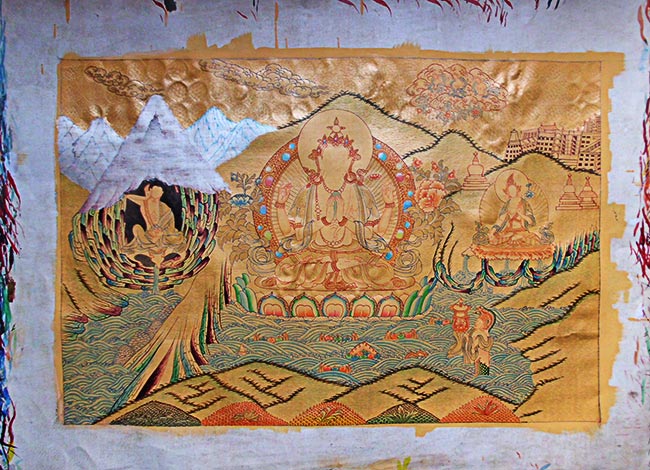
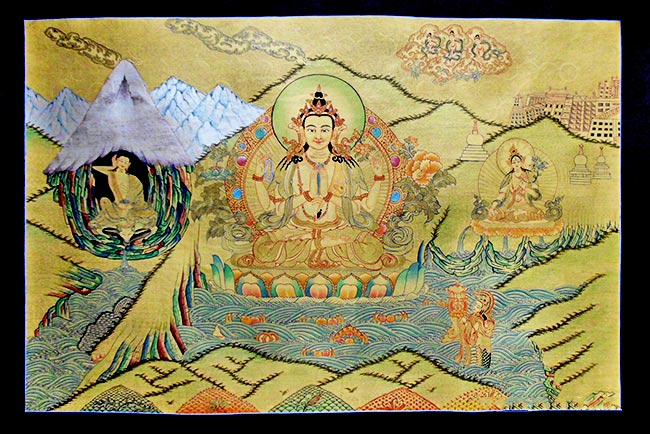
Meaning and Spiritual Significance of Vajrasattva :
His practice is famously tied to the 100-Syllable Mantra, a powerful recitation used in the Ngöndro (preliminary practices) across all major Tibetan schools. Meditating in front of a consecrated Vajrasattva statue allows practitioners to visualize the deity vividly, streaming white, purifying nectar down through the crown of the head to wash away spiritual impurities. He represents the unshakeable, unbreakable nature of realityâjust like a diamond, which can cut through anything but cannot be cut itself.
Appearance and Symbolism
Vajrasattva Statue Craftsmanship: Nepalâs Living Heritage
Why Choose a Vajrasattva Statue? :
A Vajrasattva statue is a highly versatile sacred object that enriches various environments:
Meditation Spaces: Acts as a visual anchor for deity yoga, visualization, and mindfulness practices.
Home Altars (Shrines): Serves as the central figure for daily purification water-offering rituals and mantra accumulations.
Temples & Dharma Centers: Provides a premium, canonically accurate representation for community practice and teachings.
Spiritual Collections: Appeals to collectors who value fine Himalayan metalwork and religious art history.
Meaningful Gifts: An auspicious gift for loved ones embarking on serious spiritual retreats, recovery journeys, or major life transitions.
How to Place and Care for a Vajrasattva Statue :
Treating your statue with respect maintains its spiritual integrity and preserves its physical beauty for generations.
Optimal Placement
Place your Vajrasattva statue in an elevated position, ideally above eye level when you are seated. The statue should be the central focus of your altar. Avoid placing it directly on the floor, in bathrooms, or facing busy, low-energy areas of the house.
Cleaning and Handling
Dusting: Use a clean, soft, dry makeup brush to gently dust the statue. Avoid touching the face directly if it is painted with cold gold, as natural skin oils can smudge the pigment.
Polishing: For un-gilded copper or bronze areas, a dry microfiber cloth is sufficient. Never use harsh chemical cleaners, liquids, or abrasive metal polishes on gold-gilded areas, as this will strip away the real gold layer.
Respectful Handling: When moving the statue, lift it by the base using both hands rather than picking it up by the head or crown.
What People Want to Know About Vajrasattva :
Who is Vajrasattva?
Vajrasattva is a major Buddha and deity in Vajrayana and Tibetan Buddhism. He represents the primordial purity of the mind and body, acting as the ultimate embodiment of the cleansing aspect of enlightened consciousness.
What does Vajrasattva symbolize?
Vajrasattva symbolizes absolute clarity, unshakeable truth, and the transformation of negative emotional patterns into enlightened wisdom. He represents our own inherent potential to completely purify our minds.
Why is Vajrasattva called the Buddha of Purification?
He is called the Buddha of Purification because his specific vow and spiritual function are to assist beings in clearing away karmic imprints, negative deeds, and mental obscurations through his specialized visualization and mantra practices.
What does Vajrasattva hold in his hands?
He holds a vajra (thunderbolt/diamond) in his right hand at his heart, symbolizing compassionate skillful means. In his left hand, resting on his lap or hip, he holds a ghanta (bell), which symbolizes the wisdom of emptiness.
What is the meaning of the Vajrasattva mantra?
The 100-syllable Vajrasattva mantra is a prayer of purification. It requests Vajrasattva to remain firmly stable within the practitioner, to grant complete satisfaction, to purify all negative actions, and to bring about ultimate realizations.
Where should a Vajrasattva statue be placed?
It should be placed in a clean, quiet area on a raised altar or shelf, well above the floor. Ideally, it should face east or occupy a central position in your dedicated meditation or living space.
What materials are used to make Vajrasattva statues?
High-quality Nepalese statues are typically cast from pure copper or bronze alloys. Premium pieces feature 24k gold gilding, hand-engraved silver details, and faces painted with genuine cold gold powder.
How are Nepalese Vajrasattva statues made?
They are handmade by hereditary master artisans using the traditional lost-wax casting method. This involves hand-carving wax molds, pouring molten metal, and finishing each piece with intensive hand-chiseling, engraving, and gilding.
Is Vajrasattva suitable for meditation practice?
Yes, he is one of the most widely practiced deities for meditation. Having a physical statue provides an accurate, three-dimensional reference point that greatly improves your visualization during mantra recitation.
Why buy a handmade Vajrasattva statue from Nepal?
Nepalese statues from the Newar tradition offer unparalleled artistic mastery and stick strictly to sacred geometric proportions. Unlike mass-produced items, handmade statues carry a distinct spiritual presence, support fair-trade artisans, and hold lasting value as heirloom art.
Mantra of Vajrasattva
ༀ་ཨ་ར་པ་ཙ་ན་དྷཱི༔,
om vajrasattva hum
You may also want to read the related articles :
What is a Thangka | Making Process Of Tibetan Thangka | Videos of Thangka Making Process | Thangka Brocading OptionAt Handmade Statue, we aim to provide a seamless and user-friendly experience. While our website is not a direct online shopping platform, we have a shopping cart system to make submitting your inquiries easy. Follow these steps to place your order:
Step 1: Browse Our Products
Explore our website to discover a wide range of authentic Nepali handicrafts, including statues, thangkas, singing bowls, wood carvings, jewelry, and more. Click on any product to view detailed descriptions and images.
Step 2: Add Items to Your Inquiry Cart
Click the “Add to Inquiry Cart” button for each product you are interested in. This will help you organize your selections conveniently.
Step 3: Review Your Inquiry Cart
Once you’ve added all your items, review your cart to ensure accuracy before submitting your inquiry.
Step 4: Submit Your Inquiry
Click the “Submit Inquiry” button. Fill out the form with your contact details, selected products, and any specific questions or customization requests.
Step 5: Communicate via Email
Since we don’t have an automated payment system, our team will respond to your inquiry via email. We’ll provide guidance, answer questions, and assist with customization requests.
Step 6: Finalize Your Order
Confirm all product details and customization options with our team. Once everything is finalized, we will provide secure payment instructions.
Step 7: Complete Your Payment
Make the payment through the provided method. After confirmation, we will process and prepare your order for shipment.
Step 8: Shipping and Delivery
We offer worldwide shipping. Once your order is dispatched, we will provide tracking details and shipping information.
Step 9: Receive and Enjoy Your Handicrafts
Unpack your beautiful handmade Nepali products and enjoy the craftsmanship and cultural heritage of Nepal.
Need Assistance?
If you face any issues or have questions while placing your order, contact us via email or mobile communication apps. Our team is dedicated to providing prompt support and a smooth ordering experience.
We hope this straightforward ordering process ensures a delightful and satisfying experience with Handmade Statue. Thank you for choosing us to connect you with the rich heritage of Nepali handicrafts.
Return Policy
We have a 7 days money back policy but buyer have to pay the return shipping charges.
Shipping
- Shipping cost is calculated, based on the shipping weight of the products ordered. THe normal Shipping cost is US$25 for upto 0.5 kgs weight
- We ship Worldwide, Except Russia and India.
- The deliver duration varies for international Shipping location. We normally dispatch the product in 2 -3 business days. Else Buyer will be infromed Personally about the shipping.
Related Products
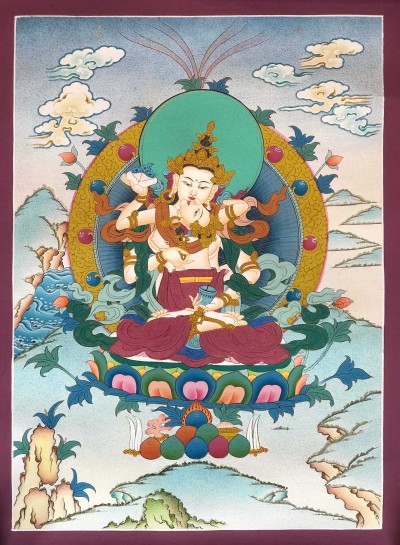
35cm Tibetan Thangka Of Vajrasattva With Consort, Shakti, Yab-yum, Light Color
Weight : 0.1kg | [18883]
US$60
US$45
You Save
US$15
(20%)
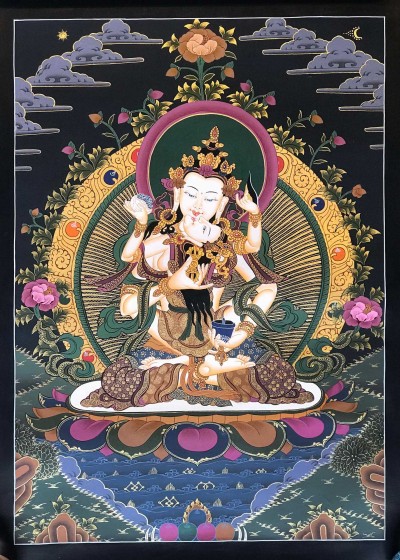
50cm Tibetan Thangka Of Vajrasattva With Consort, Shakti, Yab-yum
Weight : 0.1kg | [18683]
US$70
US$60
You Save
US$10
(20%)
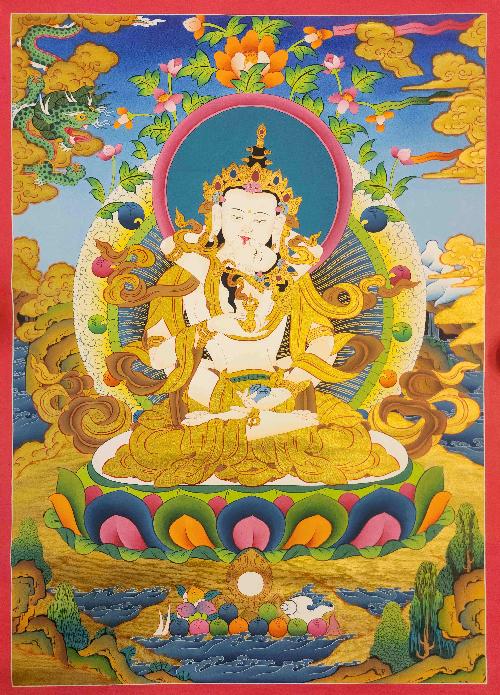
76cm Vajrasattva, Buddhist Traditional Painting, Hand Painted, Real Gold
Weight : 0.3kg | [33449]
US$1000
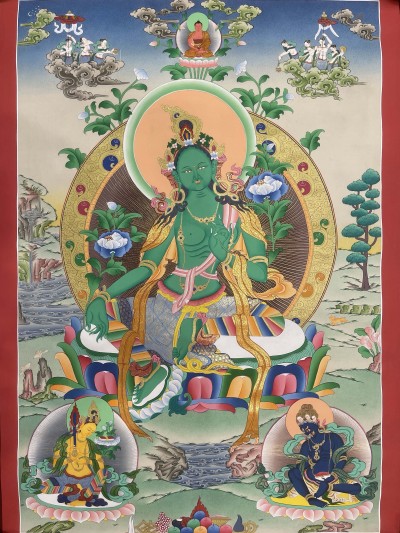
75cm Buddhist Hand Painted Thangka Of Green Tara, Real Gold, Lamas Art
Weight : 0.1kg | [23736]
US$325
US$260
You Save
US$65
(20%)
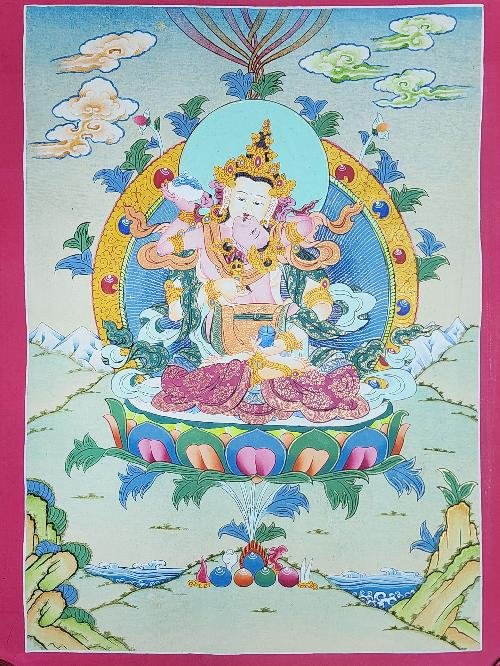
35cm Vajrasattva Shakti Thangka, Buddhist Traditional Painting, Hand Painted, Real Gold, Best Value
Weight : 0.1kg | [37166]
US$100
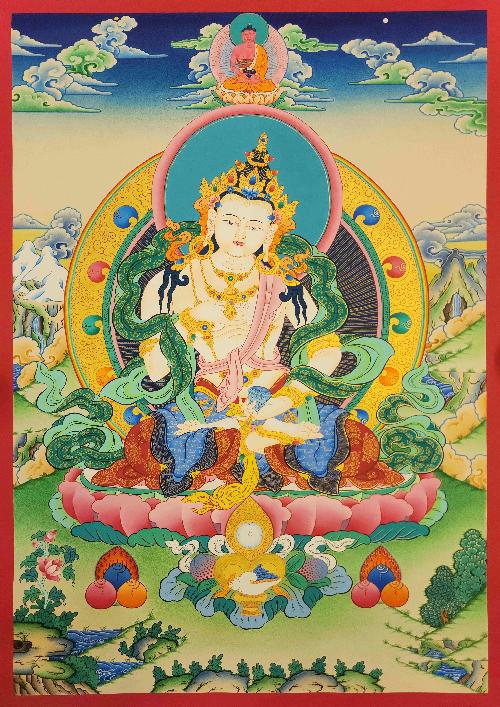
76cm Vajrasattva, Buddhist Traditional Painting, Hand Painted, Real Gold
Weight : 0.3kg | [33448]
US$2000
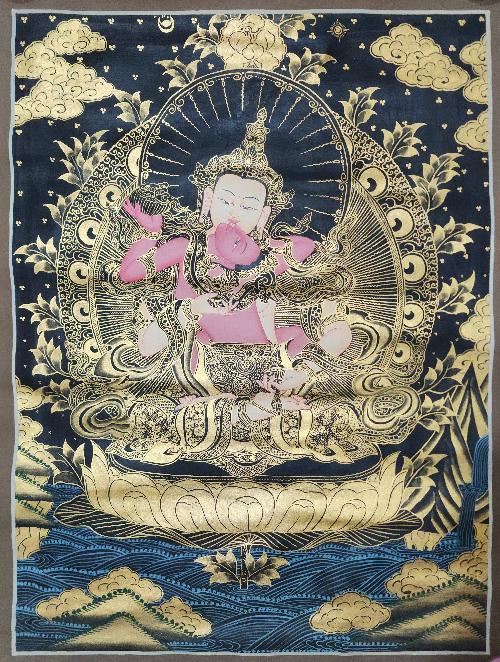
64cm Vajrasattva, Buddhist Traditional Painting, Hand Painted
Weight : 0.2kg | [32455]
US$75
US$60
You Save
US$15
(20%)
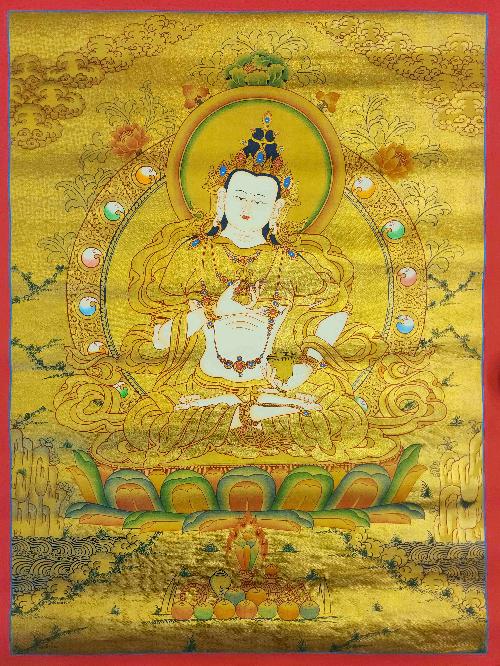
60cm Vajrasattva, Buddhist Traditional Painting, Hand Painted, Real Gold
Weight : 0.3kg | [33447]
US$1440