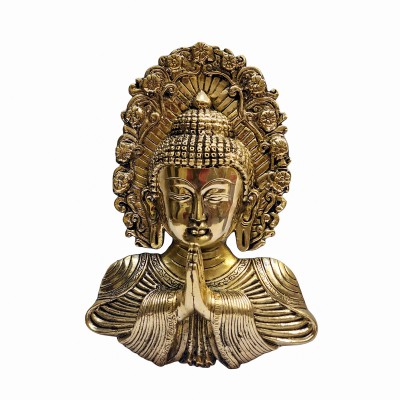
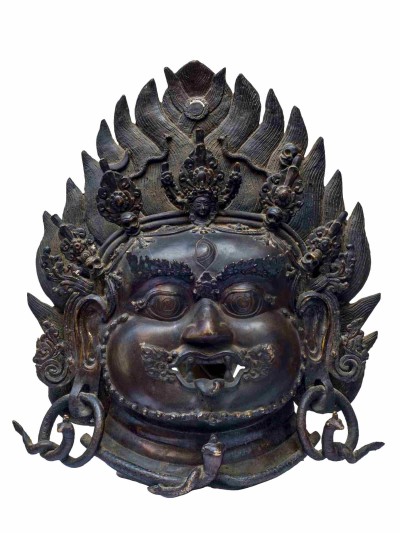
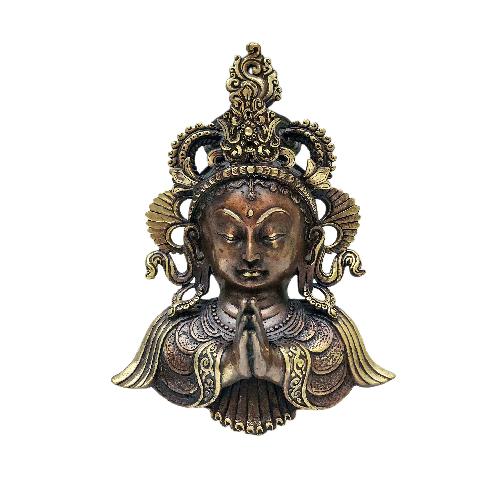
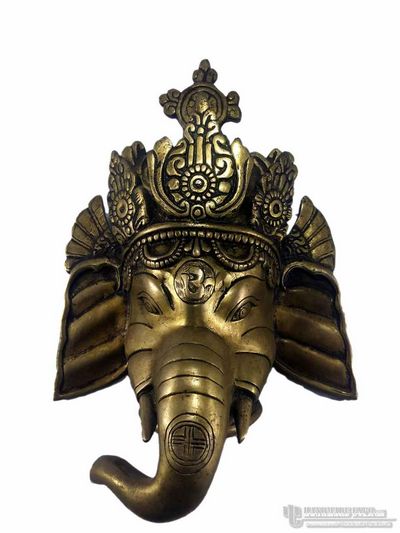
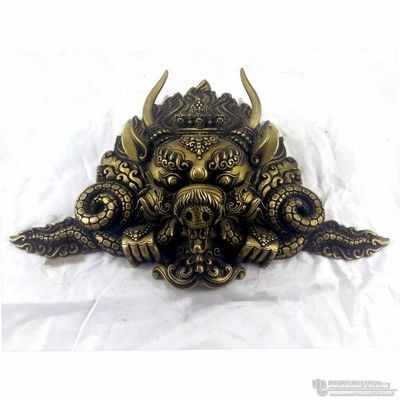
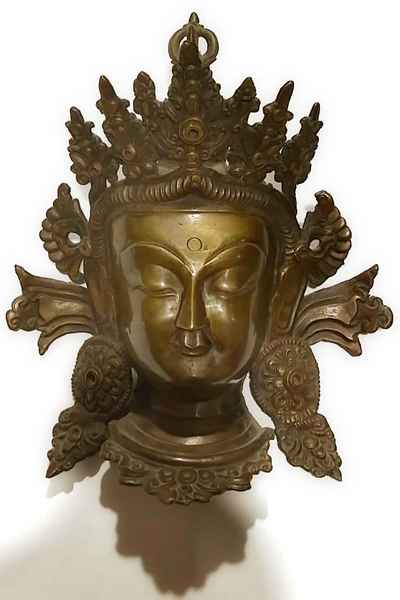
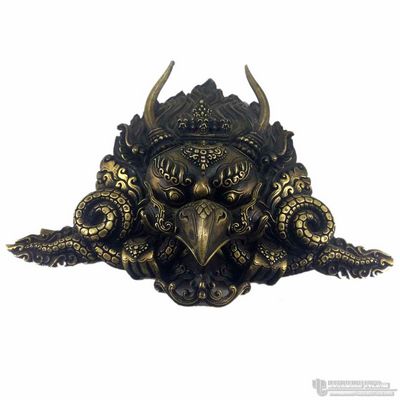
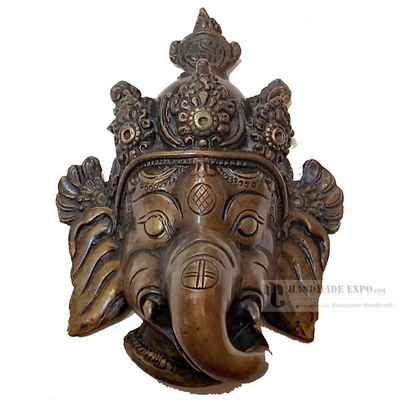
Metal Wall Hangings :Tibetan Buddhist culture is rich in symbolism and art, and metal or wooden wall hangings are essential to this tradition. These wall hangings, also known as paubhas, are typically made in painting form, painted on a cotton canvas with natural color. they are also made in wood, brass, or clay, and feature intricate designs and vibrant colors. They depict various aspects of Buddhism, such as deities, Buddhist teachings, and spiritual stories. Many of these wall hangings are adorned with semi-precious stones, such as turquoise, coral, and lapis lazuli, which add to their beauty and symbolic significance.
Bhairav : Brief Introduction
Bhairav, also known as Bhairava or Kala Bhairava, is a fierce manifestation of Lord Shiva associated with annihilation and protection. He represents the destructive power of time and is revered as the guardian of temples and protector of the universe. In Hindu mythology, Bhairav symbolizes the force that removes ignorance and brings about spiritual awakening.
He is often depicted with a fierce expression, adorned with serpents, holding weapons like a trident, drum, or skull, and accompanied by a dog, which serves as his mount. Worshipers of Bhairav believe he has the power to destroy evil, protect devotees from dangers, and bestow blessings for prosperity, success, and spiritual growth.
In some traditions, Bhairav is seen as a guardian deity in both Hinduism and Tibetan Buddhism, especially in forms like âMahakalaâ in Tibetan Buddhism, where he serves as a wrathful protector.
Read More . . .
Metal Wall Hangings : Brief Introduction
Tibetan Buddhist culture is rich in symbolism and art, and metal or wooden wall hangings are essential to this tradition. These wall hangings, also known as paubhas, are typically made in painting form, painted on a cotton canvas with natural color. they are also made in wood, brass, or clay, and feature intricate designs and vibrant colors. They depict various aspects of Buddhism, such as deities, Buddhist teachings, and spiritual stories. Many of these wall hangings are adorned with semi-precious stones, such as turquoise, coral, and lapis lazuli, which add to their beauty and symbolic significance.
The art of creating these metal or wooden wall hangings is considered a sacred tradition in Tibetan Buddhist culture, and it is often passed down from generation to generation. The creation process can take many months or even years, as each detail is carefully crafted and the colors are meticulously applied. These wall hangings are considered to be sacred objects and are used for meditation, worship, and offerings.
One of the most common themes depicted in Tibetan wall hangings is the mandala, a geometric representation of the universe. Mandalas are often intricate, symmetrical designs that are meant to represent the balance and harmony of the universe. They can also depict important Buddhist teachings and spiritual stories, and they serve as a focus for meditation and spiritual contemplation. Other popular themes in Tibetan wall hangings include Buddhist deities such as the Buddha, bodhisattvas, and protectors, as well as important Buddhist symbols like the lotus flower, the wheel of life, and the eight auspicious symbols.
The use of color in Tibetan wall hangings is also significant, as each color is associated with a specific emotion, quality, or spiritual aspect. For example, gold is associated with wisdom and compassion, red symbolizes passion and power, and blue represents serenity and peace. The use of semi-precious stones in these wall hangings is also significant, as each stone is believed to have spiritual properties and can bring positive energy to the environment.
In conclusion, Tibetan metal or wooden wall hangings are a rich and important part of Tibetan Buddhist culture. They serve as sacred objects for meditation, worship, and offerings, and their intricate designs, vibrant colors, and semi-precious stone settings make them both beautiful and significant. These wall hangings are a testament to the beauty and significance of Tibetan Buddhist culture and continue to be valued and revered to this day.
Read More . . .
Lost-Wax System
This Metal Mask of Metal Wall Hangings is made by the process of the Lost Wax system. This is a very complicated, time consuming and historic process of making metal sculptures.Which is why it is sometimes called Precision Casting as well. Hence the sculptures made by this process are comparatively expensive. There are many new, advanced and less time consuming methods of casting metal sculptures available as well. But due to the benefits provided by the traditional lost wax system in quality control and customization, we prefer the Loss wax system over Ceramic molding, or sand casting to make our Metal Mask.
Below we have tried to illustrate the process of making a loss wax system statue:
The method of metal casting in which a molten metal is poured into a mold that has been created by means of a wax model. Once the mold is made, the wax model is melted and drained away. Bronze statues come to life differently than marble statues. Instead of carving a block or marble, the bronze artist uses the lost-wax technique to make a series of molds, and then pours melted bronze into the final mold to create the sculpture. This method has been around since 4500 BCE.
There are few important steps in lost wax casting process :
Step 1: Sculpting ( It all starts in the studio with an idea, Then figuring out how to realize the vision in clay.)
Step 2: Mold Making.
Step 3: Wax Pouring.
Step 5: Wax Spruing.
Step 6: Shell Dipping.
Step 7: Bronze Pouring.
Interestingly enough Loss wax process is also called Investment casting because after layers have been formed and dried, the wax is melted out of the ceramic tree by using steam (120°C) in an autoclave. This is why it is called "lost wax casting". The majority of the molten wax which can then be regenerated and is reusable.
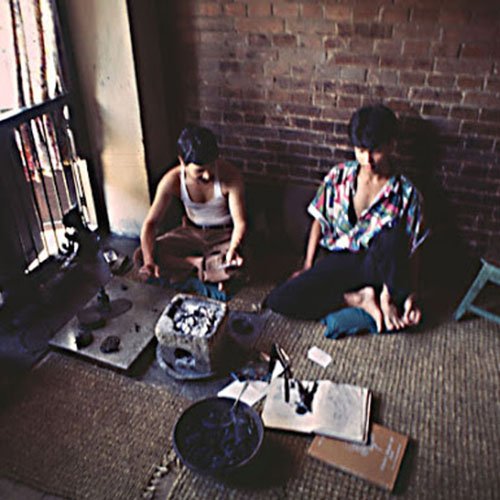
Before Making statue :At work room making the wax models.
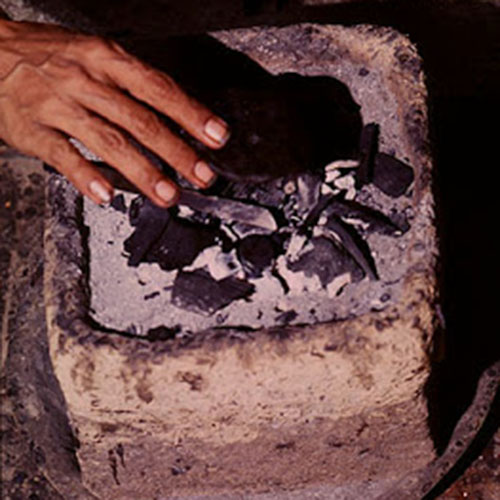
Softening a piece of wax over a brazier.

Relaxing after softening the wax The working environment with works in progress.
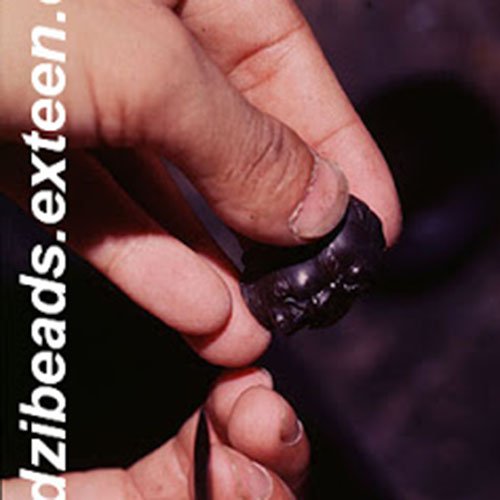
Working the face of an Ekajata wax model.

Working the face of wax model.Using a modeling tool to form the face of Ekajata.

Deatail of wax model
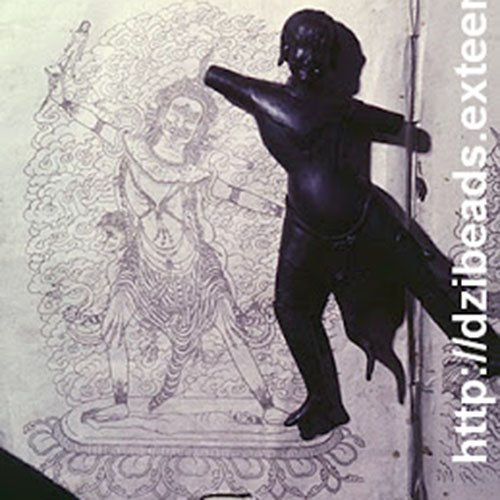
The design for Ekajata compared to the Tibetan book on which it was based.Statues Maker Are master in buddhism .

Detail of A partially finished Candamaharoshana (Acala) wax figure made in the Tibetan style.

A finished wax image of Mahakala.
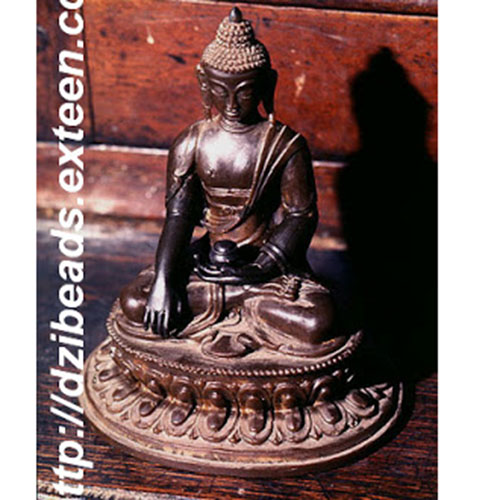
Anthor Finished Wax Model of Shakyamuni Buddha

One of the modelers working in the room shows the Pehar image on which he is working.
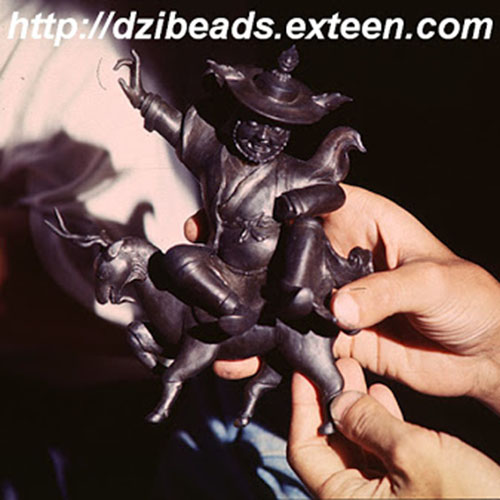
The artist showed how the goat , which had been completed earlier, fits under the image. ,
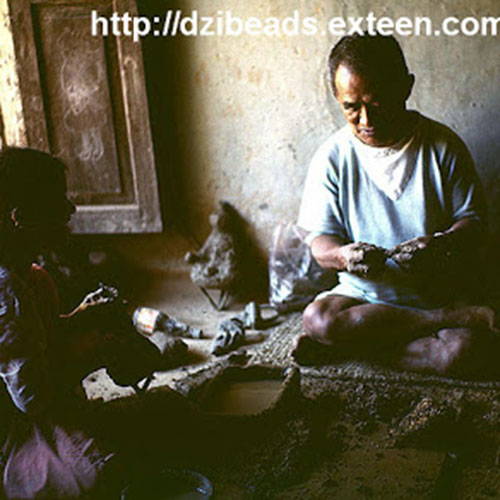
Tej Jyoti Shakya and his wife, Nani Maya Shakya Covering the wax model in a mixture of clay and dung
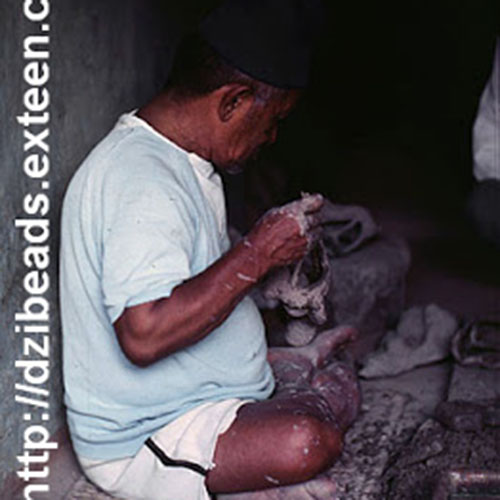
Pressing the mixture of clay and dung around the wax image.

The board with the clay and dung mixture ready for use.
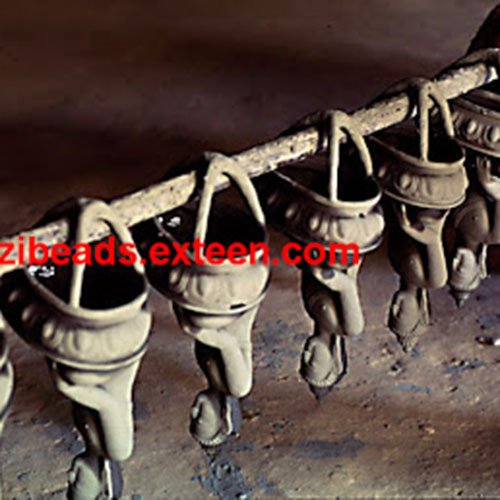
Model Pieces drying after the initial (dipped) thin layer of fine clay.
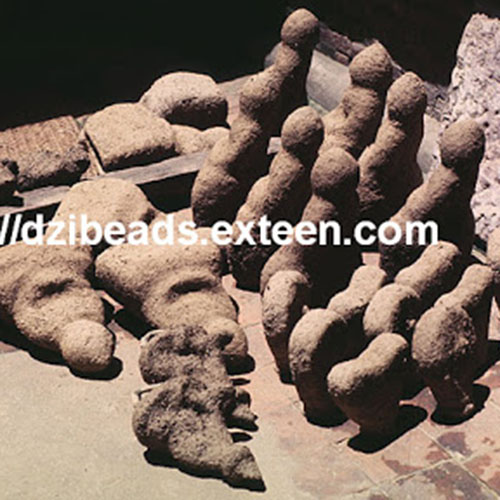
Clay-covered model pieces drying in the sun.
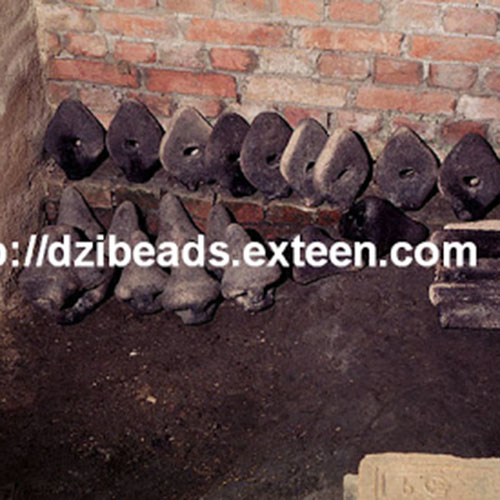
Molds waiting to be put into the burnout furnace
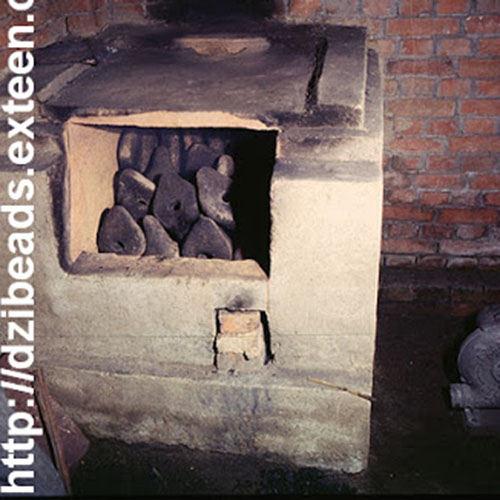
The same molds, seen in the previous image, in the burnout furnace
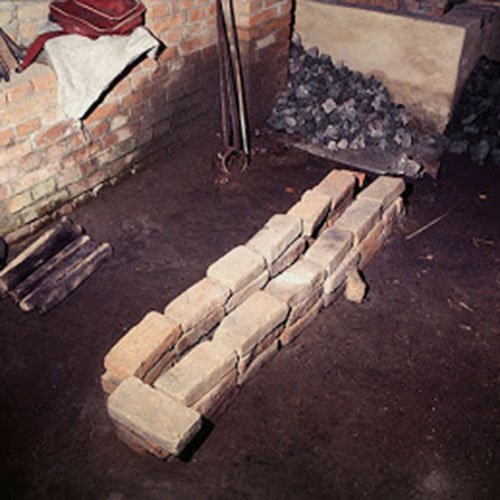
The double row of refractory bricks used to support the heated molds during casting.
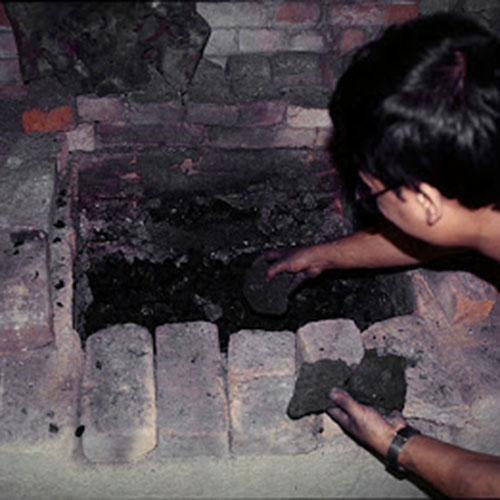
The melting furnace and a pile of coke used for melting the metals. Laying the bed of coke in the melting furnace.

The first ignition of the coke.
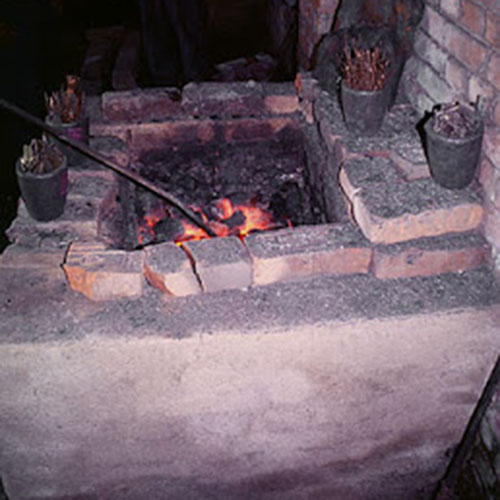
Checking the coke bed.
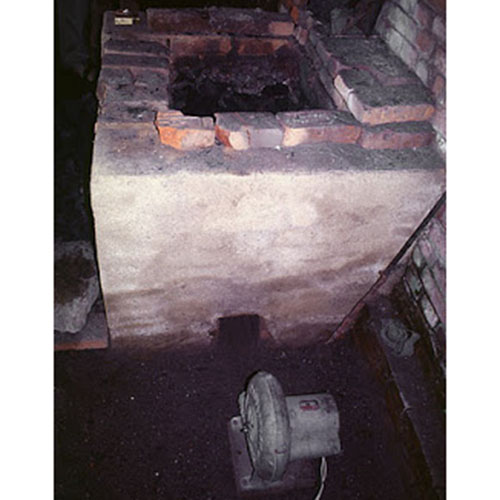
The electric blower used to force air into the melting furnace
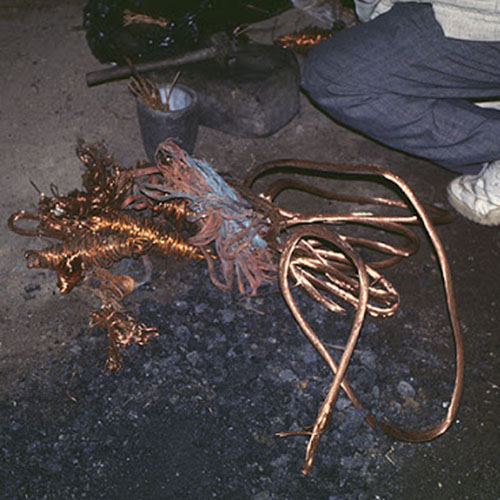
Beginning to fill the crucibles with scrap copper.
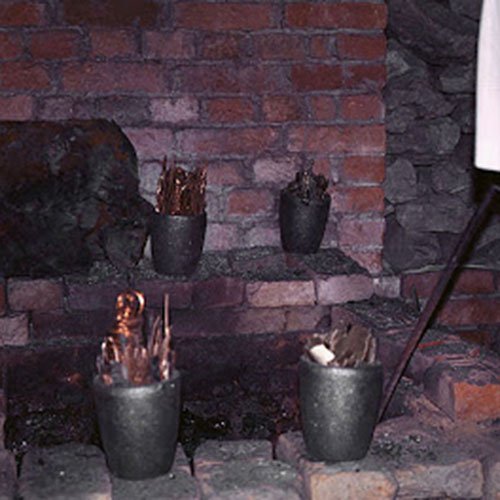
Preparing the bed of burning coke to receive the crucibles
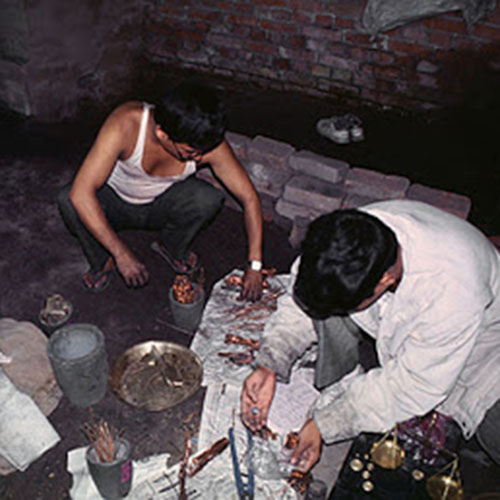
Sorting various metals used in the alloys.

Weighing precious metals that are used in the alloys

Weighing copper from Singapore to achieve a correct alloy.
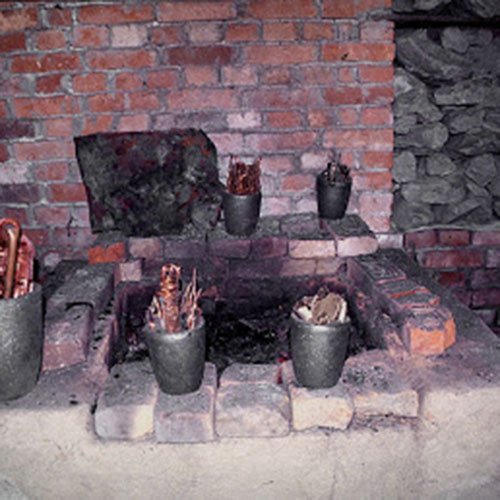
Different sizes of crucibles and various types of metals to be cast in this melt.
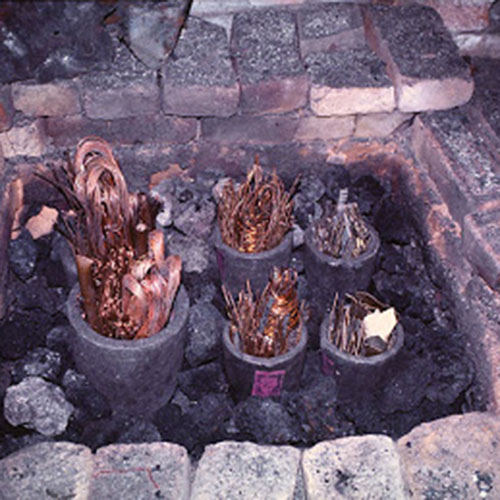
Placing the crucibles in the bed of coke filled with metal are in place.
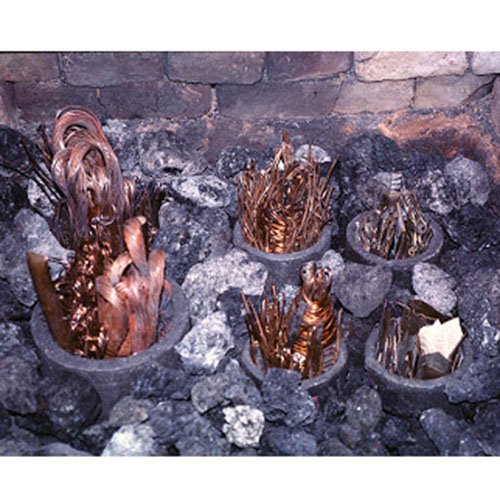
After the crucibles are in place, more coke is piled around them.

The crucibles are covered with scrap metal to hold in the heat.
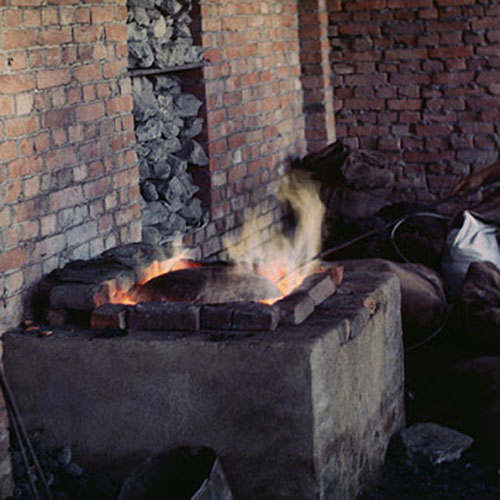
The electric fan is then connected.Soon a very hot flame is produced.

The entire furnace temperature goes up to about 1800 -1900 degrees.
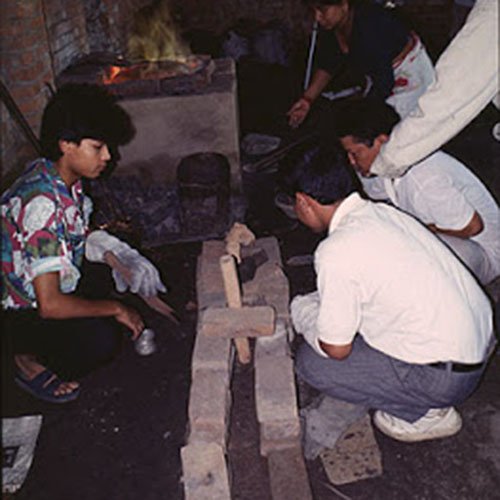
Setting up molds in between the refractory bricks to receive the molten metal. Handling the molds with asbestos gloves and bracing them with fragments of bricks.
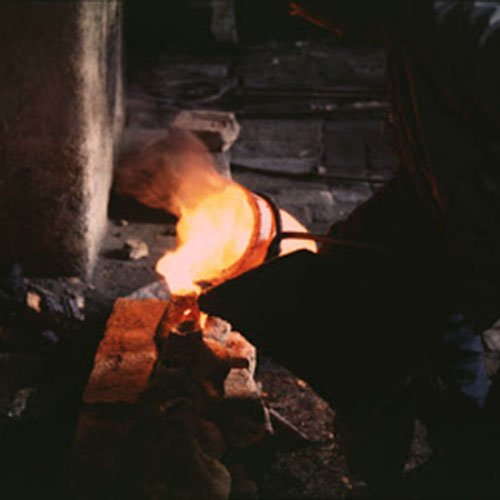
Pouring the molten metal into the base of a mold

Another view of the artists pouring the molten metal.Detailed view showing the molten metal being poured into the sprues.

Preparing to lift and pour molten metal from one of the larger crucibles.

Cooling a mold containing the recently poured metal.
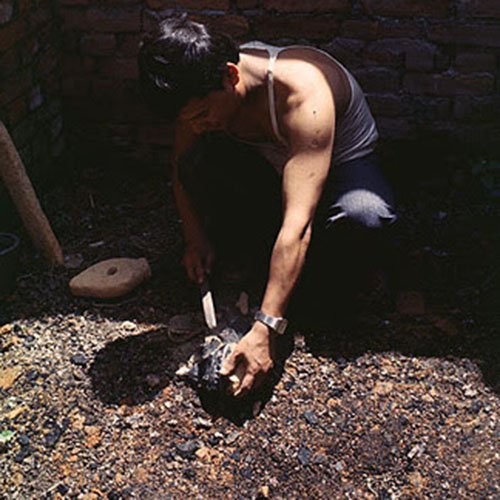
Beginning to break away the clay mold from the metal casting. The mold breaks away revealing the metal image inside

The first metal image from the day's work.
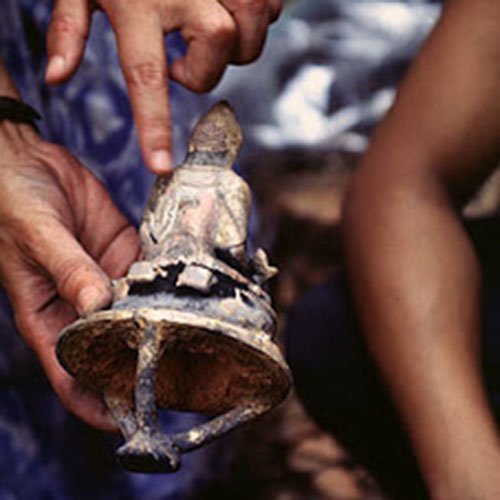
Examining the image for flaws

Two auras (prabhamandalas), one that cast perfectly and one (in front) that only partially filled.
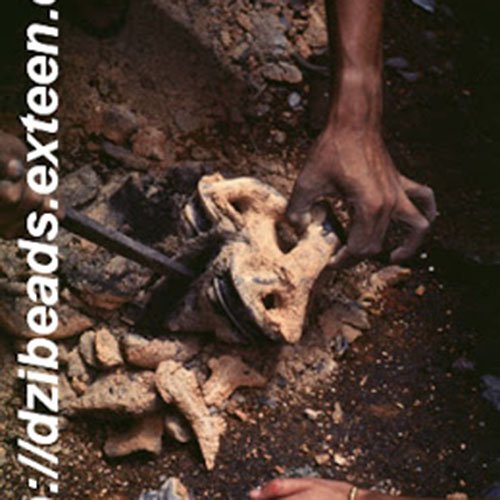
Opening more molds

Researchers mark specific metal images for future identification.

Cleaning the details of the image with a metal tool.

Sawing off the sprues from Aura image. The sprue metal will be reused in future castings.

Two auras that worked perfectly. The one on the right has been cut off of the sprues, while the one on the left still has the sprues attached.

The finishing specialist begins the finishing process with a set of tools, including a small hammer. to give more detail

The entire surface of the image will be gently hammered to a final, almost polished finish.

The finisher's tools and the work in progress

Finishing work on an image of the Buddha.

Hammering the chest of an image that is being held against the work block
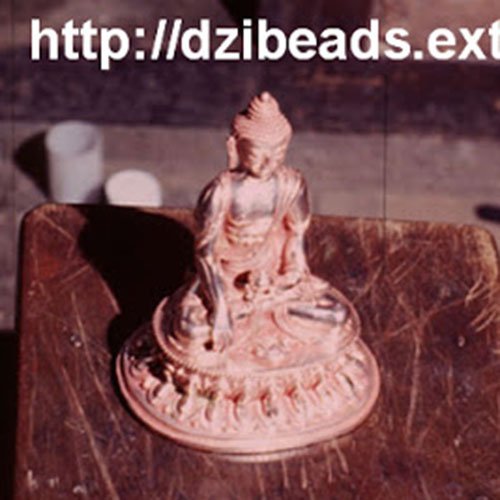
A Buddha image hammered and chased to the final, detailed finish.
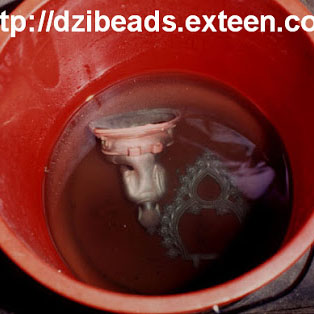
Cleaning in a very mild acid bath. The image and prabhamandala are placed in a final acidic bath to make sure the surface is absolutely clean.
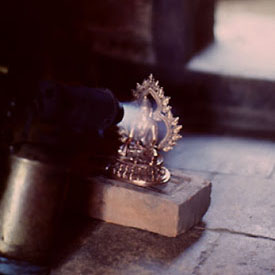
Drying the image with a blow torch.
The art of creating these metal or wooden wall hangings is considered a sacred tradition in Tibetan Buddhist culture, and it is often passed down from generation to generation. The creation process can take many months or even years, as each detail is carefully crafted and the colors are meticulously applied. These wall hangings are considered to be sacred objects and are used for meditation, worship, and offerings.
One of the most common themes depicted in Tibetan wall hangings is the mandala, a geometric representation of the universe. Mandalas are often intricate, symmetrical designs that are meant to represent the balance and harmony of the universe. They can also depict important Buddhist teachings and spiritual stories, and they serve as a focus for meditation and spiritual contemplation. Other popular themes in Tibetan wall hangings include Buddhist deities such as the Buddha, bodhisattvas, and protectors, as well as important Buddhist symbols like the lotus flower, the wheel of life, and the eight auspicious symbols.
The use of color in Tibetan wall hangings is also significant, as each color is associated with a specific emotion, quality, or spiritual aspect. For example, gold is associated with wisdom and compassion, red symbolizes passion and power, and blue represents serenity and peace. The use of semi-precious stones in these wall hangings is also significant, as each stone is believed to have spiritual properties and can bring positive energy to the environment.
In conclusion, Tibetan metal or wooden wall hangings are a rich and important part of Tibetan Buddhist culture. They serve as sacred objects for meditation, worship, and offerings, and their intricate designs, vibrant colors, and semi-precious stone settings make them both beautiful and significant. These wall hangings are a testament to the beauty and significance of Tibetan Buddhist culture and continue to be valued and revered to this day.
You may also want to read the related articles :
At Handmade Statue, we aim to provide a seamless and user-friendly experience. While our website is not a direct online shopping platform, we have a shopping cart system to make submitting your inquiries easy. Follow these steps to place your order:
Step 1: Browse Our Products
Explore our website to discover a wide range of authentic Nepali handicrafts, including statues, thangkas, singing bowls, wood carvings, jewelry, and more. Click on any product to view detailed descriptions and images.
Step 2: Add Items to Your Inquiry Cart
Click the “Add to Inquiry Cart” button for each product you are interested in. This will help you organize your selections conveniently.
Step 3: Review Your Inquiry Cart
Once you’ve added all your items, review your cart to ensure accuracy before submitting your inquiry.
Step 4: Submit Your Inquiry
Click the “Submit Inquiry” button. Fill out the form with your contact details, selected products, and any specific questions or customization requests.
Step 5: Communicate via Email
Since we don’t have an automated payment system, our team will respond to your inquiry via email. We’ll provide guidance, answer questions, and assist with customization requests.
Step 6: Finalize Your Order
Confirm all product details and customization options with our team. Once everything is finalized, we will provide secure payment instructions.
Step 7: Complete Your Payment
Make the payment through the provided method. After confirmation, we will process and prepare your order for shipment.
Step 8: Shipping and Delivery
We offer worldwide shipping. Once your order is dispatched, we will provide tracking details and shipping information.
Step 9: Receive and Enjoy Your Handicrafts
Unpack your beautiful handmade Nepali products and enjoy the craftsmanship and cultural heritage of Nepal.
Need Assistance?
If you face any issues or have questions while placing your order, contact us via email or mobile communication apps. Our team is dedicated to providing prompt support and a smooth ordering experience.
We hope this straightforward ordering process ensures a delightful and satisfying experience with Handmade Statue. Thank you for choosing us to connect you with the rich heritage of Nepali handicrafts.
Return Policy
We have a 7 days money back policy but buyer have to pay the return shipping charges.
Shipping
- Shipping cost is calculated, based on the shipping weight of the products ordered. THe normal Shipping cost is US$25 for upto 0.5 kgs weight
- We ship Worldwide, Except Russia and India.
- The deliver duration varies for international Shipping location. We normally dispatch the product in 2 -3 business days. Else Buyer will be infromed Personally about the shipping.
This is not a direct shopping website. So no payments are needed for placing an order. Please feel free to send us an order for the product you are interested in, mentioning the approximate quantity. Based on which we will send you a wholesale price quotation.
![[bhairav], Buddhist Handmade Ritual Metal Mask, [antique Finishing]](https://www.handmadeexpo.com/pics/product/36878.jpg)

![[bhairav], Buddhist Handmade Ritual Metal Mask, [antique Finishing]](https://www.handmadeexpo.com/pics/product/thumb/36878.jpg)
![[bhairav], Buddhist Handmade Ritual Metal Mask, [antique Finishing]](https://www.handmadeexpo.com/pics/product/thumb/36878_3.jpg)
![[bhairav], Buddhist Handmade Ritual Metal Mask, [antique Finishing]](https://www.handmadeexpo.com/pics/product/thumb/36878_2.jpg)
![[bhairav], Buddhist Handmade Ritual Metal Mask, [antique Finishing]](https://www.handmadeexpo.com/pics/product/thumb/36878_1.jpg)
![[bhairav], Buddhist Handmade Ritual Metal Mask, [antique Finishing]](https://www.handmadeexpo.com/pics/product/thumb/36878_0.jpg)