![Antique Nepali Style Hukka [tambakhu] Old](https://www.handmadeexpo.com/pics/product/23113.jpg)

![Antique Nepali Style Hukka [tambakhu] Old](https://www.handmadeexpo.com/pics/product/thumb/23113.jpg)
![Antique Nepali Style Hukka [tambakhu] Old](https://www.handmadeexpo.com/pics/product/thumb/23113_0.jpg)
![Antique Nepali Style Hukka [tambakhu] Old](https://www.handmadeexpo.com/pics/product/thumb/23113_1.jpg)
![Antique Nepali Style Hukka [tambakhu] Old](https://www.handmadeexpo.com/pics/product/thumb/23113_2.jpg)
![Antique Nepali Style Hukka [tambakhu] Old](https://www.handmadeexpo.com/pics/product/thumb/23113_3.jpg)
![Antique Nepali Style Hukka [tambakhu] Old](https://www.handmadeexpo.com/pics/product/thumb/23113_4.jpg)
Antique Nepali Style Hukka Tambakhu Old
The health risks of smoking through a hookah include exposure to toxic chemicals that are not filtered out by the water and risk of infectious disease when hookahs are shared.
This is a beautiful old Buddhist statue that carries a deep sense of spirituality and craftsmanship. These statues were made around 15 to 20 years ago and are crafted from pure copper. If the statue has gold, it has a thick layer of gold plating, unlike modern statues where using a lot of gold is expensive.
Skilled artisans, who were well-versed in religious teachings, made these statues. They followed traditional guidelines and sacred texts to create each statue with precise expressions and postures. The artisans believed they were creating representations of gods rather than just ordinary figures. This unique perspective is reflected in the statues themselves. Read More . . .
This is an antique patina-finished Hookah. This is not an antique statue. It is just an antique patina finish. This Hookah is a testament to the artisan's mastery of the art of aging. Its antique patina has been meticulously crafted to give the appearance of an aged statue, showcasing the artist's unique techniques and skills. Through undisclosed processes and careful aging treatments, the Hookah undergoes a transformation that captures the essence of time and history. Read More . . .
There are two theories regarding the origin of the hookah. The first is that following the introduction of tobacco to medieval India by the Jesuits, and since then tobacco use became widespread. The hookah or waterpipe was invented by Abuâl-Fath Gilani, a Persian physician of Akbar, in the Indian city of Fatehpur Sikri during Mughal India; the hookah spread from the Indian subcontinent to Persia first, where the mechanism was modified to its current shape, and then to the Near East. Alternatively, it could have originated in the Safavid dynasty of Persia, from where it eventually spread to the Indian subcontinent.
Despite tobacco and drug use being considered a taboo when the hookah was first conceived, its use became increasingly popular among nobility and subsequently widely accepted. Gradually, burned tobacco has been commonly replaced by vaporizing flavored shisha. Still the original hookah is often used in rural South Asia, which continues to use Tumbak (a pure and coarse form of unflavored tobacco leaves) and smoked by burning it directly with charcoal. While this method delivers a much higher content of tobacco and nicotine, it also imposes more adverse health effects compared to vaporized shisha hookahs.[citation needed]
The word hookah is a derivative of "huqqa", a Hindustani word, of Arabic origin (derived from حُقَّة ḥuqqa, "casket, bottle, water pipe"). Outside its native region, hookah smoking has gained popularity throughout the world, especially among younger people.A hookah (Hindustani: हुक़्क़ा (Devanagari), حقّہ (Nastaleeq), IPA: [ˈɦʊqːa]; also see other names), or shisha, is a single- or multi-stemmed instrument for heating or vaporizing and then smoking either tobacco, flavored tobacco (often Muâassel), or sometimes cannabis, hashish, and in the past opium. The smoke is passed through a water basinâoften glass-basedâbefore inhalation.
The health risks of smoking through a hookah include exposure to toxic chemicals that are not filtered out by the water and risk of infectious disease when hookahs are shared.
There are two theories regarding the origin of the hookah. The first is that following the introduction of tobacco to medieval India by the Jesuits, and since then tobacco use became widespread. The hookah or waterpipe was invented by Abuâl-Fath Gilani, a Persian physician of Akbar, in the Indian city of Fatehpur Sikri during Mughal India; the hookah spread from the Indian subcontinent to Persia first, where the mechanism was modified to its current shape, and then to the Near East. Alternatively, it could have originated in the Safavid dynasty of Persia, from where it eventually spread to the Indian subcontinent.
Despite tobacco and drug use being considered a taboo when the hookah was first conceived, its use became increasingly popular among nobility and subsequently widely accepted. Gradually, burned tobacco has been commonly replaced by vaporizing flavored shisha. Still the original hookah is often used in rural South Asia, which continues to use Tumbak (a pure and coarse form of unflavored tobacco leaves) and smoked by burning it directly with charcoal. While this method delivers a much higher content of tobacco and nicotine, it also imposes more adverse health effects compared to vaporized shisha hookahs.[citation needed]
The word hookah is a derivative of "huqqa", a Hindustani word, of Arabic origin (derived from حُقَّة ḥuqqa, "casket, bottle, water pipe"). Outside its native region, hookah smoking has gained popularity throughout the world, especially among younger people.
You may also want to read the related articles :
At Handmade Statue, we aim to provide a seamless and user-friendly experience. While our website is not a direct online shopping platform, we have a shopping cart system to make submitting your inquiries easy. Follow these steps to place your order:
Step 1: Browse Our Products
Explore our website to discover a wide range of authentic Nepali handicrafts, including statues, thangkas, singing bowls, wood carvings, jewelry, and more. Click on any product to view detailed descriptions and images.
Step 2: Add Items to Your Inquiry Cart
Click the “Add to Inquiry Cart” button for each product you are interested in. This will help you organize your selections conveniently.
Step 3: Review Your Inquiry Cart
Once you’ve added all your items, review your cart to ensure accuracy before submitting your inquiry.
Step 4: Submit Your Inquiry
Click the “Submit Inquiry” button. Fill out the form with your contact details, selected products, and any specific questions or customization requests.
Step 5: Communicate via Email
Since we don’t have an automated payment system, our team will respond to your inquiry via email. We’ll provide guidance, answer questions, and assist with customization requests.
Step 6: Finalize Your Order
Confirm all product details and customization options with our team. Once everything is finalized, we will provide secure payment instructions.
Step 7: Complete Your Payment
Make the payment through the provided method. After confirmation, we will process and prepare your order for shipment.
Step 8: Shipping and Delivery
We offer worldwide shipping. Once your order is dispatched, we will provide tracking details and shipping information.
Step 9: Receive and Enjoy Your Handicrafts
Unpack your beautiful handmade Nepali products and enjoy the craftsmanship and cultural heritage of Nepal.
Need Assistance?
If you face any issues or have questions while placing your order, contact us via email or mobile communication apps. Our team is dedicated to providing prompt support and a smooth ordering experience.
We hope this straightforward ordering process ensures a delightful and satisfying experience with Handmade Statue. Thank you for choosing us to connect you with the rich heritage of Nepali handicrafts.
Return Policy
We have a 7 days money back policy but buyer have to pay the return shipping charges.
Shipping
- Shipping cost is calculated, based on the shipping weight of the products ordered. THe normal Shipping cost is US$25 for upto 0.5 kgs weight
- We ship Worldwide, Except Russia and India.
- The deliver duration varies for international Shipping location. We normally dispatch the product in 2 -3 business days. Else Buyer will be infromed Personally about the shipping.
Related Products
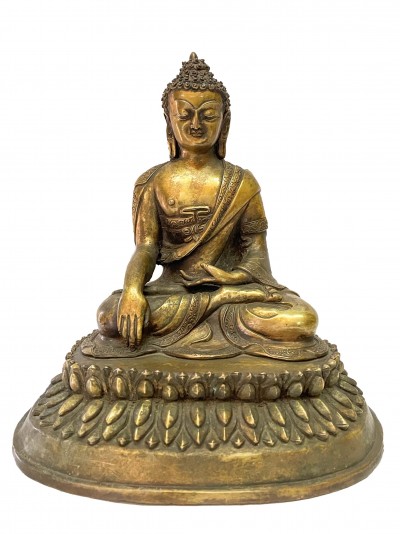
22cm Old Nepali Handmade Statue Of Shakyamuni Buddha, Fire Gold Plated, Antique Finishing
Weight : 2.2kg | [22382]
US$640
US$512
You Save
US$128
(20%)
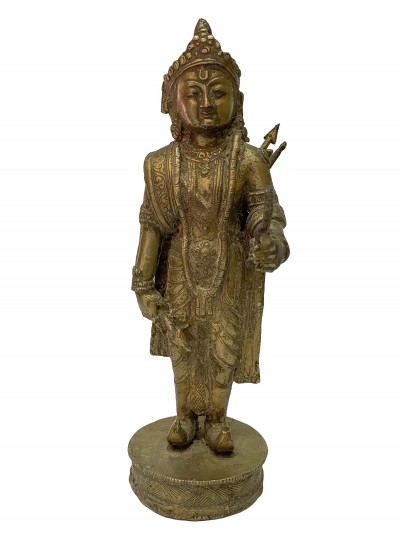
27cm Antique Nepali Handmade Statue Of Rama, Chocolate Oxidized, Rare Find
Weight : 1.46kg | [22391]
US$440
US$352
You Save
US$88
(20%)
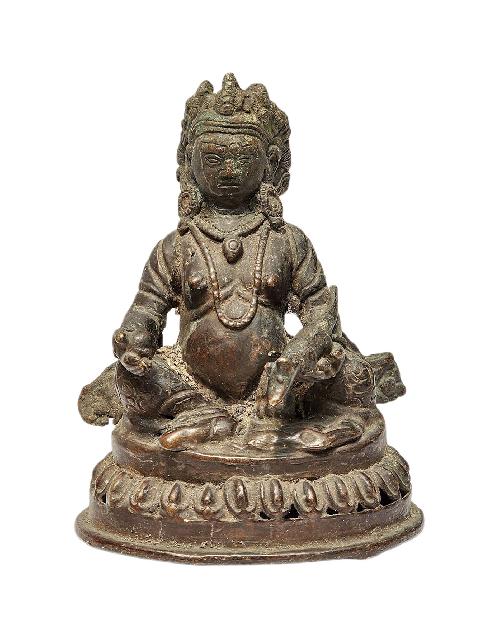
11cm + 50 Year Old Buddhist Miniature Statue Of Yellow Jambhala, Old Stock
Weight : 0.35kg | [35103]
US$100
US$75
You Save
US$25
(25%)
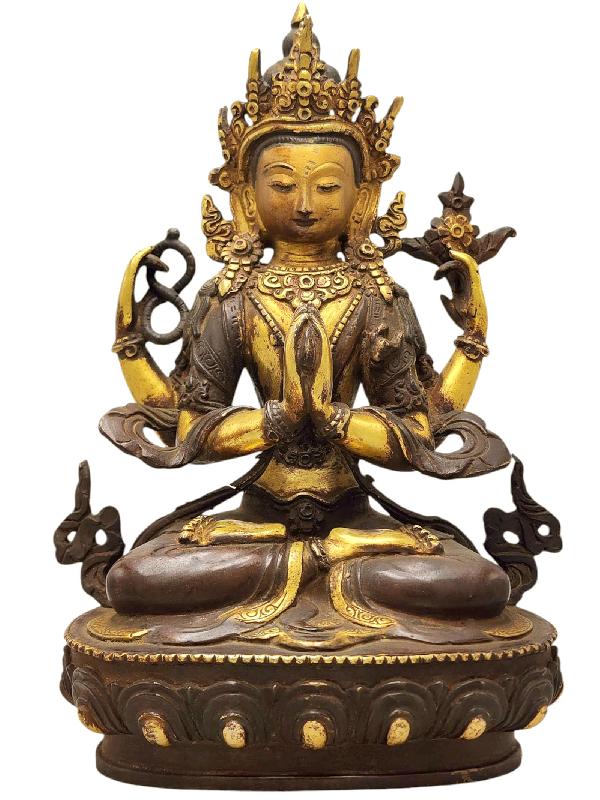
21cm Old Stock, Chenrezig, Buddist Handmade Statue, Partly Gold Plated, Antique Finishing, Face Painted
Weight : 1.38kg | [36043]
US$500
US$375
You Save
US$125
(25%)
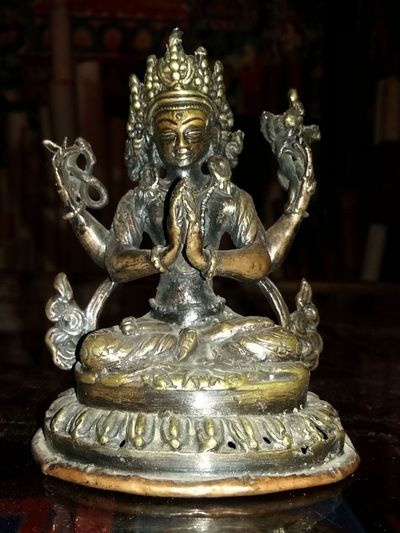
12cm Brass Changrashi 30 Years Plus
Weight : 0.45kg | [12085]
US$60
US$48
You Save
US$12
(20%)
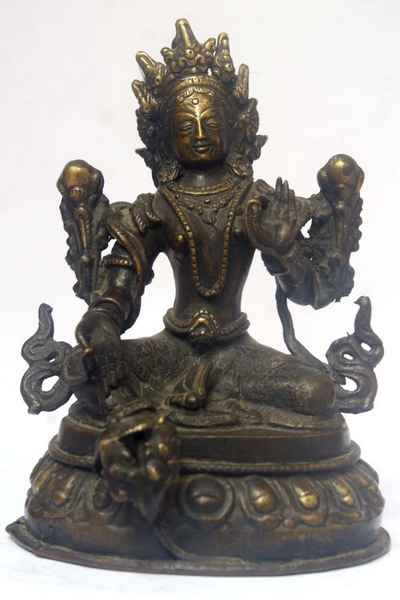
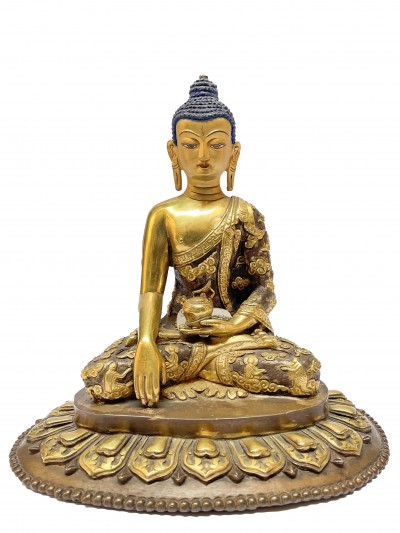
20cm Old Stock, Nepali Handmade Statue Of Shakyamuni Buddha, Fire Gold Plated, With Deep Carving
Weight : 1.65kg | [22652]
US$840
US$672
You Save
US$168
(20%)
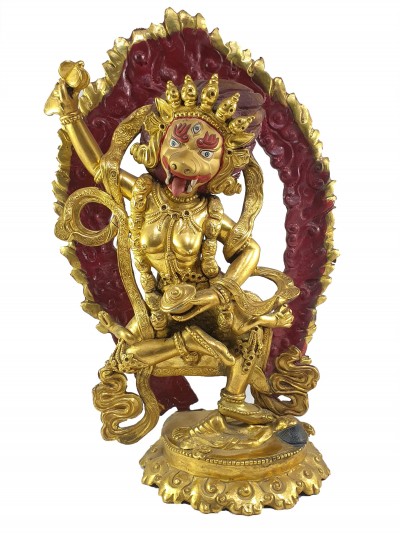
25cm Buddhist Statue Of Simhamukha Yogini, Senge Dongma, Full Fire Gold Plated, Painted Face, Old Stock, Rare Find
Weight : 1.5kg | [23538]
US$1400
US$1120
You Save
US$280
(20%)