Sarangi
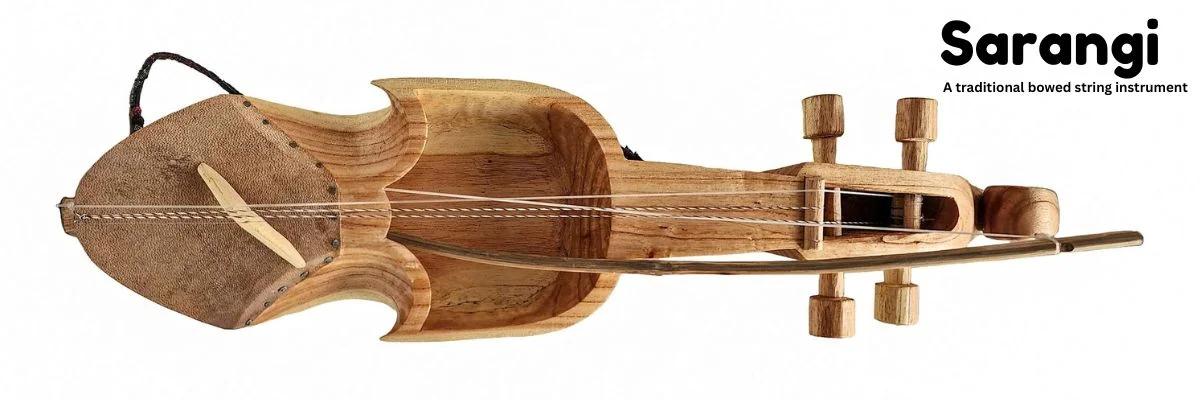
The Sarangi is a soulful, four-stringed bowed instrument that stands as one of Nepal’s most iconic traditional musical treasures.
In a rapidly modernizing world, the Sarangi remains a vital anchor for folk music and oral storytelling traditions.
The word Sarangi is traditionally believed to derive from the Sanskrit phrase sau rang, meaning "a hundred colors," highlighting the instrument's capacity to express an infinite spectrum of human emotions. While classical variations exist across South Asia, the Nepali Sarangi possesses a distinct design, size, and cultural ecosystem that sets it apart from its Indian counterpart.
Unlike the larger, heavy classical Indian version that utilizes dozens of sympathetic strings, the Nepalese Sarangi is remarkably compact, portable, and built explicitly for the wandering lifestyle of folk musicians. It remains a cornerstone of Nepal's musical identity today because it bridges the gap between historical storytelling and modern acoustic art.
History of the Sarangi
The history of the Sarangi in Nepal is fundamentally intertwined with the Gandharva (or Gaine) community.
During major national festivals like Dashain, or at community gatherings and ceremonies, the arrival of a Gandharva player with his wooden Sarangi was a momentous event. They sang of legendary kings, tragic love stories, and the lived experiences of ordinary mountain folk.
Design and Craftsmanship
Every authentic Nepali Sarangi tells a story of generations-old woodworking knowledge passed down through families of Nepalese artisans.
Traditional Materials
The creation of an artisan-made instrument relies entirely on native, sustainably sourced Himalayan materials:
Hardwood: The entire structure is meticulously hollowed out from a single block of local light-to-medium hardwood, most commonly Khiro (Falconeria), Saaj (Indian laurel), Sisau (Rosewood), or Bakaino (White cedar).
Resonator Skin: The lower half of the open body is covered firmly with dried goat, sheep, or lizard skin, which serves as the soundboard upon which the bridge rests.
Strings: Traditionally, the four strings were crafted from processed sheep intestines (catgut) harvested during autumn festivals.
In modern practice, nylon, steel, or professional badminton strings are frequently used to offer improved tuning stability. The Bow: Known as the Dhano, the bow is traditionally curved out of sturdy bamboo or wood and strung with genuine horsehair.
Handmade Construction
The building process requires intense precision. The artisan divides the single piece of wood into three symbolic zones: the pet (stomach/lower resonance chamber), the chaati (chest/upper open body), and the magaj (brain/headstock). The neck is kept entirely fretless, allowing the player to slide fluidly between notes. Tuning pegs, called Kunti, are carved to fit snugly into the headstock by hand, using friction alone to keep the strings tensioned. The bridge is placed precisely over the animal skin to cleanly transfer string vibrations straight into the hollow core, creating its signature resonant, wailing timbre.
Symbolism and Cultural Significance
The Sarangi functions as the undeniable voice of Nepalese folk culture. Its significance extends deep into the spiritual and cultural identity of Himalayan communities:
Emotional Resonance: The instrument is famous for its "crying" tone. It handles melancholic tunes and narrative tragedies with a gripping emotional expression that few other string instruments can match.Oral History Preservation: It has kept century-old Nepalese poems, community laws, and local historical events alive purely through song. Spiritual Anchoring: In ancient Hindu mythology, Gandharvas were viewed as celestial musicians playing in the courts of the gods. Owning or playing a Sarangi honors this divine lineage of sacred sound.How the Sarangi is PlayedPlaying the traditional string instrument requires an entirely tactile approach due to its fretless neck. The musician sits comfortably, holding the instrument vertically against the torso or resting it lightly against the left thigh and shoulder. Bowing Technique: The right hand moves the horsehair bow smoothly across the strings at the intersection where the upper open chamber meets the skin-covered lower chamber.Finger Positioning: Instead of pressing the strings down flat against the wooden neck like a guitar or violin, the player pushes their left-hand fingertips or fingernails laterally against the side of the strings to alter the pitch. Melodic Framework: The four strings are traditionally tuned to a relative pitch sequence of Low Sa - Pa - Pa - High Sa (Tonic and Perfect Fifths). The middle two strings serve as a continuous rhythmic drone while the outer strings carry the main folk melody. Sarangi in Nepalese Folk MusicWithin the realm of Folk Music Nepal, the Sarangi holds a legendary position alongside the Madal (traditional drum) and the Bansuri (bamboo flute). Traditional Gandharva songs like "Amale Sodlin Khoi" (a heartbreaking narrative of a soldier's final words) remain deeply woven into the national consciousness. Beyond historical ballads, the Sarangi accompanies rural weddings, seasonal harvests, and community theater performances across Nepal. Its adaptive microtonal range allows it to mimic regional singing styles effortlessly, preserving local dialects through song.
Sarangi as Handmade Art
An authentic Sarangi is as much a visual feast as it is an acoustic one. Master carvers often treat the headstock and the outer shell of the wooden body as a canvas for intricate Nepalese handicrafts.
It is common to find the head of the instrument carved beautifully into the shape of a sacred bird, an animal, or a protective deity. Because of this rich visual storytelling, the instrument holds immense collectible value. For collectors of Himalayan handicrafts, it serves as an elegant piece of sacred home décor, a deeply thoughtful cultural gift, or a museum-quality display piece that brings the soulful energy of the Himalayas into any indoor space.
Why Choose a Handmade Sarangi from Nepal?
When searching for an authentic piece of Himalayan heritage, factory-manufactured replicas simply cannot compete with the soul of an artisan-made instrument.
| Feature | Handmade Nepalese Sarangi | Mass-Produced / Souvenir Replicas |
| Material Source | Single block of seasoned local hardwood | Assembled pieces of cheap plywood or scrap wood |
| Acoustic Integrity | Hand-hollowed for optimal tone and resonance | Often non-functional or poorly hollowed with dead sound |
| Skin Fitment | Hand-stretched natural goat/sheep skin | Low-grade synthetic sheets or loose thin leather |
| Artistic Value | Unique, hand-carved cultural motifs | Stamped, repetitive patterns or raw unfinished wood |
At handmadestatue.com, we work directly with master artisans across Nepal to source authentic handmade Himalayan handicrafts, traditional musical instruments, and sacred Buddhist art. Every Sarangi in our collection is crafted using traditional woodworking techniques that preserve the strict acoustic and visual designs of the Gandharva heritage, ensuring you receive a premium, culturally authentic instrument.
Caring for a Handmade Sarangi
Because it is crafted from organic wood and natural skin, your handmade Sarangi needs gentle maintenance to retain its sound quality and beauty over time:
Humidity Control: Wood and animal skin expand and contract with weather changes. Store your instrument in a dry area away from direct sunlight, damp basements, or heating vents.
Cleaning: Gently wipe down the wooden frame and strings with a soft, dry microfiber cloth after every session to prevent oils from building up. Never use harsh chemical cleaners on the natural wood or skin.
String & Bridge Maintenance: If you plan on storing the instrument for a long period, loosen the tuning pegs slightly to relieve excessive pressure on the delicate skin soundboard.
Bow Care: Loosen the hair on the bow when it is not in use to preserve its natural elasticity, and apply high-quality rosin sparingly to maintain smooth friction.
The Sarangi is far more than an assembly of wood, skin, and wire—it is the living, breathing musical heartbeat of Nepal. From its deep roots within the wandering Gandharva community to its brilliant display of traditional woodworking, it remains a timeless monument to Himalayan folk art. Whether you are an active musician looking to explore its unique, vocal microtones, a cultural collector, or looking to enrich your home with authentic Nepalese handicrafts, a handmade Sarangi is an investment in living history.
Explore the finest selection of authentic, artisan-crafted traditional instruments and Himalayan masterworks at
Common Questions About Sarangi
1. What is a Sarangi?
The Sarangi is a traditional, four-stringed bowed musical instrument carved from a single piece of wood. It is famous for its unique, resonant tone that closely resembles the emotional quality of the human voice.
2. Where did the Sarangi originate?
While bowed string lutes share ancient roots across South Asia, the specific four-string folk Sarangi originated and evolved within the hills of Nepal, developed primarily by the indigenous Gandharva community.
3. What is the Sarangi made of?
An authentic Nepali Sarangi is carved from a single block of local hardwood (such as Khiro, Saaj, or Bakaino). Its lower chamber is covered with dried goat or sheep skin, and its bow is crafted from bamboo strung with natural horsehair.
4. Who traditionally plays the Sarangi in Nepal?
It was traditionally played exclusively by the Gandharva (or Gaine) caste, who functioned as traveling minstrels, community news messengers, and oral historians across rural Nepal.
5. Is the Sarangi difficult to learn?
Because the Sarangi is a fretless instrument, it requires a good ear for pitch and muscle memory. Players change notes by sliding the sides of their fingers or nails against the strings rather than pressing them down flat, which takes practice to master.
6. What kind of music is played on a Sarangi?
It is primarily used to play traditional Nepalese folk music, historical narrative ballads, and seasonal festival songs. However, its versatile microtonal capability has made it popular in modern classical and global fusion music projects.
7. How is a handmade Sarangi different from a factory-made instrument?
A handmade Sarangi is meticulously hollowed from a single block of seasoned wood by a skilled artisan, ensuring proper acoustic volume, accurate bridge alignment, and responsive sound. Mass-produced variants often use glued scrap wood and are built as cheap, non-functional decorative items.
8. Can the Sarangi be used as home décor?
Yes. Due to its striking dual-chambered shape, beautiful wood grains, and the intricate hand-carved details found on the headstock, it makes a stunning and conversation-starting piece of authentic cultural art for homes and offices.
9. How should a Sarangi be maintained?
Keep it in a climate-controlled room away from extreme humidity or direct heat sources. Wipe it clean with a dry cloth after use, and loosen the strings slightly if you plan to store it unplayed for several months to protect the animal skin body.
10. Why buy a handmade Sarangi from Nepal?
Purchasing an artisan-made instrument directly supports indigenous woodcarvers and traditional musicians who are actively working to preserve Nepal’s endangered oral histories. It guarantees you receive an authentic, culturally accurate piece of Himalayan handicraft heritage.

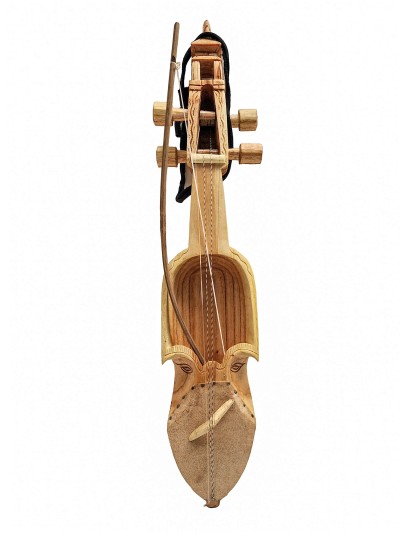
59cm High Quality Nepali Folk Musical Instrument Sarangi, Professional
Weight : 0.68kg | [28479]
US$150
US$120
You Save
US$30
(20%)
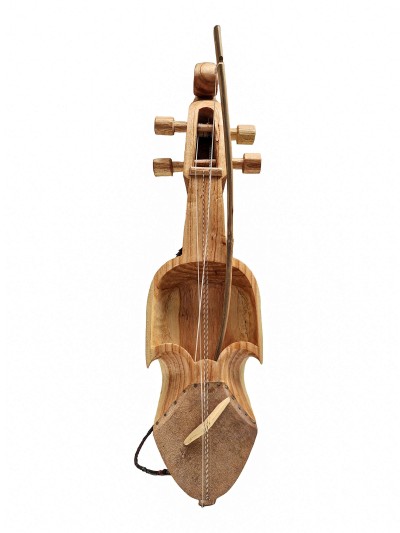
60cm High Quality Nepali Folk Musical Instrument Sarangi, Professional
Weight : 0.95kg | [28478]
US$210
US$170
You Save
US$45
(20%)