Padmasambhava
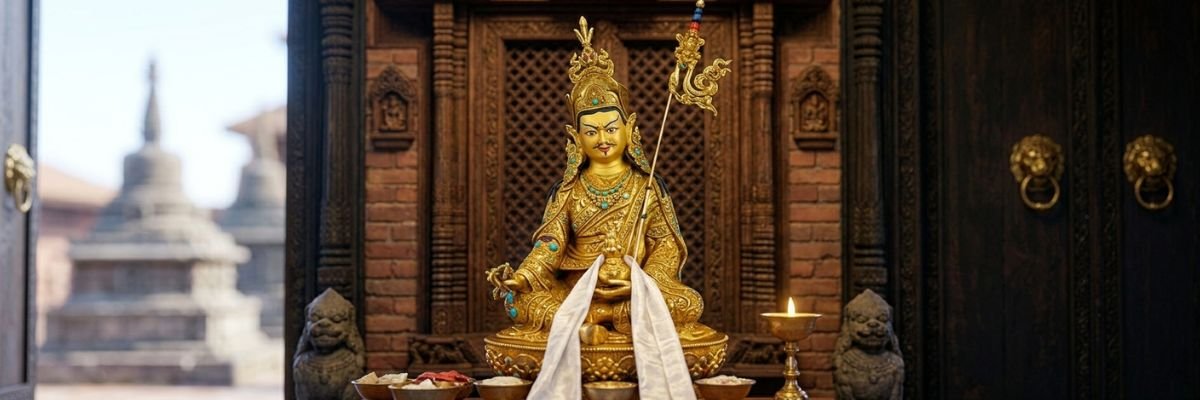
Few figures in religious history possess a legacy as vast, dramatic, and mystically charged as Padmasambhava. Revered across the Himalayan region as Guru Rinpoche ("Precious Master"), he was an eighth-century Indian tantric master who transformed the spiritual landscape of Tibet.
By binding local animistic spirits, establishing the country’s first Buddhist monastery, and concealing profound spiritual treasures (terma), Padmasambhava laid the foundation for what is known today as Vajrayana (Tandric) Buddhism. For millions of practitioners, he is not merely a historical saint but the "Second Buddha" of our age.
According to sacred biographies, Padmasambhava’s entry into this world bypassed ordinary human birth. He was discovered as an eight-year-old child resting inside a pristine lotus blossom on Lake Dhanakosha, located in the ancient kingdom of Oddiyana (modern-day Swat Valley, Pakistan). Because of this miraculous origin, he was named Padmasambhava, which translates directly from Sanskrit as "Lotus-Born."
The Journey to Tibet and King Trisong Detsen
In the eighth century, the 38th Tibetan Emperor, King Trisong Detsen, sought to establish Buddhism across his empire. He invited the great Indian scholar Shantaraksita to build Tibet's first monastery. However, severe environmental disasters, plagues, and local resistance—attributed to hostile local deities and spirits—halted construction.
Recognizing that intellectual scholarship alone could not tame these volatile forces, Shantaraksita advised the King to invite Padmasambhava, who possessed unrivaled mastery over tantric rituals and spiritual energy.
Taming the Spirits and Founding Samye Monastery
Upon arriving in Tibet, Padmasambhava did not destroy the hostile spirits. Instead, using wrathful rituals and deep realization, he subdued them and bound them by oath to become protectors of the Buddha’s teachings (Dharmapalas).
With these spiritual obstacles cleared, Samye Monastery was successfully completed around 779 CE. This landmark achievement initiated the first systematic translation of Sanskrit Buddhist texts into Tibetan, creating the bedrock for the Nyingma (Ancient) school of Tibetan Buddhism.
Decoding Padmasambhava Iconography & Symbolism
Tibetan thangka paintings and statues are not merely decorative; they serve as precise visual maps of enlightened mindsets. When observing a traditional image of Padmasambhava, every posture, color, and implement carries profound philosophical meaning.
1. Physical Appearance and Posture
Guru Rinpoche is typically depicted with a vibrant, youthful countenance, expressing a facial expression that is simultaneously peaceful and slightly wrathful (snarl). This tension reflects his ability to use fierce, transformative energy to conquer stubborn ignorance. He sits in the posture of royal ease (kingly posture), indicating his absolute mastery over the mundane world.
2. The Lotus Hat (Pasha)
His distinctive five-eared hat symbolizes the five Buddha families and the integration of all spiritual paths. It is topped with a half-vajra and a single eagle feather. The feather represents the soaring, unhindered view of Dzogchen—the highest state of natural awareness.
3. The Vajra (Right Hand)
In his right hand, held near his heart, he wields a five-spoked golden Vajra (Tibetan: Dorje). The vajra represents unchanging, indestructible reality and the active masculine principle of upaya (skillful means/compassion).
4. The Skull Cup / Kapala (Left Hand)
Resting in his lap, his left hand holds a Kapala (human skull cup) filled with the nectar of immortality (amrita). Inside the nectar rests a long-life vase topped with a wish-fulfilling tree, symbolizing the ultimate union of wisdom and longevity.
5. The Khatvanga Trident (Left Shoulder)
Leaning against his left shoulder is a ritual staff known as a Khatvanga. This staff is deeply symbolic:
The Three Heads: A freshly severed head, a decaying head, and a dry skull represent victory over the three poisons (desire, anger, and ignorance) as well as the three bodies of a Buddha (kayas).
The Hidden Consort: The staff itself represents his primary spiritual consort, Yeshe Tsogyal, meaning he always carries the vital feminine principle of wisdom (prajna) with him.
6. Seat and Rainbow Aura
Guru Rinpoche rests upon a sun disc, a moon disc, and a multi-colored lotus flower. The sun and moon represent the balance of absolute and relative truth. He is wrapped in an expansive aura of rainbow light, indicating the complete transformation of his physical form into a light-body.
The Eight Manifestations of Guru Rinpoche
To meet the specific spiritual needs of various cultures, environments, and entities, Padmasambhava assumed different forms throughout his life. These are celebrated as the Guru Tsen Gye (Eight Manifestations).
1. Guru Pema Gyalpo (The Lotus King)
This form depicts Guru Rinpoche as a young prince. According to tradition, King Indrabhuti of Oddiyana found an eight-year-old child sitting inside a radiant lotus flower on Lake Dhanakosha. Amazed by the boy's wisdom, the king adopted him and groomed him to rule. In art, look for his royal attire, majestic posture, and the gentle hand-drum he plays to capture the hearts of all who hear it.
2. Guru Tsokyé Dorje (The Lake-Born Vajra)
Representing the exact moment of his miraculous birth within the lotus, this is a deeply peaceful form. He is usually depicted as a soft blue or white youth, holding a vajra directly against his chest. This manifestation reminds practitioners that our own fundamental nature—just like Guru Rinpoche—is completely unpolluted by the mud of worldly confusion.
3. Guru Loden Choksé (The Wise Seeker)
After leaving the royal palace to pursue absolute truth, Guru Rinpoche mastered all the sciences, arts, and meditative lineages of ancient India. As Loden Choksé, he represents supreme intelligence and scholarly perfection. He is depicted holding a mirror of clear awareness, reminding us that true intellect is a tool to reflect reality as it is, free from bias.
4. Guru Shakya Sengé (The Lion of the Shakyas)
To show that even an enlightened master must honor conventional spiritual discipline, Guru Rinpoche took formal monastic ordination. In this form, he looks almost identical to the historical Buddha Shakyamuni, dressed in simple saffron robes and holding a monastic bowl. He represents the path of discipline, mindfulness, and pure renunciation.
5. Guru Padmasambhava (The Lotus-Born)
This is the most common and recognizable form of the master. It represents his time in the kingdom of Zahor, where a jealous king tried to burn him alive at the stake. Instead of burning, Guru Rinpoche transformed the execution pyre into a massive, cool mountain lake (known today as Rewalsar or Tso Pema in India) and sat peacefully inside a blooming lotus. This form represents the ultimate power of spiritual transformation—turning the fires of worldly anger and poison into the cool nectar of realization.
6. Guru Nyima Özer (The Ray of the Sun)
In this wild, semi-wrathful yogic form, Guru Rinpoche lived in ancient charnel grounds, taming ghosts, spirits, and wild elements. He is depicted wearing a tiger-skin loincloth, holding a sunbeam in his hand. Legend says he once pinned the sun in the sky to prevent it from setting so he could finish a ritual, symbolizing total mastery over the subtle energies of the universe.
7. Guru Sengé Dradrok (The Lion's Roar)
When non-Buddhist magicians and aggressive critics tried to destroy the great monastic university of Nalanda in India, Guru Rinpoche manifested as a terrifying, dark-blue protector. He defeated them not with physical weapons, but by clapping his hands together to unleash an acoustic roar of pure truth. This form represents the fierce, unyielding protection of spiritual truth against intellectual delusion.
8. Guru Dorje Drolö (The Wrathful Vajra)
This is perhaps the most intense manifestation in the entire Himalayan pantheon. To seal the sacred Terma (hidden treasure texts) inside the cliff-faces of Bhutan and Tibet, Guru Rinpoche transformed into Dorje Drolö.
Mantras and Spiritual Practices
The most widespread method of connecting with Guru Rinpoche is through the recitation of his primary mantra, known as the Vajra Guru Mantra.
"Om Ah Hum Vajra Guru Padma Siddhi Hum"
Breaking Down the Meaning
Om Ah Hum: The primordial sounds representing the pure Body, Speech, and Mind of all Buddhas.
Vajra: The indestructible diamond-like quality of reality.
Guru: A weighty spiritual guide who illuminates the path.
Padma: Lotus, signaling the pure, unstained origin of the master.
Siddhi: Spiritual accomplishments or realizations.
Hum: It is granted! (Anchoring the mantra's energy in the practitioner's heart).
Benefits of Recitation
According to classic Nyingma texts, chanting this mantra removes external obstacles (sickness, financial distress, environmental chaos) and internal blocks (anger, pride, anxiety). It is used as a core daily meditation practice involving vivid visualizations of the master dissolving into light and merging into oneself.
Sacred Sites and Living Heritage
The energetic imprint of Padmasambhava remains mapped onto the geography of the Himalayas.
Samye Monastery (Tibet): The historic ground where Tibetan Buddhism officially began.
Taktshang Goemba / Tiger's Nest (Bhutan): A monastery perched precariously on a sheer cliffside where Guru Rinpoche flew on the back of a tigress in his wrathful form as Dorje Drolo to meditate and hide termas.
Maratika Cave (Nepal): The sacred cavern where Padmasambhava, along with his consort Mandarava, achieved the state of immortal life.
The Tsechu Festivals
Every month, on the tenth day of the lunar calendar (the day associated with Guru Rinpoche's life milestones), Himalayan communities celebrate Tsechu. These vibrant festivals feature sacred, masked dances (Cham) that dramatize the Eight Manifestations, bringing the visual symbolism of the thangka paintings to life for thousands of spectators.
What People Want to Know About Padmasambhava
Who is Padmasambhava?
Padmasambhava was an 8th-century Indian Buddhist master from Oddiyana who successfully brought Tantric (Vajrayana) Buddhism to Tibet, overcoming local spiritual obstacles and building the region's first monastery.
Why is Padmasambhava called Guru Rinpoche?
"Guru Rinpoche" means "Precious Master" in Tibetan. The title reflects the immense reverence and love the people of the Himalayan region hold for him as their primary spiritual father.
What does Padmasambhava hold in his hands?
In his right hand, he holds a five-spoked golden vajra (indestructible reality). In his left hand, he holds a kapala (skull cup) containing a vase filled with the nectar of immortality.
What is the meaning of Padmasambhava's iconography?
Every detail is symbolic: his lotus hat represents the integration of all Buddhist paths, his kingly posture shows mastery over the world, and the khatvanga staff on his shoulder symbolizes the union of wisdom and compassion.
What is Guru Rinpoche's mantra?
His primary mantra is "Om Ah Hum Vajra Guru Padma Siddhi Hum." It is chanted to clear spiritual obstacles, purify negative karma, and cultivate ultimate wisdom.
Is Padmasambhava considered a Buddha?
Yes. In Tibetan Buddhism, particularly within the Nyingma school, he is referred to as the "Second Buddha" because he tailored the deep teachings of Shakyamuni Buddha into a rapid, accessible tantric system for our specific era.
Mantra of Padmasambhava
(Om Ah Hum Vajra Guru Padma Siddhi Hum)

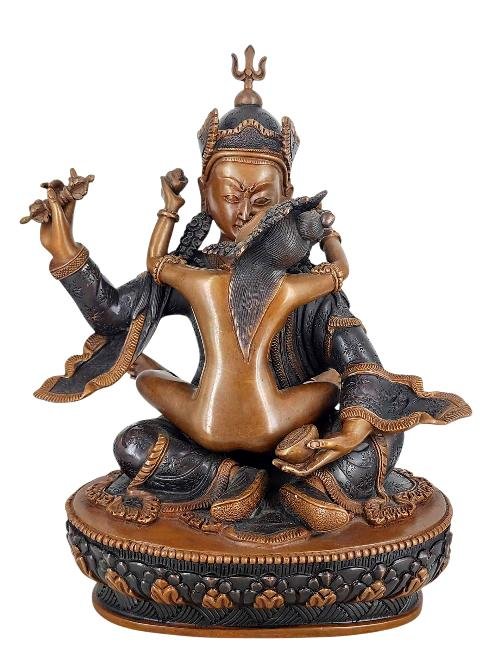
24cm Buddhist Handmade Statue Of Padmasambhava Shakti, Chocolate Oxidized
Weight : 2.4kg | [37534]
US$1300
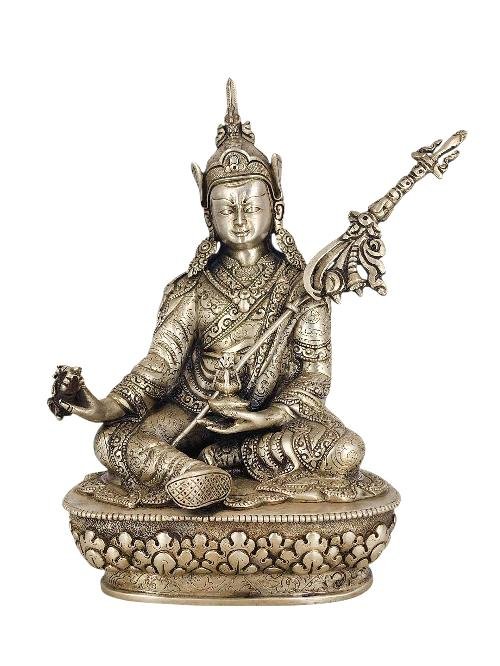
24cm Buddhist Handmade Statue Of Padmasambhava, Silver Plated
Weight : 1.52kg | [37516]
US$800

31cm Padmasambhava Handmade Nepali Buddhist Statue, Full Gold Plated, Stone Setting, Face Painted
Weight : 2.56kg | [37432]
US$2160

25cm Padmasambhava Handmade Nepali Buddhist Statue, Full Gold Plated, Stone Setting, Face Painted
Weight : 1.85kg | [37430]
US$1010

56cm Padmasambhava Handmade Nepali Buddhist Statue, Full Gold Plated, Stone Settingguhyasamaja , Face Painted
Weight : 9.85kg | [37426]
US$4610

37cm Padmasambhava Set Handmade Nepali Buddhist Statue, Full Gold Plated, Face Painted
Weight : 5.08kg | [37424]
US$3025

56cm Padmasambhava Handmade Nepali Buddhist Statue, Partly Gold Plated, Stone Setting, Face Painted
Weight : 9.68kg | [37421]
US$2160
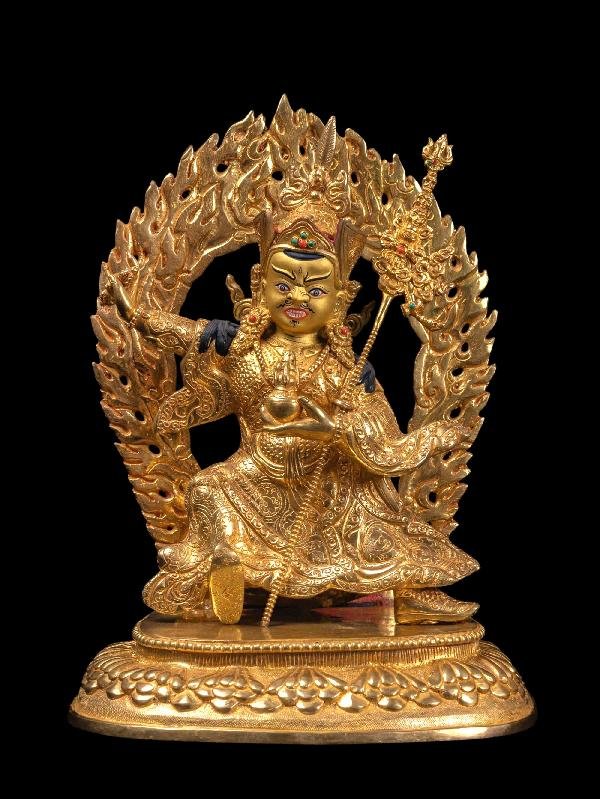
29cm Padmasambhava Handmade Nepali Buddhist Statue, Full Gold Plated, Hand Painted Face
Weight : 3.42kg | [37407]
US$1585

24cm Padmasambhava, Buddhist Handmade Statue, Thangka Color Finishing, Partly Gold Plated
Weight : 1.4kg | [37391]
US$300

23cm Padmasambhava, Buddhist Handmade Statue, Chocolate Oxidized
Weight : 1.1kg | [37373]
US$320
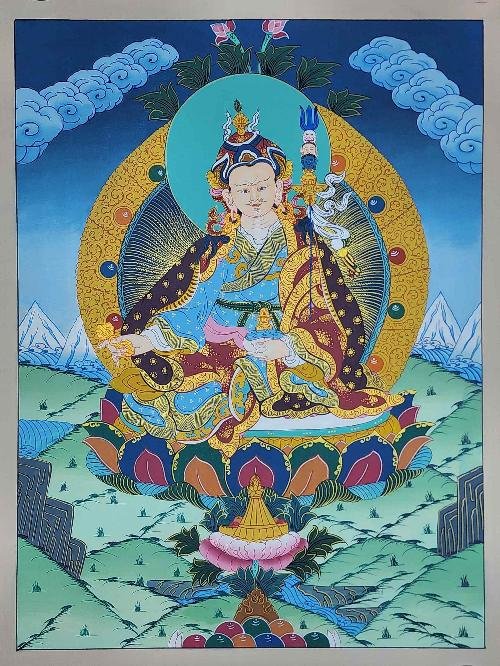
60cm Padmasambhava Guru Rinpoche Tibetan Buddhist Thangka Painting With Sacred Detailing
Weight : 0.15kg | [37314]
US$90
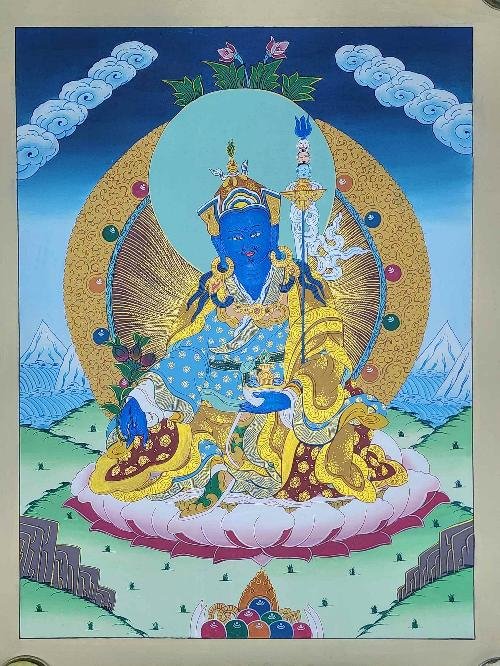
60cm Padmasambhava Guru Rinpoche Tibetan Buddhist Thangka Painting With Traditional Art Detailing
Weight : 0.15kg | [37310]
US$90
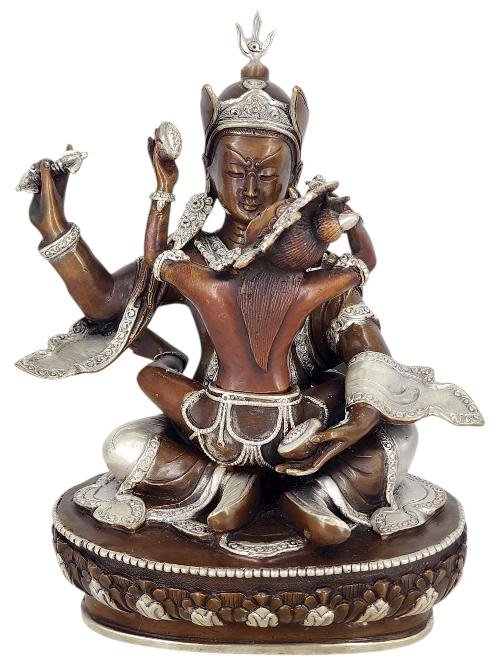
23cm Padmasambhava Guru Rinpoche Shakti Yab Yum Statue Copper With Silver And Chocolate Oxidized Finish
Weight : 2.13kg | [37233]
US$450
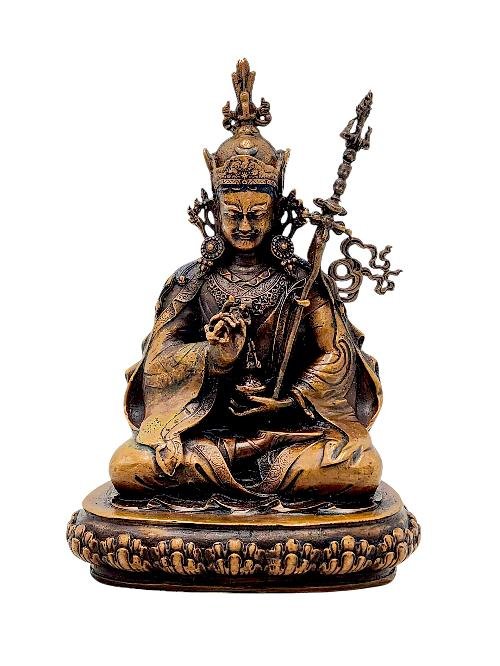
11cm Padmasambhava, Buddhist Miniature Statue, Chocolate Oxidized Finish
Weight : 0.34kg | [37173]
US$130

23cm Padmasambhava Orgyen Kandro Norlha Handmade Statue, Double-tone Chocolate Oxidized,
Weight : 2.05kg | [37120]
US$360

41cm Padmasambhava Guru Rinpoche Statue, Handcrafted Art Piece, Thangka Color Finish
Weight : 5.71kg | [37087]
US$590

22cm Padmasambhava With Detailed Deep Carving, Buddhist Handmade Statue, Chocolate Oxidize
Weight : 1.03kg | [37049]
US$190
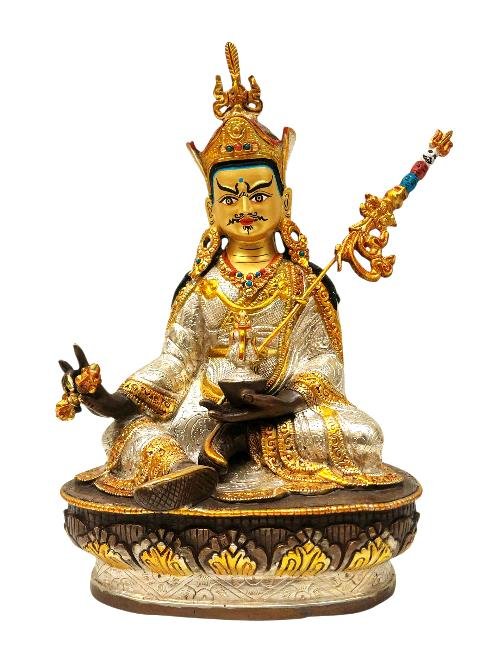
23cm Padmasambhava Handcrafted Statue, Chocolate & Silver Oxidized With Extra Gold Plating, Stone Inlay, Hand Painted
Weight : 1.28kg | [37005]
US$180
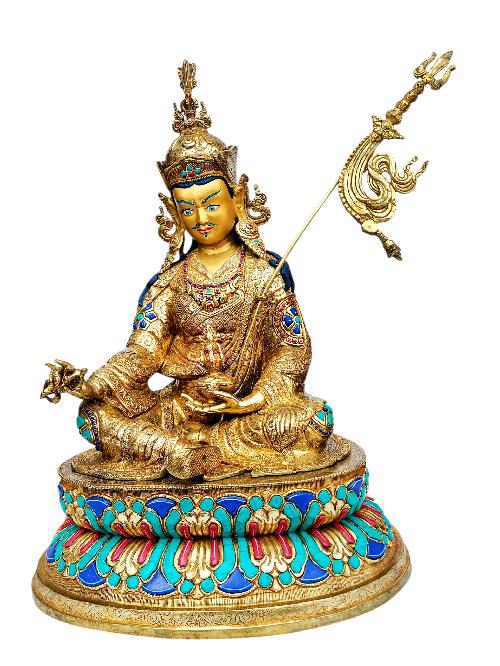
50cm Padmasambhava Handmade Statue, Full Gold Plated, Stone Setting, Face Painted
Weight : 9.26kg | [37000]
US$3700
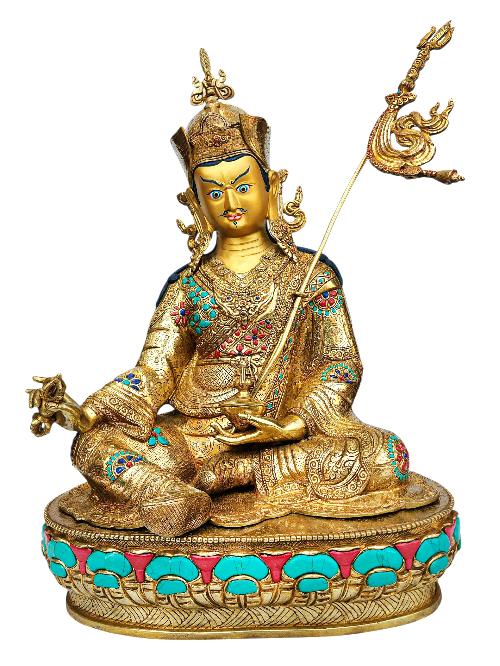
48cm Padmasambhava Handmade Statue, Full Gold Plated, Stone Setting, Face Painted
Weight : 8.81kg | [36999]
US$3700